


Tank water management
Use distilled or rainwater to fill the central cup, flush it through the pot every 2–3 weeks, and then refill to prevent salt buildup and bacterial growth in the rosette.

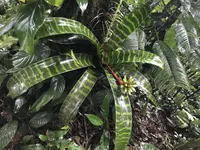
Guzmania musaica is a tropical bromeliad grown mainly as an indoor ornamental plant. It forms a compact rosette of arching, strap-shaped leaves with subtle banding. From the center, it produces a bright, long-lasting flower spike surrounded by colorful bracts, which gives the plant its main decorative value. In nature, it often grows as an epiphyte on trees in humid forests of Central and South America. This growth habit means it prefers airy conditions, moderate indirect light, and consistently moist but not waterlogged media. These traits generally make it a manageable plant for indoor growers once they understand how to care for Guzmania musaica.

Care Difficulty
Moderate Care

Light Preference
Bright Indirect Light

Water Requirements
Keep Soil Moist

Temperature Preference
Tropical / Frost Sensitive

Hardiness Zone
11–12

Soil Texture
Loamy, Peaty, Organic-rich

Soil pH
Acidic (5.5–6.5)

Soil Drainage
Moist but well-drained

Fertilization
Light (every 4–6 weeks)
Scan your plant to receive care tips personalized for your specific plant
Available on iOS and Android
This bromeliad prefers bright, gentle light that mimics filtered tropical forest conditions.
Watering should focus on both the central cup and the potting mix without leaving the plant constantly soaked.
Stable warm temperatures support healthy growth and long-lasting blooms.
This bromeliad prefers consistently warm, humid air to keep its foliage and central cup healthy.
Guzmania musaica grows best in a loose, airy, organic-rich medium rather than dense potting soil.
This species is very suitable for container growing due to its compact root system and rosette form.
This bromeliad has modest nutrient needs but benefits from light feeding in active growth.
Pruning focuses on removing spent tissue and maintaining a tidy rosette rather than shaping the plant.
This bromeliad has a small root system and only needs infrequent repotting in loose, airy mix.
Propagation is usually done by separating offsets rather than by seed.
This tropical species is frost-sensitive and needs mild, stable conditions in winter.

Plant Health Check
Not sure what's wrong with your plant? Check your plant's health inside the app.
This species forms rosettes with broad, arching leaves whose lower surfaces show a distinct network of pink to reddish cross-banding, giving the common name mosaic guzmania. The upper leaf surfaces remain mostly green, so the pattern is most visible when viewed from below or into the rosette.
The central inflorescence produces stiff, overlapping bracts in soft pink to salmon shades that can remain attractive for several months. The true flowers are small and short-lived, but the colorful bracts provide the main visual display for an extended period.
In its native habitat in Panama and Colombia, this bromeliad often grows as an epiphyte on tree branches, not in soil. Its rosette acts as a water tank, collecting rain and organic debris that supply moisture and nutrients to the plant and to small invertebrates living in the tank.

Guzmania musaica was first described scientifically in the 19th century and has since become a parent in breeding programs aimed at producing ornamental hybrids with patterned foliage, transferring its characteristic mosaic leaf markings into new cultivated varieties.
This species usually blooms only once when mature, then slowly declines while offsets develop. Lack of bloom often means the plant is still juvenile, light is slightly too low, or the central tank has not been consistently filled with clean water.
Keep your plants happy and healthy with plant identification, disease detection, and easy care guidance.

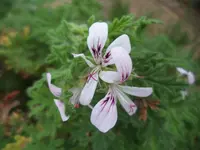
Lemon-scented Geranium
Pelargonium crispum
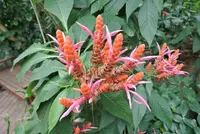
Aphelandra sinclairiana
Aphelandra sinclairiana
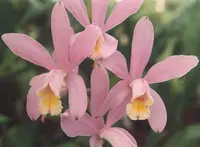
Cattleya loddigesii
Cattleya loddigesii

Elephant's Ear
Colocasia 'Black Ripple'
Hairy-lipped Polystachya
Polystachya pubescens
Chinese Pothos
Pothos chinensis
Bromeliad
Aechmea 'Blue Tango'
Yellow dragonfruit
Selenicereus megalanthus