Acclimate After Purchase
After bringing the plant home, keep it in its nursery pot for 2–3 weeks to monitor watering response and leaf behavior before repotting, which reduces transplant shock and leaf drop when growing zebra calathea.

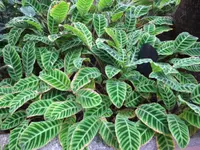
Goeppertia zebrina, commonly called zebra calathea, is a tropical evergreen from Brazil’s rainforest understory. It is grown mainly as a decorative foliage plant indoors.
Leaves are broad, velvety, and patterned with bold light-green stripes on a darker background, giving a striped, almost animal-like appearance. Plants form low clumps from short, clustered stems.
This species prefers warm, stable conditions with moderate, filtered light, high humidity, and evenly moist but well-drained soil. It reacts quickly to dry air, cold drafts, or irregular watering, so it is considered moderately challenging for beginners.
Understanding how to care for zebra calathea helps keep leaves healthy, maintain strong color, and reduce issues like browning edges or leaf curl.

Care Difficulty
Moderate Care

Light Preference
Bright Indirect Light

Water Requirements
Keep Soil Moist

Temperature Preference
Tropical / Frost Sensitive

Hardiness Zone
11–12

Soil Texture
Loamy, Peaty, Organic-rich

Soil pH
Acidic (5.5–6.5), Slightly acidic (6.5–7.0)

Soil Drainage
Moist but well-drained

Fertilization
Light (every 4–6 weeks)
Scan your plant to receive care tips personalized for your specific plant
Available on iOS and Android
This plant prefers bright, filtered light that mimics a shaded tropical understory.
This species needs evenly moist, never soggy, soil to keep roots healthy.
Stable, warm temperatures support steady growth and prevent stress in this species.
This species needs consistently high humidity for stable growth.
This plant prefers a loose, airy, organic-rich mix that drains freely but stays slightly moist.
This species is well suited to container growing when moisture and stability are controlled carefully.
Balanced, diluted feeding supports steady foliage growth for zebra calathea in active seasons.
Pruning focuses on hygiene and maintaining a neat shape for Goeppertia zebrina rather than size control.
Moving this plant to fresh substrate every few years maintains root health and stable growth.
New plants are typically produced by division rather than by seed or cuttings.
Cold-sensitive Goeppertia zebrina requires stable indoor conditions during winter in most climates.

Plant Health Check
Not sure what's wrong with your plant? Check your plant's health inside the app.
This species shows pronounced nyctinasty, a daily leaf movement where the broad leaves lower during the day for maximum light capture and raise more upright at night, likely reducing water loss and physical damage.
The foliage has a dense layer of tiny, fine hairs that makes the surface feel slightly velvety and helps diffuse light across the leaf blade, which is useful in the shaded, understory habitats where it evolved.
In its native Brazilian Atlantic forest, this plant naturally grows in warm, humid, low-light understory microhabitats, often forming small ground-level colonies beneath larger trees and shrubs.
Brown, crispy edges usually result from low humidity, underwatering, or excess fertilizer salts. Hard tap water with high minerals or fluoride can worsen damage. Increase humidity, water evenly, flush the soil occasionally, and avoid overfertilizing.
Keep your plants happy and healthy with plant identification, disease detection, and easy care guidance.