Provide climbing grid
Install a sturdy mesh or wire grid 1–2 in off a wall or fence so the vines can thread through and self-support, which reduces stem breakage and keeps flowering shoots well exposed for better bud formation.

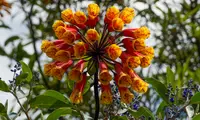
Bomarea glaucescens is a twining, tuberous climber in the alstroemeria family, valued for its decorative clusters of bell-shaped flowers. The stems wind through surrounding vegetation or supports, creating a loose, scrambling vine with narrow, often bluish-green leaves.
This species is native to high-elevation regions of the northern Andes, where it grows in cool, moist habitats with filtered light. Its need for consistent moisture, support for climbing, and protection from heat or strong frost makes it moderately challenging for beginners learning how to care for Bomarea glaucescens.
In cultivation, it prefers cool to mild temperatures, humus-rich, well-drained soil, and steady but not waterlogged moisture levels.

Care Difficulty
Hard Care

Light Preference
Partial Shade

Water Requirements
Regular Water

Temperature Preference
Warm Climate

Hardiness Zone
9–11

Soil Texture
Loamy, Silty, Organic-rich

Soil pH
Acidic (5.5–6.5), Slightly acidic (6.5–7.0)

Soil Drainage
Moist but well-drained

Fertilization
Light (every 4–6 weeks)
Scan your plant to receive care tips personalized for your specific plant
Available on iOS and Android
This twining climber prefers bright, gentle light similar to its native montane forest edges.
This species prefers steadily moist but not waterlogged soil throughout the growing season.
This highland climber prefers cool to mild conditions rather than intense heat.
This species prefers consistently moist air and benefits from elevated humidity in most homes.
Bomarea glaucescens grows best in loose, moisture-retentive but well-drained soil that protects its tuberous roots from rot.
This species is suitable for container growing when the pot supports its climbing, tuberous habit.
This vigorous climber responds well to moderate feeding during active growth.
Thoughtful pruning keeps Bomarea glaucescens flowering well and easier to manage on supports.
This twining climber dislikes frequent disturbance, so repotting or transplanting should be planned carefully.
New plants are most reliably produced by division or seed under controlled conditions.
This species prefers mild, frost-free winters and benefits from basic cold-season protection in many regions.

Plant Health Check
Not sure what's wrong with your plant? Check your plant's health inside the app.
This species naturally occurs as a twining vine in high Andean cloud forests, where it climbs through shrubs and small trees rather than creeping along the ground.
It forms underground tubers that store water and carbohydrates, allowing the plant to resprout after periods of stress such as drought or mechanical damage.
Its showy, bell-shaped flowers are arranged in umbels and produce abundant nectar that attracts hummingbirds and large insects as primary pollinators.
This species is a twining climber that wraps its stems around nearby supports rather than creeping along the ground. In gardens it behaves like a vine, needing vertical space but not forming dense, spreading ground cover.
Keep your plants happy and healthy with plant identification, disease detection, and easy care guidance.