garlicvine Care (Mansoa alliacea)

garlicvine

About garlicvine

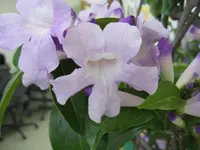
Garlicvine, Mansoa alliacea, is a woody tropical climber valued for its purple to lavender bell-shaped flowers and faint garlic scent when leaves are crushed. It often grows on trellises, fences, or arbors, forming a dense, leafy curtain. Native to tropical regions of South America, it thrives in warm, frost-free climates with a distinct dry and wet season. The plant is considered relatively easy to grow where temperatures stay mild, as long as it receives bright light, moderate moisture, and well-drained soil. For those learning how to care for garlicvine, its vigorous growth and forgiving nature make it suitable for many home gardens and patios.

Main Plant Requirements

Care Difficulty

Moderate Care

Light Preference

Full Sun

Water Requirements

Moderate Water

Temperature Preference

Tropical / Frost Sensitive

Hardiness Zone

10–11

Soil Texture

Sandy, Loamy, Organic-rich

Soil pH

Acidic (5.5–6.5), Slightly acidic (6.5–7.0)

Soil Drainage

Moist but well-drained

Fertilization

Light (every 4–6 weeks)

Get Personalized Care Plan

Scan your plant to receive care tips personalized for your specific plant

Available on iOS and Android

How to Care for the garlicvine

This vine prefers bright, indirect light and benefits from some gentle direct sun.

  • Provide 4–6 hours of morning sun with light afternoon shade; east or southeast exposure suits garlicvine well outdoors.
  • Tolerates partial shade, but flowering decreases if it receives less than 3–4 hours of direct or very bright filtered light daily.
  • In hot summers, protect from intense afternoon sun to avoid leaf scorch; in winter, ensure it still gets bright light by avoiding deep shade.

This plant prefers evenly moist but not saturated soil, with short dry periods between waterings.

  • Water when the top 3–5 cm of soil feels dry, applying enough to moisten the root zone, then let excess drain away fully.
  • In warm growing seasons, expect more frequent watering, while in cooler months reduce frequency so the soil dries a bit deeper between soakings.
  • Mansoa alliacea dislikes standing water; yellowing, soft leaves indicate overwatering, while limp, curling, or dull leaves signal underwatering.

This tropical vine thrives in warm, stable temperatures without frost exposure.

  • Optimal growth occurs around 68–82°F (20–28°C), with steady warmth supporting vigorous shoots and flowering.
  • It tolerates brief dips to about 50°F (10°C) but growth slows; repeated exposure below this weakens the plant and increases disease risk.
  • Protect from frost, as tissue is damaged near 32°F (0°C); in heat above 90°F (32°C), provide shade and consistent soil moisture to reduce stress.

This vine prefers moderately humid air but adapts to many home environments if not kept very dry.

  • Aim for 50–70% humidity, especially in warm conditions, to support steady growth and flowering in garlicvine.
  • Expect tolerance of short dry spells, but consistently very dry heated air can slow growth and cause leaf edges to brown.
  • Watch for curling, crispy tips, or stalled new shoots as signs of low humidity stress and increase humidity with grouped plants or a pebble tray.

This climber performs best in loose, well-drained, organic-rich soil that stays slightly moist but never waterlogged.

  • Use a loamy mix such as 2 parts all-purpose potting mix, 1 part compost, and 1 part coarse sand or perlite to balance moisture and drainage.
  • Ensure water drains freely within a few seconds from the pot or bed; standing water around roots quickly increases rot risk for Mansoa alliacea.
  • Aim for slightly acidic to neutral pH, around 6.0–7.0, which supports nutrient availability and healthy root function.
  • Improve aeration by incorporating chunky bark or coarse perlite, and avoid heavy clay or compacted soils that stay wet or form hard clods.

This species is well suited to container growing when the pot is chosen to support its climbing habit and root system.

  • Select a pot wide and deep enough to anchor both roots and support structures, reducing wobble as vines lengthen and gain weight.
  • Choose a slightly heavier material such as ceramic or thick terracotta to stabilize tall growth and attached trellises in windy spots.
  • Position a sturdy trellis or support inside the container at planting so roots can grow around the base and brace the plant over time.

Mansoa alliacea responds well to light, consistent feeding during its active growing season.

  • Use a balanced liquid fertilizer (such as 10-10-10) at 1/2 strength every 4–6 weeks in spring and summer.
  • Alternatively, apply a thin layer of compost or a slow-release granular fertilizer at the start of the growing season.
  • Avoid feeding in late fall and winter when growth slows, especially for garlicvine grown in cooler regions.
  • Always water before and after applying fertilizer to reduce root burn risk.

Pruning helps Mansoa alliacea stay compact, vigorous, and floriferous on trellises or supports.

  • Carry out main pruning in late winter or early spring before strong new growth starts.
  • Remove dead, damaged, or crossing stems first, then shorten overly long vines to control size and shape.
  • Lightly thin crowded interior stems to improve air flow and light penetration, which supports flowering.
  • Use clean, sharp hand pruners and make angled cuts just above healthy leaf nodes.

This vine benefits from occasional repotting or transplanting to maintain healthy root growth and support flowering.

  • Check for roots circling the pot, emerging from drainage holes, or noticeably slowed growth as signs it needs more space.
  • Plan to move it to a container 1–2 in wider or to a permanent ground position every 2–3 years in spring.
  • Gently loosen the root ball, trim broken roots, and set the plant at the same soil depth in fresh, well-drained mix.
  • Water thoroughly after transplanting and keep it in bright, sheltered conditions for 1–2 weeks to limit transplant shock.

Mansoa alliacea is most commonly propagated from semi-ripe stem cuttings taken during the warm growing season.

  • Take 10–15 cm cuttings from non-flowering shoots in late spring or summer, keeping 2–3 leaf nodes per piece.
  • Remove lower leaves, optionally dip the cut end in rooting hormone, and insert into a moist, well-drained medium such as perlite and peat.
  • Provide bright, indirect light, high humidity, and temperatures around 70–80°F for reliable rooting.
  • For layering, pin a flexible stem to the soil, cover a section with mix, and sever it once strong new roots form.

This tropical vine is frost-sensitive and needs protection in regions with cool or freezing winters.

  • In-ground plants in mild climates benefit from 5–8 cm of organic mulch around the root zone, kept away from the main stem.
  • In areas with frost, grow Mansoa alliacea in containers and move indoors or to a greenhouse before temperatures drop below 45°F.
  • Place indoor plants in bright light and reduce watering in winter while still preventing the soil from fully drying out.

Care Tips

Support and training

Install a sturdy trellis or wire mesh early and gently tie new vines horizontally along it to encourage dense lateral branching and heavier flowering clusters rather than a few long, bare stems.

Flowering cycle pruning

Right after the main flush of blooms fades, lightly thin out older, woody stems while leaving young green shoots intact to stimulate a new wave of flower buds and keep the plant from becoming congested.

Root zone mulching

Apply a 3–5 cm layer of composted bark or leaf mulch over the root zone, keeping it a few cm away from the main stem, to buffer soil temperature, reduce surface drying, and protect fine feeder roots in hot conditions.

Salt and chlorine management

If tap water is heavily chlorinated or saline, occasionally leach the container or planting bed with a deep, slow watering using low-salt water (rainwater or filtered) to flush accumulated salts that can reduce flowering and root vigor.

Seasonal container rotation

For potted plants on patios, rotate the container by 90° every 2–3 weeks during the growing season so all sides receive similar light exposure, which promotes even foliage coverage and a balanced display when growing garlicvine along a support.

Common Pests and Diseases

Spider mites

This pest thrives on garlicvine foliage in hot, dry conditions and feeds by piercing leaf cells, leading to pale stippling and fine webbing on the undersides of leaves.

Solution

Rinse the plant thoroughly with a strong but gentle stream of water, focusing on leaf undersides, then apply insecticidal soap or horticultural oil every 5–7 days until new growth appears clean; increase humidity and avoid heat buildup around the vine to reduce reinfestation.

Mealybugs

These insects often hide in leaf axils and along stems, sucking plant sap and leaving cottony white clusters and sticky honeydew that can attract sooty mold.

Solution

Spot-treat visible clusters with cotton swabs dipped in 70% isopropyl alcohol, then wash the plant and follow with 2–3 applications of neem oil or insecticidal soap; inspect regularly and prune heavily infested shoots to prevent spread, especially in garlicvine indoor care situations.

Scale insects

This pest appears as small, hard or soft bumps on stems and leaf veins, weakening vines by removing sap and sometimes causing yellowing leaves and dieback of twigs.

Solution

Scrape or rub off accessible scales with a soft brush or cloth, prune out heavily infested stems, then treat remaining growth with repeated applications of horticultural oil, ensuring thorough coverage of stems and both leaf surfaces while improving light and airflow around the plant.

Aphids

These insects colonize tender new shoots and flower buds, causing leaf curl, distorted growth, and sticky honeydew that can support black sooty mold on the foliage.

Solution

Dislodge colonies with a firm water spray, then use insecticidal soap on all soft new growth every few days until populations drop; encourage natural predators outdoors and avoid excessive nitrogen fertilization, which promotes the soft growth aphids prefer.

Leaf spot

This disease causes small to medium brown or purplish lesions on leaves, sometimes with yellow halos, which can merge and lead to premature leaf drop in humid, poorly ventilated conditions.

Solution

Remove and discard affected leaves, avoid overhead watering, and space the plant to improve air movement; if spots continue to spread, apply a copper-based fungicide according to label directions and keep foliage as dry as possible during prolonged wet weather.

Interesting Facts

Garlic-like leaf chemistry

When crushed, the leaves and young stems release a strong garlic or onion scent due to sulfur-containing compounds similar to those found in Allium species such as garlic and onion.

Color-shifting flowers

The funnel-shaped flowers typically open a deep purple, then fade through lilac to almost white as they age, so a single vine often shows several flower colors at the same time.

Neotropical dry-forest native

This species is native to seasonally dry lowland forests and woodland edges in northern South America and the Amazon basin, where it climbs over shrubs and small trees rather than high rainforest canopies.

Botan icon

Did you know?

In parts of the Amazon region, this species is traditionally planted near homes and gateways because its strong garlic scent when leaves are crushed is believed to help repel unwanted spirits and bring good luck to the household.

FAQs about garlicvine

Poor flowering often relates to insufficient light, lack of seasonal temperature contrast, or old, unpruned wood. Light pruning after major bloom flushes and avoiding heavy nitrogen fertilizer help redirect energy into flower bud production next season.

Grow Healthy Plants with Botan Care

Keep your plants happy and healthy with plant identification, disease detection, and easy care guidance.

Botan plant care app — identify plants on mobile

Explore More Plants