Sturdy Trellis Support
Install a strong, weather-resistant trellis or fence before planting so the vine can be tied in with soft ties every 20–30 cm, which prevents wind damage and keeps stems off the ground where pests and rot are more common.

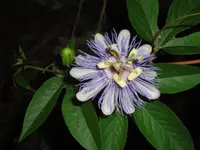
Maypop, Passiflora incarnata, is a vigorous, cold-hardy passionflower vine native to the southeastern United States. It is grown both as an ornamental and for its edible fruit. The plant climbs by tendrils, producing deeply lobed leaves and large, intricate flowers with white petals and purple filaments. These flowers are followed by egg-shaped fruits that turn yellow when ripe.
In suitable conditions, Maypop can spread quickly by underground runners and may become dominant in a garden bed. It prefers sun to light shade, moderately moist but well-drained soil, and some structural support. Understanding how to care for Maypop helps keep its growth controlled and flowering reliable.

Care Difficulty
Moderate Care

Light Preference
Full Sun

Water Requirements
Regular Water

Temperature Preference
Cold Hardy

Hardiness Zone
5–9

Soil Texture
Sandy, Loamy, Organic-rich

Soil pH
Acidic (5.5–6.5), Slightly acidic (6.5–7.0)

Soil Drainage
Moist but well-drained

Fertilization
Light (every 4–6 weeks)
Scan your plant to receive care tips personalized for your specific plant
Available on iOS and Android
This species is a sun-loving vine that flowers best with strong, direct light.
This vine prefers evenly moist, well-drained soil rather than constant wetness.
This hardy passionflower handles a wide temperature range but responds best to moderate warmth during the growing season.
This species prefers moderate outdoor humidity but generally adapts well in typical garden conditions.
This vine performs best in loose, well-drained soil that still retains moderate moisture.
This species is suitable for container growing when the pot and support are planned for vigorous vine growth.
Passiflora incarnata benefits from moderate feeding to support vigorous vine growth and flowering.
Pruning helps Passiflora incarnata stay manageable and flower well on accessible growth.
This species is usually grown in the ground, so care focuses more on transplanting than frequent repotting.
Passiflora incarnata is commonly propagated from root pieces, seeds, and softwood cuttings in warm conditions.
This vine is cold hardy in much of its range, with top growth often dying back while roots survive low temperatures.

Plant Health Check
Not sure what's wrong with your plant? Check your plant's health inside the app.
This species is one of the few passionflowers native to the southeastern United States that produces an edible, egg-sized fruit, often called maypop, which develops from the intricate flowers after pollination.
Its large, fragrant flowers are primarily pollinated by carpenter bees and bumblebees, which are strong enough to push past the corona filaments and contact the reproductive structures.
The foliage is an important larval food source for several butterfly species, including the Gulf fritillary and zebra longwing, whose caterpillars can feed heavily on the leaves without killing a mature vine.

Indigenous peoples in its native range traditionally used the fibrous stems for cordage and weaving, taking advantage of the strong, flexible vines long before the plant became popular in ornamental and edible gardens.
Lack of flowers usually comes from insufficient maturity, poor light intensity, or nutrient imbalance. Young vines often need 2–3 years. Avoid heavy nitrogen, ensure strong sun, and do not let roots stay cramped or repeatedly drought-stressed.
Keep your plants happy and healthy with plant identification, disease detection, and easy care guidance.