Provide climbing support
Install sturdy wire mesh or a heavy trellis before shoots emerge in late winter so the vigorous vine can immediately attach and climb without tearing nearby plants or fencing.

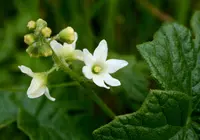
California manroot, Marah fabacea, is a vigorous perennial vine native to California and parts of the western United States. It grows from a large, rounded underground tuber that stores water and energy.
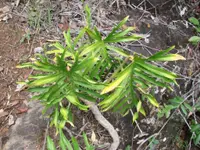
Above ground, the plant produces fast-growing, twining stems with deeply lobed green leaves and small, pale flowers, followed by spiny, cucumber-like fruits. It typically appears in chaparral, coastal scrub, and open woodlands.
California manroot is adapted to dry, Mediterranean-type climates and often dies back to the tuber during summer drought. It can be challenging to grow in small gardens due to its strong growth and large root, so planning ahead helps when you care for California manroot.

Care Difficulty
Moderate Care

Light Preference
Full Sun

Water Requirements
Low Water

Temperature Preference
Warm Climate

Hardiness Zone
7–10

Soil Texture
Sandy, Loamy, Rocky

Soil pH
Slightly acidic (6.5–7.0), Neutral (7.0)

Soil Drainage
Well-drained

Fertilization
Minimal (feed rarely)
Scan your plant to receive care tips personalized for your specific plant
Available on iOS and Android
This perennial vine prefers bright, direct light but tolerates some seasonal variation in exposure.
This deep-tubered vine is drought-tolerant and prefers infrequent, thorough watering once established.
This vine is adapted to Mediterranean-type climates with mild, wet winters and warm, dry summers.
Marah fabacea tolerates a wide humidity range and usually needs no special humidity management outdoors in its native-type conditions.
Marah fabacea prefers coarse, fast-draining mineral soils that mimic dry hillsides or rocky slopes.
This species can be grown in containers, but long-term success requires careful accommodation of its large tuber and vigorous vines.
This drought-adapted perennial vine usually performs well in native, unfertilized soils.
Pruning needs for Marah fabacea are minimal and mainly relate to safety and access.
This species is best grown in the ground because of its very large tuberous root.
Propagation of Marah fabacea is done mainly from seed and is moderately slow.
This native vine is generally cold hardy in its natural range and needs little winter care in the ground.

Plant Health Check
Not sure what's wrong with your plant? Check your plant's health inside the app.
This species forms a large, irregular underground tuber that can weigh several kilograms and serves as a water and carbohydrate storage organ, allowing the vine to survive long California dry seasons and resprout after summer dormancy or fire.
It produces distinctive spherical fruits covered in soft yet conspicuous spines; these seed capsules dry, split open, and release several large, hard seeds that can be dispersed downslope by gravity and winter rains.
In much of its range, the vine leafs out and flowers mainly in the cool, moist months from late winter to spring, then dies back to the tuber in summer, a growth pattern adapted to Mediterranean-type climates.

Marah fabacea is functionally dioecious to strongly monoecious, meaning individual plants bear separate male and female flowers on the same vine, and its flowers are primarily pollinated by native bees and other small insects that navigate the narrow, pale green to white corolla to reach nectar and pollen.
This species can spread widely via long vines and large underground tubers. In suitable conditions it may overwhelm nearby plants. Use sturdy supports and physical barriers, and remove unwanted seedlings or young tubers to keep growth contained.
Keep your plants happy and healthy with plant identification, disease detection, and easy care guidance.