Solandra guttata Care

Solandra guttata

About Solandra guttata

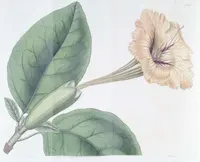
Solandra guttata, often called spotted chalice vine or giant cup, is a vigorous evergreen climber from tropical Mexico and Central America. It belongs to the nightshade family and tends to form long, woody vines that can cover supports quickly in warm climates.

The plant is known for its very large, cup-shaped yellow flowers marked with purple-brown spots and glossy, oval leaves. These dramatic blooms open mostly at night and have a strong fragrance.

Solandra guttata suits experienced growers better than complete beginners because it needs consistent warmth, bright light, and space to climb. Understanding how to care for Solandra guttata helps maintain healthy growth and regular flowering, especially in containers or protected outdoor settings.

Main Plant Requirements

Care Difficulty

Moderate Care

Light Preference

Full Sun

Water Requirements

Moderate Water

Temperature Preference

Tropical / Frost Sensitive

Hardiness Zone

10–11

Soil Texture

Sandy, Loamy, Organic-rich

Soil pH

Acidic (5.5–6.5), Slightly acidic (6.5–7.0)

Soil Drainage

Well-drained

Fertilization

Light (every 4–6 weeks)

Get Personalized Care Plan

Scan your plant to receive care tips personalized for your specific plant

Available on iOS and Android

How to Care for the Solandra guttata

This vigorous climber needs strong light to flower well while avoiding harsh burn.

  • Provide 6–8 hours of bright sun daily, with morning sun and light afternoon shade ideal, especially in hot climates.
  • Tolerates light or dappled shade for part of the day, but deep shade leads to weak growth, sparse blooms, and stretched, pale shoots in Solandra guttata.
  • In summer, protect from intense midafternoon sun on west- or south-facing walls; in winter, maximize exposure by keeping it unshaded and free from overhanging branches.

Watering should support fast growth without leaving the roots standing in soggy soil.

  • Allow the top 3–5 cm of soil to dry before deep watering, then soak the root zone thoroughly so moisture reaches the full planting depth.
  • In spring and summer, expect to water more often during hot, dry spells; in cooler or rainy periods, extend intervals and rely on natural rainfall when possible.
  • Use well-drained soil; watch for yellowing, soft leaves as a sign of overwatering and crisp, drooping leaves and dry stems as a sign that Solandra guttata is too dry.

This tropical vine thrives in warm, frost-free conditions with only limited temperature swings.

  • Aim for daytime temperatures around 70–85°F (21–29°C) and nights above 60°F (16°C) during active growth for strongest flowering and foliage.
  • Plant in the ground only where winter lows stay above 40°F (4°C); light, brief dips to 35–40°F (2–4°C) may be survived but can damage young tips.
  • Protect from frost, cold winds, and scorching heat above 95°F (35°C); in extreme heat, provide partial shade and extra airflow to reduce stress.

This species prefers moderately humid air but copes with typical indoor levels if watering is consistent.

  • Aim for 40–60% humidity, as very dry air increases leaf edge browning and bud drop.
  • Solandra guttata tolerates brief dips to 30% if soil moisture is stable and roots are not stressed.
  • Watch for crispy margins, curled leaves, and stalled growth as signs humidity is too low.
  • Increase humidity locally with a nearby humidifier or grouped plants rather than misting leaves.

This vine needs a fast-draining but moisture-retentive soil that prevents waterlogging around the roots.

  • Use a loose mix such as 50% peat- or coco-based potting soil, 30% compost, and 20% perlite or coarse sand for structure and drainage.
  • Aim for slightly acidic to neutral pH, roughly 6.0–7.0, to keep nutrients available and root growth steady.
  • In heavy native soil, raise the planting area or build a mound with added perlite, bark chips, and organic matter to improve aeration.
  • Avoid dense clay, compacted beds, or spots that stay wet longer than 1–2 days after watering or rain to reduce root disease risk.

This species is suitable for large, sturdy containers when its vigorous growth is managed with pruning and support.

  • Choose a wide, heavy pot that will not tip when the vine climbs or when strong winds catch the foliage.
  • Use a deep container to allow a substantial root system, which stabilizes the tall top growth and maintains even moisture uptake.
  • Position a strong trellis or support directly in the pot so stems can be tied early, preventing leverage that could crack the container.

This vigorous vine benefits from moderate feeding during its active growing season for strong growth and flowering.

  • Use a balanced liquid fertilizer (around 10-10-10 or 20-20-20) diluted to 1/2 strength every 4–6 weeks in spring and summer.
  • Alternatively, apply a slow-release balanced fertilizer or a thin layer of compost at the start of spring.
  • Skip or greatly reduce feeding in fall and winter when growth slows to avoid weak, leggy shoots.
  • Always water lightly before applying fertilizer to reduce root burn risk.

Pruning helps keep Solandra guttata manageable, encourages branching, and supports flowering on vigorous wood.

  • Plan main pruning for late winter or early spring before strong new growth begins.
  • Remove dead, diseased, storm-damaged, or crossing stems with sharp, clean bypass pruners or loppers.
  • Shorten overly long, tangled vines to shape the plant and keep it on its support structure.
  • After the main flush of flowers, lightly thin crowded shoots to improve light penetration and airflow.

Large, woody vines are usually grown in the ground, but container-grown plants may need occasional transplanting to maintain vigor.

  • Check for roots circling the pot, pushing through drainage holes, or slow growth as signs a container plant needs a larger home.
  • Time major repotting or outdoor transplanting for spring, once frost risk has passed and growth is starting.
  • Expect repotting every 2–3 years for young plants, shifting to only when clearly rootbound as the vine matures.
  • Move the root ball gently, keep roots as intact as possible, then water thoroughly and shade lightly for several days to reduce stress.

Gardeners most often propagate this species from semi-ripe stem cuttings for consistent flower and growth traits.

  • Take 10–15 cm semi-ripe cuttings in late spring to summer, including 2–3 nodes on each piece.
  • Remove lower leaves, dip the cut end in rooting hormone, and insert into a moist, well-drained mix such as perlite and peat or coco coir.
  • Maintain bright, indirect light, 70–80°F warmth, and high humidity until roots form, usually over several weeks.
  • Seeds are possible but slower and more variable, so they are used less often than cuttings for Solandra guttata plant care.

This tropical vine is frost-tender and needs protection in climates with cold winters.

  • In USDA zones colder than 10, grow in containers and move plants indoors before temperatures drop below 40°F.
  • Provide a cool, bright indoor spot, reduce watering, and stop feeding until spring growth resumes.
  • In mild frost-free areas, apply a 5–8 cm mulch layer over the root zone to stabilize soil temperature.
  • If an unexpected light frost occurs outdoors, cover the vine with breathable fabric to limit foliage damage.

Care Tips

Provide strong support

Install a heavy-duty trellis or wire mesh fixed to a wall or pergola before planting so the vigorous vine can be tied in and kept structurally safe as stems quickly thicken and become woody.

Train main leaders

Select 3–5 strong main stems and tie them loosely but firmly to the support, removing weak, tangled side shoots so the plant puts energy into a stable framework that will carry the large flowers.

Protect from wind

Site the plant where strong winds are buffered by walls, fences, or shrubs to prevent brittle, woody stems from snapping and to reduce damage to flower buds.

Monitor root spread

In the ground, periodically root-prune with a sharp spade around the drip line to limit excessive spread; in containers, root-prune and repot every 2–3 years to maintain vigor when growing Solandra guttata.

Plan for toxicity

Place the plant out of reach of children and pets and avoid planting next to seating or play areas, since all parts are toxic if ingested and pruning waste should be bagged and removed promptly.

Common Pests and Diseases

Spider mites

This pest often appears on Solandra grown in hot, dry, sheltered spots, causing fine webbing, pale stippling, and dull, bronzed foliage. Symptoms include slowed growth and premature leaf drop when infestations are heavy.

Solution

Rinse foliage thoroughly with a strong but controlled stream of water, including the leaf undersides, and repeat every few days for several cycles. If needed, apply insecticidal soap or horticultural oil labeled for mites, and keep humidity slightly higher and the plant well watered but not waterlogged to reduce stress during Solandra guttata care instructions.

Whiteflies

These insects congregate on the undersides of leaves and fly up in a small cloud when the plant is disturbed. Symptoms include sticky honeydew, sooty mold growth on leaves, and general decline in vigor.

Solution

Vacuum adults gently from foliage in the early morning, then use yellow sticky traps to monitor and reduce flying populations. Treat the leaf undersides with insecticidal soap or horticultural oil every 7–10 days until new growth is clean, and avoid excessive nitrogen fertilization that encourages soft, susceptible growth.

Leaf spot

This disease causes irregular brown, tan, or black spots on leaves, often with yellow halos, especially in warm, humid conditions with poor air circulation. Symptoms include premature leaf yellowing and drop, which can thin the canopy over time.

Solution

Prune and discard affected leaves and any dense, crossing stems to improve airflow around the vine. Water at soil level, avoid wetting foliage, and if outbreaks persist, use a copper- or chlorothalonil-based fungicide according to label directions while keeping the area around the plant free of fallen leaves.

Powdery mildew

This disease produces a white, powdery coating on leaves and young stems, typically in warm days and cooler nights with moderate humidity. Symptoms include distorted new growth and reduced flowering when the infection is heavy.

Solution

Remove and discard heavily infected leaves, and thin crowded stems to lower humidity around the plant surface. Improve light exposure and air movement, avoid overhead watering in the evening, and apply a labeled fungicide such as sulfur or a potassium bicarbonate product at the first sign of white patches.

Scale insects

This pest appears as small, immobile bumps on stems and leaf midribs, feeding on sap and excreting sticky honeydew. Symptoms include yellowing leaves, weak growth, and sometimes sooty mold on the honeydew-coated surfaces.

Solution

Gently scrape or wipe individual scales off with a cotton swab dipped in alcohol, then wash the plant with lukewarm water and mild insecticidal soap. For heavier infestations, apply horticultural oil thoroughly to stems and leaf undersides to smother remaining scales, repeating after 7–14 days as new crawlers emerge.

Interesting Facts

Night-fragrant blossoms

The large yellow flowers open in the evening and release a strong, sweet fragrance at night, an adaptation that attracts nocturnal pollinators such as moths and bats in its native range.

Color-changing corolla

Freshly opened flowers are bright yellow with purple-brown spots, then deepen in color and sometimes develop more pronounced markings as they age, which may help pollinators distinguish older, less rewarding blooms.

Woody liana habit

This species develops thick, woody, climbing stems that can scramble over trees and structures, allowing mature plants to form extensive, heavy canopies in frost-free climates.

Botan icon

Did you know?

In some parts of tropical America, traditional accounts describe the plant as having been used in ritual or ethnobotanical contexts because of its toxic alkaloid content, although its poisonous properties make it hazardous and unsuitable for casual or experimental use.

FAQs about Solandra guttata

Lack of blooms usually comes from insufficient maturity, light, or nutritional imbalance. This woody climber often flowers best once established, with stable warmth, strong support, and moderate feeding that is not excessively high in nitrogen.

Grow Healthy Plants with Botan Care

Keep your plants happy and healthy with plant identification, disease detection, and easy care guidance.

Botan plant care app — identify plants on mobile

Explore More Plants