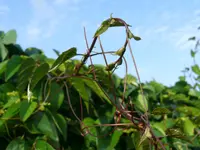
Virginia creeper Care (Parthenocissus quinquefolia)

Also known as: Woodbine, American Ivy
Virginia creeper

About Virginia creeper

Virginia creeper, Parthenocissus quinquefolia, is a vigorous woody vine known for its fast growth and strong clinging tendrils. It climbs using small adhesive pads that attach to walls, fences, and trees.

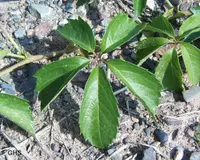
The foliage is made of five leaflets that emerge green and often turn striking red in autumn, giving strong seasonal interest in many landscapes. This species is native to eastern and central North America, where it grows in woodlands, thickets, and along edges.

It adapts to a wide range of light and soil conditions, which makes it generally easy to establish and maintain. Gardeners who learn how to care for Virginia creeper can use it effectively for quick coverage of large vertical or sloped areas.


Main Plant Requirements

Care Difficulty

Easy Care

Light Preference

Full Sun

Water Requirements

Moderate Water

Temperature Preference

Cold Hardy

Hardiness Zone

3–9

Soil Texture

Sandy, Loamy, Clay

Soil pH

Acidic (5.5–6.5), Slightly acidic (6.5–7.0)

Soil Drainage

Well-drained

Fertilization

Minimal (feed rarely)

Get Personalized Care Plan

Scan your plant to receive care tips personalized for your specific plant

Available on iOS and Android

How to Care for the Virginia creeper

This vigorous climber adapts to varied light but colors and grows best with sufficient sun exposure.

  • Provide 4–8 hours of direct sun daily; morning sun with light afternoon shade reduces leaf scorch in hot summers.
  • Tolerates partial shade, but Virginia creeper may produce sparser growth and less intense fall color with under 3–4 hours of sun.
  • In very bright, hot climates, avoid all-day, west-facing exposure; use dappled or filtered light during midsummer to limit leaf burn.

Parthenocissus quinquefolia prefers evenly moist, well-drained soil once established outdoors.

  • Before watering, let the top 3–5 cm of soil dry; the surface should feel dry, not just cool or damp to the touch.
  • Increase watering in the first growing season and during hot, dry spells, then reduce once deep roots form and rainfall is sufficient.
  • Signs of overwatering include yellowing, soft leaves and soggy soil, while underwatered vines show wilted, crisping foliage and slow shoot growth.

This hardy vine tolerates a wide temperature range and is well suited to outdoor climates with cold winters.

  • Active growth is strongest in spring and summer around 60–80°F (16–27°C), when shoots and leaves develop rapidly.
  • Mature plants usually survive down to about -20°F (-29°C); stems may die back in harsher cold, but roots often resprout in spring.
  • Handles summer heat up to about 90–95°F (32–35°C) if soil stays slightly moist, but prolonged extreme heat with drought can cause leaf scorch and early leaf drop.

This species tolerates a wide humidity range and seldom needs special humidity management outdoors.

  • Performs well in 30–70% humidity, as long as soil moisture is consistent and roots are not waterlogged.
  • Handles dry air and wind better than many vines, though prolonged hot, dry spells can slow growth.
  • Humidity stress shows as crisp leaf edges and premature leaf drop; deep, infrequent watering is more effective than misting for Virginia creeper.

Parthenocissus quinquefolia adapts to many soils but grows best in loose, well‑aerated ground with reliable drainage.

  • Aim for a loamy or sandy‑loam texture with moderate organic matter to balance moisture retention and air spaces around roots.
  • Ensure sharp drainage; standing water or compacted clay promotes root rot, so loosen heavy sites and avoid low spots.
  • A slightly acidic to neutral pH around 6.0–7.0 is suitable and usually needs no adjustment in most garden soils.
  • For container or new beds, mix roughly 2 parts garden soil with 1 part compost and 1 part coarse sand or perlite to improve structure and aeration.

This vigorous vine can be grown in containers if the pot is large, stable, and drains freely.

  • Choose a deep, heavy container (ceramic or thick plastic) to support climbing growth and reduce tipping in wind.
  • Use a tall trellis or sturdy support fixed directly to or anchored behind the pot to prevent leverage from pulling the container over.
  • Position the container where trailing stems cannot root into nearby soil, or place it on hardscape to keep growth truly confined.

Parthenocissus quinquefolia usually grows well in average soil and needs only light feeding to support vigorous growth.

  • Apply a balanced slow-release fertilizer (around 10-10-10) or a thin layer of compost in early spring as new growth starts.
  • Feed once more in mid-summer only if growth is weak or leaves are pale, avoiding overfertilization that encourages excessive, weak shoots.
  • Use fertilizer at 1/2 label strength for container-grown Virginia creeper, ensuring even soil moisture before and after application.
  • Do not fertilize in late fall or winter, when the plant is dormant and not actively using nutrients.

Parthenocissus quinquefolia responds well to pruning, which controls size and maintains safe, tidy growth on walls, fences, or trees.

  • Carry out main pruning in late winter or very early spring, before buds swell, to shape the vine and limit spread.
  • Remove dead, damaged, or crossing stems first, then thin congested areas to improve air flow and light penetration.
  • Shorten overly long shoots to strong buds or side branches to keep the vine within its support area and off roofs or gutters.
  • Use clean, sharp hand pruners or loppers and avoid tearing stems from masonry to prevent damage to both plant and structure.

This vigorous vine is usually grown in the ground, so Virginia creeper care instructions focus more on careful transplanting than container repotting.

  • Transplant in early spring or early fall when temperatures are mild and soil is workable, minimizing heat and drought stress.
  • Look for signs such as roots circling the container, water running off quickly, or slowed growth indicating a need to move or upsize.
  • Choose a site with strong support and well-drained soil; dig a wide hole and loosen the root ball gently without breaking major roots.
  • Water deeply after transplanting, keep soil evenly moist for several weeks, and use a light mulch to reduce evaporation and temperature swings.

Parthenocissus quinquefolia is commonly propagated from cuttings, natural layering, or seed when controlled spread is desired.

  • Take 10–15 cm softwood cuttings in late spring to early summer, using non-flowering shoots with 2–3 nodes.
  • Insert cuttings into moist, free-draining medium, keep at 65–75°F with high humidity, and provide bright, indirect light until rooted.
  • Pin low, flexible stems to soil to encourage layering; once strong roots form at nodes, detach and transplant the new plant.
  • Sow stratified seed in autumn or after cold treatment, using a well-drained seed mix and maintaining consistent moisture for germination.

This species is cold hardy across much of the US and typically needs minimal winter care once established in the ground.

  • In regions colder than its usual range or for young plants, apply a 5–8 cm mulch layer around the root zone after the first frosts.
  • Allow top growth to die back naturally; the woody framework generally reshoots in spring from buds and basal stems.
  • Move container-grown vines into an unheated garage, shed, or sheltered porch to prevent root damage from repeated freeze–thaw cycles.

Care Tips

Control Wall Clinging

If grown on buildings, install vertical wires or a trellis a few centimeters off the wall so tendrils grip the support instead of mortar or siding, and periodically detach new shoots that start rooting directly into cracks or under roof edges.

Root Zone Containment

To stop the plant from invading lawns or beds, sink a rigid root barrier 30–40 cm deep along property lines or paths and edge the area twice a year to cut back creeping surface stems.

Seasonal Cane Renewal

Every 2–3 years in late winter, remove several of the oldest, woody vines at the base to stimulate fresh, more manageable growth and maintain better foliage density from the ground up.

Support For Heavy Vines

Before stems reach full thickness, upgrade to sturdy, corrosion-resistant anchors and cables rated for outdoor use, checking annually that fixings are not pulling out of masonry or wooden posts under the vine’s weight.

Volunteer Seedling Management

Inspect nearby beds, gutters, fences, and neighboring yards each spring for self-sown seedlings and pull or cut them young, which is much easier than removing mature, woody plants later when caring for Virginia creeper.

Common Pests and Diseases

Leafhoppers

These insects suck sap from leaves, causing pale stippling, leaf curl, and sometimes browning along the edges, especially on sunny, exposed vines.

Solution

Prune and discard heavily infested shoots, then spray foliage with a strong jet of water to dislodge nymphs from the undersides of leaves. If needed, apply an insecticidal soap or ready-to-use neem oil in the evening, repeating every 7–10 days until new growth appears clean, and keep nearby weeds down to reduce reinfestation when caring for Virginia creeper.

Japanese beetles

These insects skeletonize leaves by eating the soft tissue between veins, often leaving large clusters of vines with lacy, brown foliage in midsummer.

Solution

Hand-pick beetles in the early morning into a container of soapy water and prune out the worst-damaged sections to encourage new growth. For larger outbreaks, place pheromone traps well away from the vine to draw beetles off the plant and consider a labeled spinosad or pyrethrin spray directed only to active feeding areas, following all label instructions carefully.

Powdery mildew

This disease produces white, powdery patches on upper leaf surfaces, which may lead to yellowing and early leaf drop during warm, dry periods with cool nights.

Solution

Improve air circulation by thinning dense growth and avoid wetting foliage in the evening. Remove and discard heavily infected leaves, then treat remaining foliage with a sulfur or potassium bicarbonate product labeled for ornamental vines, repeating at 7–14 day intervals while conditions favor disease.

Leaf spot

Symptoms include small brown or purplish spots that can enlarge and merge, causing irregular dead areas and premature leaf drop, especially in humid or rainy weather.

Solution

Collect and dispose of fallen leaves to reduce fungal spores and avoid overhead watering wherever possible. If spotting recurs each year, apply a copper-based or chlorothalonil fungicide early in the season at the first sign of spots, following label directions and allowing good drying between treatments.

Scale insects

These pests appear as small, immobile bumps on stems and sometimes leaf veins, causing yellowing leaves, reduced vigor, and sticky honeydew that can lead to sooty mold on the foliage or nearby surfaces.

Solution

Prune out and discard heavily infested stems, then scrub remaining stems gently with a soft brush dipped in soapy water to remove scale coverings. For persistent infestations, use a horticultural oil spray during the plant’s dormant season to smother overwintering scales, ensuring thorough coverage of all woody surfaces.

Interesting Facts

Adhesive disk climber

This vine climbs using branched tendrils that end in small adhesive disks, allowing it to attach to stone, bark, and many artificial surfaces without twining around them.

Bird-dispersed berries

Its dark blue, waxy berries are a high-energy food source for many bird species, which disperse the seeds over long distances and help the plant colonize new habitats.

Spectacular fall coloration

The palmately compound leaves, usually with 5 leaflets, often turn vivid red to burgundy in autumn, especially in full sun and cooler temperatures.

Botan icon

Did you know?

Parthenocissus quinquefolia can regenerate vigorously from root and stem fragments, which allows it to form extensive clonal thickets and makes physical removal difficult once it has become established in a site.

FAQs about Virginia creeper

This species spreads quickly by both stems and berries. It can blanket fences, trees, and walls within a few seasons. Regular pruning and removing unwanted seedlings are essential parts of Parthenocissus quinquefolia care in small gardens.

Grow Healthy Plants with Botan Care

Keep your plants happy and healthy with plant identification, disease detection, and easy care guidance.

Botan plant care app — identify plants on mobile

Explore More Plants