Provide climbing grid
Install a sturdy mesh or wire grid for the vines to twine through so stems are supported, flowers are displayed well, and airflow around the foliage stays high to reduce fungal problems.

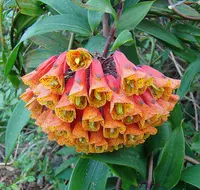
Bomarea hirsuta is a twining, tuberous perennial vine in the Alstroemeriaceae family, known for its clusters of tubular, often orange to red flowers. It typically climbs through surrounding vegetation or on supports, forming a dense, scrambling mass of stems and foliage.
This species is native to highland regions of South America, where it grows in cool, moist, mountain habitats. Its need for stable cool temperatures, support for climbing, and consistently moist but well-drained soil can make how to care for Bomarea hirsuta more challenging for beginners.
It generally prefers bright, indirect light, moderate humidity, and protection from extreme heat or frost, which suits mild outdoor climates or controlled greenhouse conditions.

Care Difficulty
Hard Care

Light Preference
Partial Shade

Water Requirements
Keep Soil Moist

Temperature Preference
Tropical / Frost Sensitive

Hardiness Zone
9–11

Soil Texture
Loamy, Sandy, Organic-rich

Soil pH
Acidic (5.5–6.5), Slightly acidic (6.5–7.0)

Soil Drainage
Moist but well-drained

Fertilization
Light (every 4–6 weeks)
Scan your plant to receive care tips personalized for your specific plant
Available on iOS and Android
This twining climber prefers bright, gentle light similar to an open woodland edge.
This species prefers consistently moist but not waterlogged soil during active growth.
This highland tropical vine prefers cool to mild conditions rather than intense heat.
This species prefers moderately humid air and reacts quickly to prolonged dryness.
This twining perennial performs best in loose, moisture-retentive yet fast-draining soil.
This vine adapts well to container growing when given adequate root depth and support.
This twining perennial benefits from moderate feeding to support steady growth and flowering.
Thoughtful pruning keeps this climbing species manageable and flowering well without heavy intervention.
This species is usually grown in the ground, but container-grown plants and young starts may need occasional transplanting.
New plants are most reliably produced by division or fresh seed under controlled conditions.
This plant prefers mild, frost-free conditions and benefits from extra protection in colder climates.

Plant Health Check
Not sure what's wrong with your plant? Check your plant's health inside the app.
This species produces clusters of orange, tubular flowers that are adapted to bird pollination, especially by hummingbirds in its native Andean range.
Bomarea hirsuta naturally grows as a twining vine in cool, high-elevation cloud forests, often scrambling over shrubs and trees rather than standing upright on its own.
True to its name, this species often shows noticeable hairiness on stems and leaves, a trait that may help reduce water loss and protect tissues in cool, humid mountain environments.
This species is a twining climber that uses nearby structures or plants for support. Stems wind around trellises, shrubs, or wires rather than sprawling along the ground, so vertical space is more important than wide planting areas.
Keep your plants happy and healthy with plant identification, disease detection, and easy care guidance.