downy thorn-apple Care (Datura innoxia)

Also known as: Hairy Thorn-apple, angel's trumpet, Prickly Datura, Pricklyburr Datura, pricklyburr, Recurved Thorn-apple, Moonflower, Indian Apple, Sacred Datura, White Thorn Apple, Silky Thorn Apple
downy thorn-apple

About downy thorn-apple

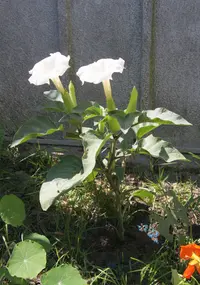
Downy thorn-apple (Datura innoxia) is a fast-growing, short-lived shrub or large annual often grown for its striking large white, trumpet-shaped night-blooming flowers. The stems and leaves are softly hairy, and the plant produces round, spiny seed pods that give it the common name thorn-apple.

It is native to warmer parts of the Americas and has naturalized in many subtropical and temperate regions, sometimes acting as a weed. The plant grows vigorously in warm conditions and poor to moderately fertile soils, but all parts are poisonous, which affects where and how to care for downy thorn-apple. It generally prefers full sun, good drainage, and moderate moisture.

Main Plant Requirements

Care Difficulty

Moderate Care

Light Preference

Full Sun

Water Requirements

Moderate Water

Temperature Preference

Tropical / Frost Sensitive

Hardiness Zone

9–11

Soil Texture

Sandy, Loamy, Organic-rich

Soil pH

Acidic (5.5–6.5), Slightly acidic (6.5–7.0)

Soil Drainage

Well-drained

Fertilization

Light (every 4–6 weeks)

Get Personalized Care Plan

Scan your plant to receive care tips personalized for your specific plant

Available on iOS and Android

How to Care for the downy thorn-apple

This sun-loving species needs strong light to bloom and branch well.

  • Provide 6–8 hours of direct sun daily; in hot climates, give downy thorn-apple morning sun with light afternoon shade to reduce scorch risk.
  • Plant in an open, unshaded spot; it tolerates brief partial shade but dense shade causes leggy stems, fewer flowers, and weaker growth.
  • In late spring, harden off young plants over 7–10 days, slowly increasing direct sun to prevent leaf burn after indoor or greenhouse starting.

This species prefers evenly moist but never waterlogged soil during active growth.

  • Water when the top 3–5 cm of soil feels dry; use this touch test rather than a fixed schedule, adjusting for local weather and soil type.
  • Choose well-drained soil; persistent puddling, yellowing leaves, and soft stems indicate overwatering or poor drainage, while drooping, dry leaves suggest underwatering.
  • Reduce watering frequency in cooler months or when growth slows, letting the soil dry slightly deeper while still preventing complete, prolonged drought for Datura innoxia.

This warm-season plant grows best in consistently mild to hot conditions without frost exposure.

  • Optimal growth occurs around 70–85°F (21–29°C); flowering and foliage quality decline if temperatures stay below 60°F (16°C) for long periods.
  • Protect from frost; it is damaged near 32°F (0°C) and should be treated as a tender perennial or annual in regions with freezing winters.
  • In hot climates, it tolerates short spikes up to about 95°F (35°C) if soil moisture is maintained; mulch roots to buffer temperature swings through summer.

This species handles a wide humidity range and usually does not need special adjustment in most homes or outdoor conditions.

  • Aim for 30–60% humidity; downy thorn-apple remains healthy even toward the lower end of this range.
  • Crisping leaf edges or stalled growth in very hot, dry wind can indicate mild humidity stress rather than watering issues.
  • In extreme dry heat, group plants together or place near other vegetation to create a slightly more humid microclimate without misting.

This plant prefers well-aerated, fast-draining, moderately fertile soil that never stays waterlogged.

  • Use a sandy or loamy base with plenty of coarse material so water drains freely yet roots still anchor well.
  • A mix of 50–60% potting soil, 20–30% coarse sand, and 20% perlite or fine gravel provides both structure and aeration for Datura innoxia.
  • Keep pH slightly acidic to neutral (6.0–7.0); incorporate a modest amount of compost, but avoid heavy, peat-clogged mixes that stay soggy.
  • Improve drainage in dense ground by raising the planting area into a low mound or blending in grit and coarse sand before planting.

This species is suitable for container growing when the pot is large, stable, and drains very efficiently.

  • Choose a deep, wide container to accommodate a strong taproot and heavy top growth, which reduces tipping in wind.
  • Select a heavier material like clay or thick ceramic in exposed sites to stabilize tall, top-heavy stems.
  • Raise the pot slightly on feet or bricks so drainage holes clear quickly and no standing water collects under the base.

Datura innoxia responds well to moderate feeding during its active growing season in warm weather.

  • Use a balanced liquid fertilizer (e.g., 10-10-10) at 1/2 strength every 2–3 weeks from late spring through summer.
  • Alternatively, mix slow-release granules into the topsoil at the start of the growing season for steady nutrients.
  • On rich garden soils, supplement with a light layer of compost instead of frequent synthetic feeding.
  • Stop feeding in fall and winter to allow natural rest and prevent weak, frost-sensitive growth.

Pruning supports a compact, floriferous shape in Datura innoxia and maintains plant health.

  • Best time is late spring once frost risk has passed, or lightly during summer after flushes of bloom.
  • Remove dead, diseased, or storm-damaged stems first, cutting back to healthy tissue with clean, sharp pruners.
  • Thin crowded interior branches to improve air flow and reduce fungal problems, keeping a balanced, open framework.
  • Tip back overly long shoots by 1/3 to encourage branching and more flower-bearing side stems.

Downy thorn-apple grows fast and often benefits from timely transplanting or pot upgrades.

  • Transplant or up-pot in late spring when soil is warm and frost risk is low for quickest recovery.
  • Look for roots circling the pot, water running straight through, or slowed growth as signs a move is needed.
  • Shift into a container 5–8 cm wider, using a well-drained mix; gently loosen circling roots without tearing.
  • Water thoroughly after transplanting, then keep soil slightly moist and shaded for a few days to limit transplant shock.

This species is most commonly propagated from seed, which allows quick production of new plants.

  • Sow fresh seeds in late winter to early spring in a warm, bright place, ideally 70–75°F.
  • Scarify hard seed coats lightly with sandpaper, then soak 12–24 hours to improve germination.
  • Use a sterile, well-drained seed mix; barely cover seeds and keep evenly moist, not waterlogged.
  • Softwood cuttings in late spring can root in warm, humid conditions, but success is less consistent than with seed.

This plant is frost-sensitive and needs protection in climates with freezing winters.

  • In USDA zones colder than 9, treat outdoor plants as annuals or lift container plants indoors before frost.
  • Move pots to a bright, cool indoor spot and reduce watering so soil dries slightly between waterings.
  • In mild climates, a 5–8 cm mulch layer around the root zone helps buffer brief cold snaps and soil temperature.

Care Tips

Use protective barriers

Install a simple wire or mesh barrier around young plants to prevent accidental contact or ingestion by children, pets, or livestock, since every part of this species is highly toxic.

Pinch for branching

Pinch out the soft tips of young stems when plants are 20–30 cm tall to encourage a bushier shape with more flowering branches rather than a single lanky stem.

Night bloom monitoring

Check flowers and buds in the evening or early morning, when blooms are open, to spot early signs of budworm damage or fungal spots that can be missed during midday inspections.

Root-zone mulching

Apply a 3–5 cm layer of coarse organic mulch around, but not touching, the stem to reduce soil splash on lower leaves, limit weed competition, and buffer short dry or hot spells.

End-of-season sanitation

At the end of the growing season, remove and dispose of all spent plants, seed pods, and leaf litter in the trash rather than compost to reduce self-seeding and lower pest and disease carryover when growing downy thorn-apple.

Common Pests and Diseases

Tobacco budworm

This pest commonly bores into buds and flowers, causing holes, browning, and premature drop of blooms on downy thorn-apple.

Solution

Hand-pick caterpillars at dusk or early morning, dispose of damaged buds, and use Bacillus thuringiensis (Bt) on foliage and buds according to label directions; reduce nearby weedy hosts, especially in warm regions where the insect persists through the season.

Spider mites

These insects thrive in hot, dry conditions, causing fine stippling on leaves, webbing on undersides, and gradual yellowing and leaf drop.

Solution

Rinse foliage thoroughly with a strong but controlled jet of water, focusing on leaf undersides, then maintain slightly higher humidity and apply insecticidal soap or horticultural oil at 5–7 day intervals until new growth appears clean.

Whiteflies

This pest feeds on leaf sap, leading to yellowing, leaf drop, and sticky honeydew that can support sooty mold on leaves and nearby surfaces.

Solution

Shake the plant gently to detect adults, then vacuum or trap flying insects with yellow sticky cards and treat leaf undersides with insecticidal soap or horticultural oil, repeating applications to break the life cycle.

Leaf spot

This disease causes tan to brown spots with darker margins on leaves, sometimes merging into larger blotches that lead to partial defoliation in humid or wet conditions.

Solution

Remove and discard spotted leaves, avoid overhead watering, and improve spacing and airflow; in persistent humid climates, apply a copper-based or chlorothalonil fungicide at the first signs of spotting following label directions.

Powdery mildew

This disease produces white, powdery patches on upper leaf surfaces, which can cause leaf distortion, yellowing, and reduced flowering if extensive.

Solution

Increase airflow, avoid crowding, and water at the soil level; prune lightly to remove the most affected leaves and, if needed, use a sulfur or potassium bicarbonate fungicide labeled for ornamentals at early stages of infection.

Interesting Facts

Night-opening fragrant flowers

This species opens its large white trumpet-shaped flowers in the evening and at night, releasing a strong sweet scent that attracts nocturnal pollinators such as moths.

Distinctive downy foliage

The leaves and young stems are covered with fine, soft hairs, giving the plant a gray-green, velvety appearance that helps reduce water loss in hot, dry conditions.

Spiny fruit capsules

It produces round, green, spiny capsules that split open when mature to release many flat seeds; these capsules are a key feature used to distinguish it from related species with smoother fruits.

Botan icon

Did you know?

All parts of Datura innoxia contain potent tropane alkaloids such as scopolamine and hyoscyamine, and ingestion can cause severe, unpredictable poisoning in humans and animals, which is why many regions treat it as a hazardous invasive weed rather than an ornamental plant.

FAQs about downy thorn-apple

Lack of flowers often comes from insufficient light, cool temperatures, or too much nitrogen fertilizer. Ensure a long, warm growing season, avoid heavy shade, and use a balanced or low‑nitrogen fertilizer to support bud formation.

Grow Healthy Plants with Botan Care

Keep your plants happy and healthy with plant identification, disease detection, and easy care guidance.

Botan plant care app — identify plants on mobile

Explore More Plants