Early-season thinning
Sow more thickly than needed, then thin seedlings to 10–15 cm apart as soon as they have 2–3 true leaves so each plant has enough light and airflow to develop a strong rosette and taproot.

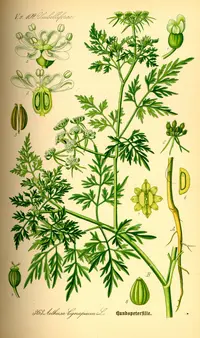
Fool's parsley (Aethusa cynapium) is an annual herb in the carrot family, often mistaken for harmless wild parsley. It has finely divided, glossy green leaves and small white umbrella-shaped flower clusters. The plant typically appears in disturbed soils, fields, roadsides, and gardens across Europe and many temperate regions, where it can self-seed and spread quickly. It is not grown as an ornamental and is considered a poisonous weed, which strongly affects how to care for fool's parsley in any setting. It favors moist, fertile, well-drained soil and open, sunny to lightly shaded positions, which helps explain its frequent appearance in cultivated ground.

Care Difficulty
Hard Care

Light Preference
Partial Shade

Water Requirements
Regular Water

Temperature Preference
Cool Climate

Hardiness Zone
5–9

Soil Texture
Loamy, Silty, Organic-rich

Soil pH
Slightly acidic (6.5–7.0), Neutral (7.0)

Soil Drainage
Moist but well-drained

Fertilization
Minimal (feed rarely)
Scan your plant to receive care tips personalized for your specific plant
Available on iOS and Android
This annual herb prefers bright outdoor exposure without intense, prolonged midday sun.
This species performs best in moist but not saturated soil throughout its growing season.
This temperate annual grows best in mild, not extreme, outdoor conditions.
Humidity is rarely critical for Aethusa cynapium, which copes well in typical outdoor air.
Soil for Aethusa cynapium should stay evenly moist yet free-draining to prevent root problems.
This species can be grown in containers outdoors when moisture and drainage are managed carefully.
This annual herb typically needs no fertilizer when grown in reasonably fertile garden soil, so caring for fool's parsley focuses more on site choice than feeding.
Pruning Aethusa cynapium is minimal and mainly for appearance and seed control in garden settings.
This species is usually grown outdoors and prefers direct sowing or gentle transplanting rather than frequent repotting.
Propagation of this annual is typically done by seed rather than vegetative methods.
This annual plant is cold tolerant as seed but does not need active winter care once the season ends.

Plant Health Check
Not sure what's wrong with your plant? Check your plant's health inside the app.
Fool's parsley closely resembles common culinary parsley, especially in young stages, but it is poisonous and has historically caused accidental poisonings when misidentified and used as food.
Crushed leaves and stems emit an unpleasant, acrid smell, which helps distinguish this species from edible parsley that has a fresh, aromatic scent.
Contact with the plant's sap can sometimes cause local skin irritation or allergic reactions in sensitive individuals, particularly during handling or weeding in sunny conditions.

In several European languages, the common name for this species links it to mistaken identity or folly, reflecting a long cultural history of people confusing it with edible parsley despite its toxicity.
This species is highly poisonous to humans and animals. All parts contain toxic alkaloids that affect the nervous system. Ingestion can cause vomiting, diarrhea, abdominal pain, confusion, and potentially life‑threatening respiratory problems. It must never be eaten.
Keep your plants happy and healthy with plant identification, disease detection, and easy care guidance.