American jumpseed Care (Persicaria virginiana)

American jumpseed

About American jumpseed

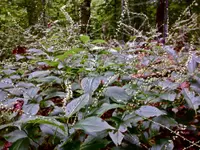
American jumpseed, Persicaria virginiana, is a woodland perennial in the knotweed family. It forms loose clumps of upright stems with pointed leaves and airy flower spikes. The tiny greenish to pink flowers line slender wands that can bend and “jump” when seeds are released, giving the plant its common name. Native to eastern North America, it usually grows in open woods, along streams, and in shaded edges. It tends to be adaptable and resilient, which makes it relatively simple to care for American jumpseed in naturalistic or shade gardens. It prefers partial shade, consistent moisture, and humus-rich soil but tolerates a range of typical garden conditions.

Main Plant Requirements

Care Difficulty

Easy Care

Light Preference

Partial Shade

Water Requirements

Regular Water

Temperature Preference

Cold Hardy

Hardiness Zone

4–8

Soil Texture

Loamy, Clay, Organic-rich

Soil pH

Acidic (5.5–6.5), Slightly acidic (6.5–7.0)

Soil Drainage

Moist but well-drained

Fertilization

Minimal (feed rarely)

Get Personalized Care Plan

Scan your plant to receive care tips personalized for your specific plant

Available on iOS and Android

How to Care for the American jumpseed

This woodland perennial prefers bright but gentle light similar to a lightly shaded forest edge.

  • Provide 2–4 hours of direct morning sun with dappled or open shade the rest of the day for best foliage and flowering.
  • Tolerates full shade but may grow taller, lean, and flower less; avoid more than 4–5 hours of strong afternoon sun in hot summers.
  • In hotter zones, increase shade from late spring to early fall to prevent leaf scorch on American jumpseed, especially in dry or exposed sites.

This species prefers consistently moist soil but not stagnant or waterlogged conditions.

  • Water when the top 2–3 cm of soil feels slightly dry, aiming to keep the root zone evenly damp, especially during the first 1–2 growing seasons.
  • In Persicaria virginiana, wilting at midday that recovers by evening is normal, but persistent droop, crisp edges, or curling indicate the soil is too dry.
  • Yellowing lower leaves, soft stems, or a sour smell from the soil suggest overwatering or poor drainage; improve drainage rather than reducing water alone.

This hardy perennial tolerates a wide temperature range typical of temperate outdoor gardens.

  • Optimal active growth occurs around 60–80°F (16–27°C), with strongest vegetative growth in the cooler part of this range.
  • Fully dormant roots can survive down to about -20°F (-29°C) in the ground when mulched, making it hardy through most cold winters.
  • In hot climates, plants handle brief periods up to about 90°F (32°C) if soil stays moist; extended heat with dry soil leads to leaf scorch and earlier dormancy.

This species grows well in typical outdoor humidity and rarely needs special humidity management.

This woodland perennial prefers consistently moist, humus-rich soil with steady drainage.

  • Use a loamy mix with high organic matter, such as garden soil blended with leaf mold or compost.
  • Aim for slightly acidic to neutral pH around 6.0–7.0, avoiding highly alkaline substrates.
  • Improve drainage and aeration by loosening heavy clay with coarse compost and small pine bark pieces.
  • Avoid compacted or waterlogged sites, as Persicaria virginiana can decline in stagnant, air-poor conditions.

This species can grow in containers outdoors if the pot supports its spreading root system and moisture needs.

  • Choose a wide, relatively deep container to accommodate spreading rhizomes and prevent crowding at the edges.
  • Select a heavier pot material, such as ceramic or thick plastic, to keep the container stable as stems elongate.
  • Use a moisture-retentive but draining mix and water thoroughly until excess drains quickly from the holes.

Persicaria virginiana grows well in average soil and generally needs only light feeding.

  • In garden beds, mix in a thin layer of compost around the clumps each spring to refresh nutrients.
  • Use a balanced slow-release fertilizer (around 10-10-10) once in early spring for plants in poorer soils.
  • For container-grown American jumpseed, apply half-strength balanced liquid fertilizer every 4–6 weeks during active growth.
  • Stop feeding in late summer so growth hardens before winter, and do not fertilize during dormancy.

Pruning Persicaria virginiana is mainly done to control spread and keep the plant tidy.

  • Cut back dead or damaged stems in early spring using clean, sharp hand pruners.
  • Shear or deadhead spent flower spikes in mid to late summer to reduce self-seeding and maintain shape.
  • Remove crowded or weak stems at the base to improve airflow and encourage stronger growth.
  • If plants flop, trim taller stems by up to one-third before flowering to create a denser mound.

This species is usually grown in the ground, so focus on thoughtful transplanting rather than frequent repotting.

  • Plan transplanting for early spring or early fall, when temperatures are mild and soil is evenly moist.
  • Move clumps when growth slows, centers thin, or plants outgrow their space, usually every 3–5 years.
  • Dig widely around the root mass, lift gently, and replant at the same depth in well-prepared soil.
  • Water thoroughly after transplanting, then keep soil evenly moist for several weeks to reduce root stress.

Persicaria virginiana is commonly propagated by division or seeds under simple garden conditions.

  • Divide mature clumps in early spring or early fall, ensuring each division has several buds and healthy roots.
  • Replant divisions immediately into moist, well-drained soil and water thoroughly to settle air pockets.
  • Sow fresh seeds outdoors in fall so natural winter chilling improves germination in spring.
  • For indoor seed starting, provide 4–6 weeks of cold stratification in moist medium, then bright light and mild warmth.

This perennial is generally cold hardy in much of the US and needs only minimal winter care outdoors.

  • After hard frost, allow stems to die back naturally, then cut them close to the ground.
  • Apply a 5–7 cm layer of mulch around the root zone in late fall to moderate freeze–thaw cycles.
  • Container plants in colder zones should be sunk into the ground, heavily mulched, or moved into an unheated shelter.

Care Tips

Contain Spreading

Install a shallow root barrier or sink bottomless nursery pots into the soil to prevent unwanted spread while still allowing the plant to form a dense clump.

Mulch For Stability

Apply a 3–5 cm layer of shredded bark or leaf mold around the base to keep soil evenly moist, reduce heaving in freeze–thaw cycles, and suppress competing weeds.

Support Tall Stems

In exposed or windy sites, use low discreet hoops or short ring supports early in the season so stems can grow through and remain upright without snapping.

Timed Division

Divide mature clumps every 3–4 years in early spring just as new shoots emerge, replanting outer vigorous sections at the same depth to maintain flowering performance and control size.

Self-Sown Seed Management

Deadhead fading spikes before seed drop where spread is not desired, or deliberately shake mature spikes over a prepared patch in late summer if you want to grow American jumpseed as a loose naturalized colony.

Common Pests and Diseases

Leaf spot

This disease causes small brown to purplish spots that can merge into larger blotches on older leaves, especially in humid, shaded sites.

Solution

Remove and discard heavily spotted leaves and any fallen debris, then thin nearby vegetation to improve airflow and reduce leaf wetness; if the plant is in a landscape bed, avoid overhead watering and, in persistent cases, use a copper-based fungicide labeled for ornamental perennials according to the product directions.

Powdery mildew

This disease produces a white to gray powdery coating on upper leaf surfaces, leading to dull, distorted foliage in late summer or in crowded plantings.

Solution

Increase spacing and light, remove the worst affected leaves, and water at soil level; in recurring cases, apply a sulfur or potassium bicarbonate product labeled for powdery mildew on ornamentals, starting early in the season when the first faint patches appear.

Aphids

These insects cluster on young stems and undersides of leaves, sucking sap and causing distortion, sticky honeydew, and occasionally sooty mold on foliage.

Solution

Blast colonies off with a firm stream of water, then follow up with insecticidal soap or a light horticultural oil, making sure to coat the undersides of leaves; limit high-nitrogen fertilization, which encourages the tender growth aphids prefer when growing American jumpseed.

Spider mites

These pests create fine webbing and tiny yellow stippling on leaves, especially in hot, dry weather or where plants grow in reflected heat.

Solution

Rinse foliage thoroughly, including leaf undersides, to physically remove mites, then maintain higher humidity around the plant and repeat washing every few days; for persistent infestations outdoors, use a horticultural oil or insecticidal soap directed at the undersides of leaves, applied in the early morning or evening.

Slugs and snails

These pests chew irregular holes in leaves, often leaving slimy trails, and are most active in damp, shaded plantings or dense groundcover patches.

Solution

Hand-pick at night or early morning, reduce hiding spots by clearing mulch mats and dense debris, and place iron phosphate slug baits around but not directly on crowns; copper tape barriers or rough mineral mulches can also reduce damage around small, high-value clumps.

Interesting Facts

Explosive seed dispersal

The tiny nutlets are launched from the mature seed pods when disturbed, a form of ballistic dispersal that inspired the common name American jumpseed.

Shade-tolerant woodland herb

This species naturally grows in deciduous forests and along shaded streambanks in eastern North America, where it thrives under filtered light and moist, humus-rich soil.

Distinctive late-season spikes

It produces slender, wiry flowering spikes from late summer into fall, with small, often bicolored flowers and persistent seeds that add fine texture when many woodland plants are already fading.

Botan icon

Did you know?

Genetic and morphological studies have shown that this species is quite variable across its range, and some botanists recognize distinct varieties such as Persicaria virginiana var. virginiana and P. virginiana var. sublaevigata to capture differences in hairiness, leaf shape, and habitat preferences.

FAQs about American jumpseed

This species spreads by both seed and rhizomes, forming colonies over time. In suitable woodland or shade gardens it can naturalize strongly. Deadheading flower spikes and removing unwanted seedlings help keep it within boundaries when needed.

Grow Healthy Plants with Botan Care

Keep your plants happy and healthy with plant identification, disease detection, and easy care guidance.

Botan plant care app — identify plants on mobile

Explore More Plants