Encourage Wall Coverage
To help the plant knit into walls or rock crevices, gently tuck young stems into cracks or behind loose mortar so new roots can anchor directly where coverage is desired.

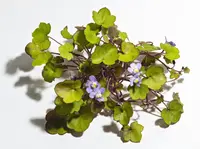
Ivy-leaved toadflax, Cymbalaria muralis, is a trailing, mat-forming perennial often seen cascading from walls, rock crevices, and old masonry. It has small, rounded, ivy-like leaves and delicate lavender to pale purple flowers with yellow throats. Native to southern Europe, it has naturalized widely in temperate regions, especially in urban areas where it self-seeds into cracks and shaded corners. This plant is resilient, spreads easily, and generally needs little attention once established. It prefers partial shade, cool conditions, and moist but well-drained soil, which makes it easy to care for Ivy-leaved Toadflax in many garden and container settings.

Care Difficulty
Easy Care

Light Preference
Partial Shade

Water Requirements
Moderate Water

Temperature Preference
Cold Hardy

Hardiness Zone
5–9

Soil Texture
Loamy, Rocky, Organic-rich

Soil pH
Acidic (5.5–6.5), Slightly acidic (6.5–7.0)

Soil Drainage
Well-drained

Fertilization
Minimal (feed rarely)
Scan your plant to receive care tips personalized for your specific plant
Available on iOS and Android
This trailing wall plant prefers bright, cool exposure with protection from harsh midday sun.
This species prefers lightly moist, not saturated, conditions with good drainage.
This hardy wall plant tolerates a wide temperature range but performs best in mild conditions.
Humidity is not critical for Cymbalaria muralis, which handles a wide range of household and outdoor conditions.
Soil for this trailing species should be light, well-drained, and slightly moist yet never waterlogged.
This species is very suitable for containers, especially for trailing over edges or softening walls and steps.
This species is low maintenance and Ivy-leaved Toadflax usually needs only light feeding in pots or poor soils.
Cymbalaria muralis responds well to light pruning that manages spread and keeps growth tidy.
This trailing plant is more often transplanted in the garden than repotted, but container-grown clumps may need attention over time.
New plants are commonly produced from small rooted pieces, as Cymbalaria muralis spreads along walls and cracks.
This species is quite cold hardy in many temperate regions and usually needs minimal winter care outdoors.

Plant Health Check
Not sure what's wrong with your plant? Check your plant's health inside the app.
The leaves and flower stalks actively grow toward darker, shaded surfaces such as walls or rock faces, then turn so that the leaf blades themselves face the light. This combination of negative phototropism in the stems and positive phototropism in the leaves helps the plant colonize vertical surfaces efficiently.
Its seeds bear small, oil-rich appendages called elaiosomes that attract ants. Ants carry the seeds to their nests, eat the elaiosomes, and discard the viable seeds, effectively spreading the plant into cracks and crevices.
The species is native to southern Europe but spread widely through cultivation in monastery and ornamental gardens. From there it naturalized across much of Europe and later other temperate regions, thriving especially on old stone walls and masonry.

The flowers show a simple form of self-incompatibility, so a single isolated plant often sets little seed, but once several genetically distinct individuals grow together, cross-pollination by small bees and hoverflies can produce large numbers of viable seeds that rapidly colonize nearby stonework.
This species spreads quickly by seed and creeping stems, especially in cracks, walls, and rockwork. It is usually easy to pull out but can self-sow widely, so remove unwanted seedlings before they mature and set seed.
Keep your plants happy and healthy with plant identification, disease detection, and easy care guidance.