BotaN logo

Japanese wisteria Care (Wisteria floribunda)

Japanese wisteria

About Japanese wisteria

Japanese wisteria (Wisteria floribunda) is a long-lived woody vine known for its dramatic, hanging flower clusters in shades of lavender, purple, pink, or white. It forms strong, twining stems that can cover pergolas, walls, or sturdy supports and develops a thick, woody trunk over time.

This species is native to Japan and has been widely planted in temperate gardens for its showy spring display and light fragrance. It can be vigorous and heavy, so it needs solid structures and regular pruning.

For those learning how to care for Japanese wisteria, its main needs are full sun, well-drained soil, and enough space to grow. Once established, it is generally hardy but slow to flower if planted in poor conditions or pruned incorrectly.

Main Plant Requirements

Care Difficulty

Moderate Care

Light Preference

Full Sun

Water Requirements

Moderate Water

Temperature Preference

Cold Hardy

Hardiness Zone

4–9

Soil Texture

Loamy, Sandy, Clay

Soil pH

Slightly acidic (6.5–7.0), Neutral (7.0)

Soil Drainage

Moist but well-drained

Fertilization

Minimal (feed rarely)

Get Personalized Care Plan

Scan your plant to receive care tips personalized for your specific plant

Available on iOS and Android

How to Care for the Japanese wisteria

This vine needs strong sun exposure to flower heavily and develop sturdy growth.

  • Provide 6–8 hours of direct sun daily; in hot climates, prioritize morning sun with light afternoon shade to prevent leaf scorch.
  • Japanese wisteria tolerates light partial shade (4–5 hours sun), but flowering will be reduced and growth can become sparse or leggy.
  • In late winter to early spring, ensure overhead trees are not shading the plant; by midsummer, some dappled shade can help reduce heat stress.

This plant prefers evenly moist but not saturated soil, especially during establishment and flowering.

  • Water when the top 3–5 cm of soil feels dry, applying a deep soak that penetrates the root zone rather than frequent shallow watering.
  • During the first 2–3 growing seasons, monitor closely in dry spells; wilting, dull foliage, or dropping buds signal underwatering, while yellowing leaves and soggy soil indicate overwatering.
  • Ensure soil drains freely; avoid standing water around the crown, and reduce watering frequency in late fall and winter when Wisteria floribunda is dormant.

This hardy climber tolerates a wide temperature range but has specific needs for reliable flowering and long-term health.

  • Active growth is strongest around 65–80°F (18–27°C); shoots elongate quickly and flower buds develop best under these moderate conditions.
  • Established plants endure winter cold to about 0°F (−18°C) or slightly lower, but late frosts just below 32°F (0°C) can damage young spring shoots and flower buds.
  • In summer heat above 90°F (32°C), growth may slow; provide mulch to keep roots cooler and avoid planting in heat-reflective spots near walls or pavements.

This vine handles a wide humidity range and usually does not need special humidity management outdoors.

  • Aim for 30–60% humidity; typical outdoor conditions in most temperate regions are suitable for Japanese wisteria.
  • Plant where air circulates freely to prevent prolonged leaf wetness, which encourages fungal problems rather than relieving stress.
  • If grown in a very dry, windy spot, use mulch over the root zone to limit moisture loss from soil rather than misting foliage.

This species prefers deep, well‑structured, freely draining ground that still holds some moisture.

  • Use a loamy, slightly clayey soil that crumbles easily in the hand and is at least 30–45 cm deep to support the strong root system of Wisteria floribunda.
  • Ensure drainage is rapid by avoiding compacted areas; incorporate coarse sand or fine gravel if water lingers on the surface after rain.
  • Aim for a slightly acidic to neutral pH of about 6.0–7.0; in very alkaline soil, flowering and nutrient uptake may decline over time.
  • Before planting, blend in compost to increase organic matter and soil life, but avoid heavy, peat‑only or constantly soggy mixes that suffocate roots.

This vine can be grown in containers, but it remains demanding and needs careful structural support and moisture control.

  • Choose a very heavy, wide container to counterbalance the top‑heavy growth and reduce the risk of the pot tipping in strong wind.
  • Select a pot at least 40–50 cm deep so the woody root system has space to anchor and does not circle tightly near the surface.
  • Use a stable trellis or rigid frame fixed directly into or behind the container so climbing stems do not pull the pot off balance as they thicken.

Wisteria floribunda benefits from modest, targeted feeding to support flowering rather than leafy overgrowth.

  • Apply a balanced slow-release fertilizer (around 10-10-10) once in early spring as new growth starts, focusing on flowering rather than foliage.
  • Avoid high-nitrogen lawn fertilizers near Japanese wisteria, which encourage excessive leaf growth and fewer blooms.
  • Use light compost or well-rotted manure as a thin top-dress, keeping it away from the main stem to prevent rot.
  • Do not feed in late fall or winter; stop fertilizing by late summer to allow wood to harden before cold weather.

Pruning Wisteria floribunda is essential for controlling size and encouraging abundant flowering wood.

  • Use clean, sharp bypass pruners or loppers to remove dead, damaged, or crossing stems at any time.
  • Carry out main structural pruning in late winter, shortening long whippy shoots to 2–3 buds to concentrate flowering spurs.
  • In mid to late summer, trim back vigorous new growth to keep the framework tidy and direct energy to flower bud formation.
  • Gradually train and tie main stems to their support, removing congested side shoots to maintain a clear, well-ventilated structure.

Established plants are usually grown in the ground, so care focuses more on transplanting than frequent repotting.

  • Transplant container or young Wisteria floribunda in late fall or early spring while dormant, when stress is lowest.
  • Look for roots circling the pot, water running straight through, or slowed growth as signs a container plant has outgrown its space.
  • Move up only 1–2 pot sizes or into a permanent ground position with a wide, deep, well-drained hole and sturdy support in place.
  • Handle the root ball gently, loosening only the outer roots, then water deeply and keep evenly moist until new growth shows good establishment.

New plants are commonly raised from cuttings or layering, with seeds mainly for breeding or patience projects.

  • Take semi-ripe cuttings in mid to late summer, 8–10 cm long, and root them in a free-draining mix under high humidity and bright, indirect light.
  • Use simple layering in spring by bending a flexible stem to the ground, lightly wounding, pinning, and covering it with soil until roots form.
  • Sow fresh seeds in spring in a cold frame or sheltered spot, understanding seedlings may differ from the parent in flowering quality.
  • For consistent flowering, many gardeners rely on named cultivars grafted onto seedling rootstocks by experienced nurseries.

Mature Wisteria floribunda is generally cold hardy in much of the US and needs only modest winter attention.

  • Tolerates typical winters in USDA zones around 5–9, though very young plants benefit from extra protection.
  • Apply a 5–8 cm layer of organic mulch around the root zone in late fall, keeping it slightly away from the main stem.
  • In colder areas, wrap young or newly planted vines and their support with burlap to reduce freeze damage to buds and stems.
  • Move container-grown plants into a sheltered, unheated but frost-sheltered location, watering sparingly so the root ball never fully dries.

Care Tips

Early framework training

In the first 2–3 years, select 1–3 strong stems to become permanent leaders, tie them loosely to wires or a pergola beam, and remove competing shoots so the plant forms a clear framework that will support heavy growth later.

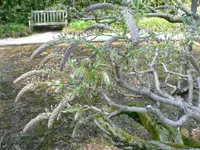
Spur system for flowers

Once the main framework is established, shorten lateral shoots along each leader to 10–15 cm in summer and then to 2–3 buds in late winter to create a spur system that concentrates energy into flower bud production rather than long whips.

Robust support structure

Install permanent supports such as 4×4 in posts, heavy crossbeams, or tensioned wire systems before the plant matures, since established vines become woody and heavy and can deform weak fences or trellises over time.

Root restriction technique

To encourage better flowering, plant in open ground but avoid over-rich, deeply cultivated soil and lightly root-prune with a spade in a shallow circle 60–90 cm from the trunk in late fall if the vine is very vigorous but not blooming well.

Bud and pod management

In late winter, learn to distinguish the plump flower buds from thinner leaf buds and avoid cutting off too many flower buds when tidying, then remove spent pods after flowering so the plant does not divert resources into seed production when growing Japanese wisteria.

Common Pests and Diseases

Wisteria scale

This pest appears as small, dome-shaped brown or gray bumps on stems and older wood, often causing poor flowering and dieback of twigs. Symptoms include sticky honeydew and sooty mold on leaves or surfaces below the plant.

Solution

Prune out and destroy heavily infested stems, then scrub remaining woody parts with a soft brush and soapy water to dislodge scales. For larger plants, use a horticultural oil spray in late winter to smother overwintering scales and repeat in early summer if needed, making sure to thoroughly coat branches and undersides of stems.

Japanese beetles

These insects skeletonize leaves by eating the soft tissue between veins and sometimes chew young flower buds. Damage is most obvious in mid-summer when clusters of metallic green beetles gather on foliage and blooms.

Solution

Hand-pick beetles in the early morning when they are sluggish and drop them into a container of soapy water, focusing on heavily clustered areas first. To reduce future pressure, avoid placing beetle traps near the vine and consider using row covers or netting to protect young foliage during peak flight periods in regions with chronic infestations.

Leaf spot

This disease causes small brown, tan, or purple spots on leaves that may merge into larger blotches, leading to premature leaf drop in humid weather. Symptoms include more severe spotting on lower, shaded foliage where moisture lingers longest.

Solution

Remove and discard affected leaves from the plant and ground to reduce the source of infection, and avoid overhead watering that keeps foliage wet. Improve air circulation by thinning congested shoots, and in climates with recurring issues, apply a labeled copper or chlorothalonil fungicide at the first signs of spotting, following all safety and timing instructions as part of Wisteria floribunda care instructions.

Crown gall

This disease forms rough, corky galls or swellings on the lower stems or at the base of the plant, which can restrict water and nutrient flow over time. Symptoms include stunted growth, weak shoots, and poor flowering on affected vines.

Solution

Cut out and destroy small, localized galls with sterilized pruning tools, disinfecting blades between cuts with alcohol or a 10% bleach solution. For severely affected plants, removal of the entire vine and as much root material as possible is often the most reliable option, and the planting site should be left fallow or used for non-susceptible plants for several years.

Aphids

These insects cluster on young shoots, leaf undersides, and flower buds, sucking sap and causing curled, sticky, and distorted new growth. This pest also produces honeydew, which supports black sooty mold on leaves and nearby surfaces.

Solution

Spray shoots and leaf undersides with a strong stream of water to knock aphids off and repeat every few days during outbreaks. For persistent infestations, use insecticidal soap or a light horticultural oil, applying in the early morning or evening to cover all infested surfaces while avoiding applications during high heat to prevent leaf injury.

Interesting Facts

Twining direction trait

The stems of this species consistently twine clockwise around supports, a trait that helps distinguish it from many other wisterias that twine in the opposite direction.

Fragrant raceme length

It produces some of the longest flower racemes in the genus, with cascades of blossoms that can exceed 60 cm in well-grown garden specimens, creating a pronounced waterfall effect.

Culturally selected cultivars

Centuries of cultivation in Japan have produced numerous named cultivars with distinct raceme lengths, flower colors, and bloom times, many of which are featured in traditional spring flower festivals.

Botan icon

Did you know?

Some long-established specimens in historic Japanese gardens have lived and flowered for more than a century, developing massive, tree-like main stems that need engineered pergolas or metal frameworks to support the weight of their woody vines and heavy floral displays.

FAQs about Japanese wisteria

Lack of flowers often comes from too much nitrogen fertilizer, heavy pruning at the wrong time, or insufficient maturity. Seed-grown plants may need many years to flower. Root disturbance and deep planting can also reduce bloom production.

Grow Healthy Plants with Botan Care

Keep your plants happy and healthy with plant identification, disease detection, and easy care guidance.

Botan plant care app — identify plants on mobile

Explore More Plants