


Gravel collar edge
Create a 5–8 cm wide collar of coarse gravel around the clump to keep the leafless basal shoots dry at the crown and reduce rot in wet periods.

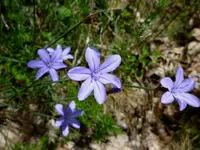
Blue Aphyllanthes (Aphyllanthes monspeliensis) is a small, clumping perennial from the Mediterranean region, especially southern France and Spain. It forms dense tufts of rush-like, leafless green stems topped with delicate star-shaped blue flowers in spring and early summer.
This species naturally grows in rocky, dry grasslands and scrub, so it is adapted to sun, wind, and lean, well-drained soils. Its drought tolerance and modest nutrient needs make it relatively easy to maintain where drainage is good. Gardeners who care for Blue Aphyllanthes usually find it long-lived if protected from prolonged winter wet and heavy, waterlogged soil.

Care Difficulty
Easy Care

Light Preference
Full Sun

Water Requirements
Low Water

Temperature Preference
Warm Climate

Hardiness Zone
7–10

Soil Texture
Sandy, Loamy, Rocky

Soil pH
Slightly acidic (6.5–7.0), Neutral (7.0)

Soil Drainage
Well-drained

Fertilization
Minimal (feed rarely)
Scan your plant to receive care tips personalized for your specific plant
Available on iOS and Android
This Mediterranean species thrives in bright, open positions with strong sun exposure.
Aphyllanthes monspeliensis is drought-tolerant and prefers careful, infrequent watering.
This species is adapted to warm, dry climates but tolerates moderate cold when established.
This Mediterranean species handles dry household air well, so humidity is rarely a limiting factor.
This species prefers lean, mineral, sharply drained soil that mimics its rocky Mediterranean habitat.
This species is suitable for container growing, especially in regions with cold or wet winters.
This drought-adapted species, often sold as Blue Aphyllanthes, needs only light feeding in lean, gritty soil.
Aphyllanthes monspeliensis requires minimal pruning, mainly to keep the clump tidy and flowering well.
This species dislikes frequent disturbance, so repotting or transplanting should be infrequent and gentle.
Propagation of Aphyllanthes monspeliensis is usually done by division or seed under suitable conditions.
This is a cold-hardy Mediterranean perennial that needs little winter care in mild, well-drained sites.

Plant Health Check
Not sure what's wrong with your plant? Check your plant's health inside the app.
This species has rush-like, cylindrical stems and almost no true leaves; the green stems perform most of the photosynthesis that leaves usually handle.
It is native to dry, rocky habitats around the western Mediterranean Basin and is well adapted to intense sun, wind, and nutrient-poor, calcareous soils.
In late spring, many star-shaped blue flowers open together above the tufted clumps, creating a brief but very dense flowering display that is highly valued in rock gardens and in Aphyllanthes monspeliensis care.

Genetic and morphological studies have shown that this plant is so distinct from related groups that it is placed alone in its own monotypic genus, Aphyllanthes, meaning it is the only species in the entire genus.
This species forms tight, slowly expanding clumps and does not spread aggressively. It enlarges gradually from the base and stays where planted, so it is suitable for rock gardens, edging, and small spaces without becoming a nuisance.
Keep your plants happy and healthy with plant identification, disease detection, and easy care guidance.

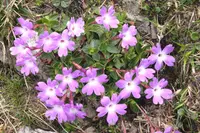
Wulfen's Primrose
Primula wulfeniana
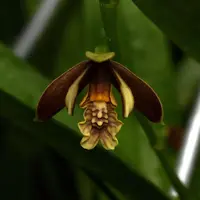
Prosthechea livida
Prosthechea livida
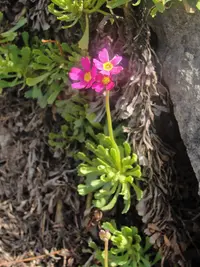
Sierra primrose
Primula suffrutescens
dyers busy lizzie
Impatiens tinctoria
Yellow Chincherinchee
Ornithogalum dubium
South African geranium
Pelargonium sidoides
Aphelandra chamissoniana
Aphelandra chamissoniana
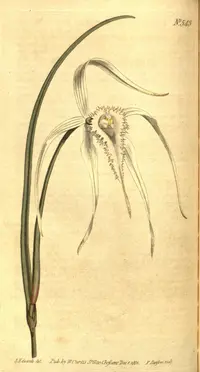
Daddy longlegs orchid
Brassavola cucullata