

Pinch For Bushiness
Pinch out the soft tips of young stems when plants are 10–15 cm tall to encourage branching and create a fuller, more floriferous mound rather than a few tall, sparse shoots.

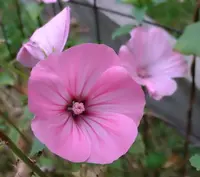
Royal mallow (Malva trimestris) is a fast-growing, flowering annual in the mallow family, valued for its showy cup-shaped blooms. Plants form upright, branching clumps with soft, rounded leaves and large flowers in shades of white, pink, or rose. Native to Mediterranean regions, it is commonly grown in borders, cottage-style gardens, and cutting beds. This species is generally easy to grow from seed and adapts well to mild climate variation. It thrives in full sun, with moderate moisture and well-drained soil. Understanding how to care for Royal Mallow helps keep flowering steady through the warm season.

Care Difficulty
Easy Care

Light Preference
Full Sun

Water Requirements
Moderate Water

Temperature Preference
Warm Climate

Hardiness Zone
6–9

Soil Texture
Sandy, Loamy, Organic-rich

Soil pH
Acidic (5.5–6.5), Slightly acidic (6.5–7.0)

Soil Drainage
Well-drained

Fertilization
Light (every 4–6 weeks)
Scan your plant to receive care tips personalized for your specific plant
Available on iOS and Android
This annual mallow prefers bright, open conditions to flower heavily.
This plant prefers evenly moist but not saturated soil once established.
This warm-season annual grows best in mild to moderately warm conditions without frost.
Humidity is rarely a limiting factor for Malva trimestris grown outdoors in temperate climates.
Malva trimestris grows best in loose, well-aerated mineral soil that drains freely after rain or watering.
This species is well-suited to container growing when given enough root depth and fast drainage.
Annual Malva trimestris benefits from modest feeding during its active growing season for sustained flowering.
Pruning Malva trimestris helps maintain a tidy shape and encourages prolonged blooming.
This annual is usually grown from seed in place, but young plants transplant well when handled carefully.
Malva trimestris is most commonly propagated from seed, which germinates reliably in mild conditions.
Malva trimestris is a frost-tender annual, so plants typically die back after hard frost and need minimal winter care.

Plant Health Check
Not sure what's wrong with your plant? Check your plant's health inside the app.
This species is a true annual from Mediterranean climates, completing its entire life cycle from seed to seed in a single growing season and then dying, unlike many perennial mallows.
Its flowers are broad, funnel-shaped with strongly veined petals, and typically start white to pale pink, often deepening in color and venation as the bloom ages.
Malva trimestris was introduced into wider European garden cultivation in the early 1800s, becoming valued as a fast-flowering ornamental for summer displays and cottage-style plantings.

In parts of southern Europe, the wild-type form of this species still occurs in disturbed, open habitats such as field margins and roadsides, where it behaves as a pioneer plant that quickly colonizes bare or recently worked soils.
Lack of flowers usually comes from too much shade, excess nitrogen fertilizer, or old, spent plants. Annuals bloom best in full sun, with moderate nutrients, and regular deadheading to redirect energy from seed production back into new buds.
Keep your plants happy and healthy with plant identification, disease detection, and easy care guidance.

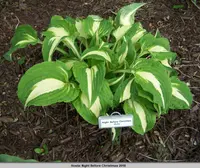
Hosta
Hosta 'Night Before Christmas'
Begonia × semperflorens-cultorum
Begonia × semperflorens-cultorum
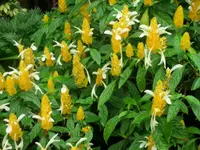
golden shrimp plant
Pachystachys lutea
faassen's catnip
Nepeta × faassenii
Acaena juvenca
Acaena juvenca
South Pacific palm
Biophytum umbraculum
Anthyllis terniflora
Anthyllis terniflora
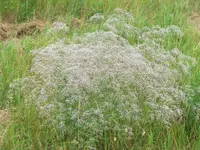
Baby's breath
Gypsophila paniculata