Staggered Spring Planting
Plant divisions or potted starts in small groups over 2–3 weeks so flowering becomes slightly staggered and the display looks more natural and extended in mixed borders or meadow-style plantings.

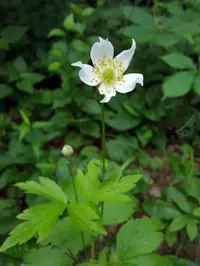
Tall thimbleweed (Anemone virginiana) is a hardy, herbaceous perennial in the buttercup family, valued for its simple, wildflower look. It typically forms upright clumps with slender stems, divided leaves, and pale greenish-white flowers that develop into distinctive, fuzzy, thimble-like seed heads.
This species is native to eastern and central North America, where it grows in open woods, prairies, and along woodland edges. It adapts well to average garden conditions, which makes it relatively straightforward to care for tall thimbleweed in informal borders and naturalistic plantings.
The plant prefers sun to light shade, moderately moist but well-drained soil, and does not usually need heavy maintenance once established.

Care Difficulty
Easy Care

Light Preference
Partial Shade

Water Requirements
Moderate Water

Temperature Preference
Cold Hardy

Hardiness Zone
2–9

Soil Texture
Loamy, Sandy, Organic-rich

Soil pH
Acidic (5.5–6.5), Slightly acidic (6.5–7.0)

Soil Drainage
Moist but well-drained

Fertilization
Minimal (feed rarely)
Scan your plant to receive care tips personalized for your specific plant
Available on iOS and Android
Anemone virginiana prefers bright conditions similar to an open woodland edge.
This species prefers steadily moist but not saturated soil.
This hardy perennial is adapted to temperate outdoor conditions with cold winters and mild to warm summers.
Humidity is not a major factor for Anemone virginiana, which suits most outdoor conditions.
Anemone virginiana prefers moist, well-drained, loamy soil that mimics woodland conditions.
This species can be grown in containers outdoors, though it performs best when roots have enough cool, stable space.
Anemone virginiana, or tall thimbleweed, grows well in average garden soil and only needs light feeding in lean conditions.
Anemone virginiana benefits from light, targeted pruning to keep plants tidy and support flowering.
This species is usually grown in the ground, so focus on careful transplanting rather than frequent repotting.
Anemone virginiana is most commonly propagated by seed or by careful division of established clumps.
This hardy perennial usually needs minimal winter care in its suitable outdoor climate.

Plant Health Check
Not sure what's wrong with your plant? Check your plant's health inside the app.
The fruiting heads form cylindrical clusters of achenes whose beak-like tips aid in ballistic seed release, so ripe fruits can spring open and project seeds a short distance from the parent plant.
This species is native to eastern North American woodlands and openings, where it is adapted to partial shade and well-drained, often calcareous or neutral soils that many other anemone species do not favor as strongly.
After flowering, the tall, bristly seed heads persist on stiff stems and are readily shaken by wind, which gradually loosens and scatters the small, dry fruits over time.

Tall thimbleweed often forms hybrid swarms with closely related anemone species, and these natural hybrids can show intermediate leaf shapes and floral traits that make field identification challenging for botanists.
This species spreads moderately by rhizomes and self-seeding, but is usually not a serious garden thug. In well-managed beds, occasional removal of unwanted seedlings and clump division every few years keeps its spread controlled.
Keep your plants happy and healthy with plant identification, disease detection, and easy care guidance.