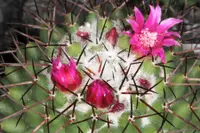
Eriosyce islayensis Care

Eriosyce islayensis

About Eriosyce islayensis

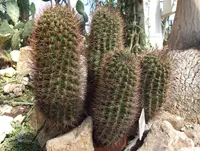
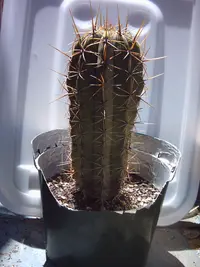
Eriosyce islayensis is a small, slow-growing cactus native to the extremely dry coastal deserts of northern Chile. It typically forms a low, rounded stem with pronounced ribs and dense clusters of spines.

In nature it grows in rocky, mineral soils with strong sun, cool nights, and very little rainfall. These conditions make it quite drought tolerant but sensitive to excess moisture and poor drainage in cultivation.

For most growers, the main challenges are preventing rot and providing enough light, so learning how to care for Eriosyce islayensis focuses on controlled watering and a very gritty, fast-draining substrate.

Main Plant Requirements

Care Difficulty

Moderate Care

Light Preference

Full Sun

Water Requirements

Low Water

Temperature Preference

Tropical / Frost Sensitive

Hardiness Zone

10–11

Soil Texture

Sandy, Rocky, Loamy

Soil pH

Slightly acidic (6.5–7.0), Neutral (7.0)

Soil Drainage

Well-drained

Fertilization

Minimal (feed rarely)

Get Personalized Care Plan

Scan your plant to receive care tips personalized for your specific plant

Available on iOS and Android

How to Care for the Eriosyce islayensis

This coastal cactus prefers strong light that mimics its bright, exposed habitat.

  • Provide 6–8 hours of direct sun daily, ideally with morning sun and light afternoon exposure to prevent scorch on very hot days.
  • In very intense climates, give Eriosyce islayensis light shade or filtered sun during mid-afternoon to avoid bleaching and wrinkling of the stem.
  • If growth elongates, color fades, or spines thin out, the plant is not getting enough light and needs a sunnier position.

This species needs infrequent, careful watering that keeps roots dry between soakings.

  • Water only when the top 3–5 cm of the soil are completely dry; soak thoroughly, then let excess drain away fully.
  • During active growth in spring–summer, expect watering every 2–4 weeks, then cut back sharply in fall and keep almost dry in winter.
  • Soft, yellowing, or translucent tissue signals overwatering and possible rot, while deep wrinkling and very light weight indicate the plant needs water.

This cactus prefers warm, dry conditions with a cool but not freezing rest period.

  • Aim for 65–80°F (18–27°C) during active growth, with good air movement to prevent overheating in strong sun.
  • In winter, keep it cooler at 45–55°F (7–13°C) and much drier to support a natural rest and stronger flowering later.
  • Protect from frost; brief dips to about 32°F (0°C) may be survived if completely dry, but repeated freezing damages tissue and roots.

This coastal cactus prefers dry indoor air and stays healthy in 20–40% humidity.

  • Tolerates very dry rooms better than humid spaces; avoid prolonged humidity above 60%.
  • Low humidity stress appears as slightly shriveled ribs from underwatering, not from dry air itself.
  • If air is very humid, improve airflow with a small fan and keep the plant away from kitchens and bathrooms.

This species needs a very fast-draining, mineral-rich mix that mimics rocky desert soil.

  • Use a gritty blend such as 70–80% mineral components (pumice, coarse sand, gravel) with 20–30% low-organic cactus mix.
  • Aim for slightly acidic to neutral pH around 6.0–7.0 to support nutrient uptake and root health.
  • Increase aeration by using coarse, angular particles rather than fine sand, which can compact and slow drainage.
  • Avoid peat-heavy, dense, or water-retentive mixes that stay wet for more than 24 hours, since roots rot quickly.

This compact cactus is very suitable for container growing.

  • Choose a shallow but wide pot so the fibrous root system can spread horizontally without trapping deep moisture.
  • Unglazed terracotta is useful because it evaporates moisture faster, reducing the risk of prolonged wet soil around roots.
  • Place the pot on a slightly sloped saucer or use pot feet so excess water drains away instead of pooling under the base.

This desert cactus needs only light feeding, as its natural habitat is very nutrient poor, but careful supplementation can support container growth.

  • Use a low-nitrogen, balanced cactus fertilizer (for example 5-10-10) diluted to 25–50% strength in well-watered plants.
  • Feed during the warm growing season only, about every 6–8 weeks if growth is active.
  • Avoid compost or rich organic mixes that stay wet and may cause root rot.
  • Stop feeding Eriosyce islayensis in late fall and throughout winter dormancy.

Pruning needs for Eriosyce islayensis are minimal and focus mainly on health and safety rather than shaping.

  • Carry out any work in late spring or early summer when growth is active.
  • Remove only dead, diseased, or badly damaged tissue with clean, sharp scissors or cactus tongs.
  • Trim dried flower remains close to the base if desired, avoiding injury to the ribs and areoles.
  • Do not cut healthy stems, as this slow-growing cactus does not respond well to structural pruning.

This species grows slowly and prefers infrequent disturbance, so repotting is only needed occasionally in containers.

  • Check for roots circling the pot, pushing through drainage holes, or very slow growth as signs it needs more space.
  • Plan repotting for late spring, using a slightly larger pot with a very free-draining cactus mix.
  • Lift the plant with tongs or folded paper, gently loosen the root ball, and remove only rotten or dead roots.
  • Allow roots to dry for 1–2 days after repotting, then water lightly to limit stress and reduce rot risk.

Propagation of Eriosyce islayensis is usually done from seed and requires patience and controlled conditions.

  • Sow fresh seed in late spring in a sterile, very gritty cactus mix, barely covering the seed.
  • Maintain 70–80°F, bright indirect light, and consistently slight moisture until germination.
  • Cover the tray with a clear lid or plastic to keep humidity high, airing briefly each day to prevent mold.
  • Grow seedlings in the seed tray for at least 6–12 months before potting individually to reduce losses.

This cactus needs a cool, very dry rest in winter and is only moderately tolerant of low temperatures.

  • Keep plants at about 40–50°F in winter, avoiding hard frosts below freezing, especially if soil is damp.
  • Move container plants indoors or into an unheated but frost-free, bright space before severe cold.
  • Water very sparingly or not at all in winter so the soil stays dry and roots remain healthy.
  • Use a gritty, fast-draining medium rather than mulch to prevent excess moisture around the crown.

Care Tips

Deep container choice

Use a clay pot that is deeper than it is wide and fill the lower third with coarse mineral material so the long taproot can grow straight down without curling or rotting.

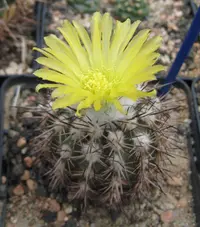
Top-dressing with grit

Add a 0.5–1 in layer of coarse gravel or pumice on the soil surface to keep the stem base dry, reduce algae and moss, and stabilize the plant against accidental knocks.

Controlled summer rest

In very hot, bright summer periods, slightly reduce watering and avoid repotting or fertilizing to mimic the plant’s natural semi-dormant phase and reduce stress.

Winter light protection

In cold but sunny windows, place a sheet of thin white fleece or a sheer curtain between the plant and glass on the coldest days to prevent tissue damage from the combination of intense light and low temperatures.

Preventing mealybug pockets

Regularly inspect woolly areoles and spine bases with a hand lens and, at the first sign of mealybugs, dab affected spots with isopropyl alcohol on a cotton swab before the insects spread into inaccessible crevices, which simplifies caring for Eriosyce islayensis over time.

Common Pests and Diseases

Red spider mites

These pests thrive on Eriosyce islayensis in hot, dry indoor air and feed by piercing epidermal cells, causing a dull, grayish or rusty discoloration and fine webbing between ribs and spines.

Solution

Increase humidity slightly around the plant without overwatering, then hose or shower the cactus to physically remove mites and webs, taking care to keep the soil dry; follow with 2–3 applications of insecticidal soap or a light horticultural oil, directed mainly at areoles and rib crevices, while improving airflow and reducing heat stress to prevent reinfestation.

Root mealybugs

These insects live hidden on the underground portions of the cactus, sucking sap and leading to weak growth, sudden shriveling, and poor root health despite apparently normal watering.

Solution

Unpot the plant and inspect the roots; rinse off old soil, trim any dead roots, and soak the root zone briefly in a systemic insecticide solution or 70% isopropyl alcohol, then repot in fresh, very free-draining mineral mix in a clean pot, and monitor for several months, discarding any old soil to prevent re‑infestation when growing Eriosyce islayensis.

Cactus scale

These insects appear as small, hard, tan to brown bumps on ribs and around areoles, causing yellow spots, slow growth, and localized scarring as they suck sap from the epidermis.

Solution

Physically remove individual scale insects with a cotton swab dipped in 70% isopropyl alcohol, then treat the entire plant surface with insecticidal soap or light horticultural oil, repeating every 7–10 days for several cycles while isolating the plant from others and maintaining bright, well-ventilated conditions.

Corky scab lesions

This disease presents as rough, brown, cork-like patches on the lower or exposed side of the stem, often triggered by chronic mechanical abrasion, intense sun, or minor fungal infections on stressed tissue.

Solution

Improve cultural conditions by providing strong but slightly filtered sun, avoiding constant rubbing or contact with hard surfaces, and keeping the epidermis dry; remove any loose dead tissue with sterile tools if needed and apply a sulfur-based dry fungicide lightly to the affected area, then monitor to ensure lesions remain dry and stable rather than expanding.

Fusarium stem rot

This disease is caused by soilborne Fusarium fungi that enter through small wounds or stressed roots, leading to internal reddish-brown rot, softening of tissue, and sometimes a narrowed, constricted base above the root zone.

Solution

At early stages, unpot and cut away all affected tissue with a sterile knife back to healthy, firm, pale flesh, then dust the wounds and cut surfaces with a sulfur or copper-based fungicide and allow them to dry fully before re‑rooting the healthy top in fresh, sterile, highly mineral substrate; discard severely infected plants and any contaminated soil to prevent spread to nearby cacti.

Interesting Facts

Extremely coastal habitat

This cactus naturally grows almost at sea level along the hyper-arid coast of northern Chile, often on rocky marine terraces that receive very little rain but frequent coastal fog.

Fog-dependent moisture strategy

Instead of relying on rainfall, it absorbs scarce moisture mainly from coastal mist and fog that condense on the plant body and surrounding rocks, a key adaptation to the Atacama Desert margin.

Variable spination and form

Wild populations show considerable variation in spine color, density, and body shape, with some forms nearly hidden under dense, curved spines, which likely help shade the stem and reduce water loss.

Botan icon

Did you know?

Field observations have shown that this species often grows in very small, scattered clusters and can be locally rare, which makes wild populations vulnerable to disturbance and has led to concern among botanists about over-collection and habitat impact.

FAQs about Eriosyce islayensis

This cactus performs best outdoors in a bright, very dry spot with excellent drainage, especially in mild, low-rain climates. In colder or wetter regions, container culture under cover or in a sunny greenhouse offers more reliable conditions and protection.

Grow Healthy Plants with Botan Care

Keep your plants happy and healthy with plant identification, disease detection, and easy care guidance.

Botan plant care app — identify plants on mobile

Explore More Plants