Sacred Column Cactus Care (Trichocereus macrogonus)

Sacred Column Cactus

About Sacred Column Cactus

The sacred column cactus, Trichocereus macrogonus, is a tall, columnar cactus valued for its architectural shape and ribbed blue-green stems. It often forms multi-stemmed clumps over time, creating a strong vertical accent in arid and dry gardens.

This species is native to high-altitude regions of the Andes in South America, where it grows in rocky, well-drained soils with intense sun. It is generally considered robust and forgiving once established, as long as excess moisture and prolonged cold are avoided.

For those learning how to care for Sacred Column Cactus, the main needs are strong light, infrequent but deep watering, and very gritty soil that dries quickly between waterings.

Main Plant Requirements

Care Difficulty

Easy Care

Light Preference

Full Sun

Water Requirements

Low Water

Temperature Preference

Warm Climate

Hardiness Zone

8–11

Soil Texture

Sandy, Loamy, Rocky

Soil pH

Slightly acidic (6.5–7.0), Neutral (7.0)

Soil Drainage

Well-drained

Fertilization

Minimal (feed rarely)

Get Personalized Care Plan

Scan your plant to receive care tips personalized for your specific plant

Available on iOS and Android

How to Care for the Sacred Column Cactus

This cactus thrives in strong, direct light that mimics high-altitude desert sun.

  • Provide 6–10 hours of direct sun daily; morning and midday sun are best, with light afternoon shade in very hot regions.
  • Young or newly moved Sacred Column Cactus needs 7–10 days of gradual exposure to full sun to prevent bleaching or brown scorch patches.
  • In winter, maximize light with an unobstructed south-facing exposure; in deep shade the stems stretch, lean, and lose their blue-green color.

This species prefers thorough but infrequent watering that lets the soil dry deeply between soakings.

  • Water only when at least the top 5–8 cm of soil are completely dry; in hot, dry weather this may be every 10–21 days, less often in cool conditions.
  • Use very fast-draining, gritty soil; standing water or slow-draining clay leads to yellowing, soft spots at the base, and root rot.
  • In winter dormancy, reduce watering to a light drink every 4–8 weeks, watching for slight skin wrinkling as a sign to water Trichocereus macrogonus.

This cactus prefers warm, dry air with a distinct cool, dry rest period in winter.

  • Aim for 70–90°F (21–32°C) in the main growing season; short spikes to 100°F (38°C) are tolerated if roots are shaded and soil is not constantly wet.
  • Protect from frost; brief dips to 28–32°F (-2–0°C) may be survived when completely dry, but tissue damage and scarring are likely.
  • For healthy growth, keep nights above 50°F (10°C); a cooler, drier period at 50–60°F (10–16°C) in winter supports strong flowering and balanced growth.

This cactus prefers dry air and typical indoor humidity rather than high humidity levels.

  • Target 30–50% humidity, similar to most heated homes, to mimic its arid native conditions.
  • It tolerates very dry air, but persistently damp, still air can promote fungal spotting and soft, waterlogged tissue.
  • If air is very humid, increase airflow with a fan, space plants apart, and avoid grouping Sacred Column Cactus over trays of standing water.

This cactus needs a very fast-draining, mineral-based soil to prevent root rot.

  • Use a gritty mix such as 50–70% inorganic components (pumice, coarse sand, perlite, crushed lava rock) blended with 30–50% cactus potting mix.
  • Aim for slightly acidic to neutral pH, around 6.0–7.0, which supports nutrient availability without encouraging salt buildup.
  • Increase aeration by using large, coarse particles (3–10 mm) and avoiding fine peat that compacts and holds excessive moisture.
  • Avoid heavy, clay-based, or water-retentive mixes, and never allow Trichocereus macrogonus to sit in soil that stays wet longer than 2–3 days.

This species is well suited to container growing when the pot supports its tall, columnar form.

  • Choose a deep, relatively heavy pot that lowers the center of gravity and reduces the risk of a tall plant tipping in wind.
  • Select unglazed terracotta or other porous material to let the mix dry faster, which helps prevent chronic moisture around the roots.
  • Use a container just 2–5 cm wider than the root mass so the soil volume dries evenly instead of staying wet at the outer edges.

This cactus benefits from light, targeted feeding during its active growing season.

  • Use a balanced cactus fertilizer (low to moderate NPK) or very dilute liquid all-purpose feed at 1/4–1/2 strength.
  • Apply every 4–6 weeks during spring–summer when growing Sacred Column Cactus in containers.
  • Skip organic compost in the potting mix; instead use a very lean, gritty mineral substrate.
  • Stop feeding in fall–winter so growth can slow and tissues harden, reducing rot risk.

Pruning needs for Trichocereus macrogonus are minimal and mostly corrective.

  • Carry out pruning in late spring–summer when the plant is actively growing and healing well.
  • Remove only dead, diseased, frost-damaged, or rubbing stems using a clean, sharp knife or saw.
  • Disinfect tools before and between cuts to limit disease transfer and fungal infection.
  • Cut above a healthy segment to maintain column shape and encourage strong, upright new growth.

Container-grown plants need infrequent but careful repotting to avoid root stress and rot.

  • Plan to repot every 3–5 years, or when roots circle the pot, drainage slows, or growth declines.
  • Repot in late spring, shifting to a slightly larger, heavy pot filled with fast-draining cactus mix.
  • Handle the column with folded newspaper or foam to protect spines and avoid bruising the stem.
  • Loosen outer roots gently, keep the root ball mostly intact, and withhold water for 5–7 days after repotting.

Trichocereus macrogonus is commonly propagated from stem cuttings and sometimes from seed.

  • Take healthy stem cuttings in late spring–summer and cut cleanly with a sterile, sharp knife.
  • Allow cut surfaces to callus in a dry, bright, shaded place for 1–3 weeks before potting.
  • Plant callused cuttings upright in a gritty, barely moist cactus mix and provide bright, indirect light.
  • For seeds, sow on the surface of sterile, fine mix, keep evenly slightly moist, and maintain gentle warmth.

Winter care is important where temperatures drop near or below freezing.

  • This cactus is only lightly frost tolerant; sustained exposure below about 25–28°F can scar or kill tissue.
  • Keep the root zone very dry in winter to increase cold resilience and reduce rot risk.
  • Mulch soil in-ground with a dry, gritty layer, keeping mulch away from direct stem contact.
  • Move container plants indoors or to a cold, bright, frost-free space with minimal watering.

Care Tips

Deep pot anchoring

Use a tall, heavy terracotta pot and plant slightly deeper than the original root line so the heavy column has a stable base and is less likely to topple in strong wind or accidental bumps.

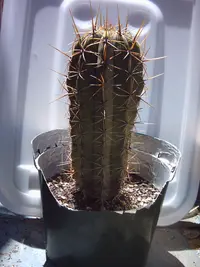
Staking for vertical growth

Install a sturdy bamboo or metal stake on the leeward side of the column and secure it loosely with soft ties in a figure‑8 pattern to keep tall stems straight without constricting growth.

Sun acclimation routine

When moving the plant from indoor light or shade to stronger outdoor sun, increase direct exposure by 30–60 minutes every few days to avoid bleaching and corky sunburn on the epidermis.

Cold rain protection

In cool, wet seasons, place the pot under a transparent rain shield or eave so the root zone stays dry and the plant avoids cold, saturated soil that can trigger rot.

Preventing scale infestations

Inspect ribs and areoles every month for scale insects and, at the first signs of sticky residue or bumps, spot‑treat with cotton swabs dipped in isopropyl alcohol to prevent colonies from establishing while caring for Sacred Column Cactus.

Common Pests and Diseases

Red spider mites

This pest thrives on stressed, high-sun cacti and can cause pale, corky scarring on ribs and new growth. Symptoms include fine, rust-colored stippling, thinning skin, and sometimes very fine webbing in rib crevices.

Solution

Rinse stems thoroughly with a strong but controlled jet of water, then wipe affected areas with a cloth dampened in 70% isopropyl alcohol. Improve airflow, avoid chronic dryness plus intense reflected heat, and repeat alcohol or insecticidal soap spot treatments every 5–7 days until no new damage appears.

Soft scale

These insects attach along ribs and areoles, appearing as small, dome-shaped brown or tan bumps that exude sticky honeydew. This pest weakens growth and can lead to sooty mold on the waxy stem surface.

Solution

Manually remove scale with a cotton swab dipped in 70% isopropyl alcohol, focusing on rib grooves and areoles. For heavier infestations, apply a light horticultural oil or insecticidal soap to all stem surfaces in the evening and repeat every 7–10 days while avoiding strong sun during treatment periods.

Mealybugs

These insects hide in areoles and rib junctions, where they form white, cottony clusters and suck sap from the tissue. This pest can cause yellowing spots, slowed growth, and deformities in new segments.

Solution

Isolate the plant, then dab visible clusters with 70% isopropyl alcohol to break down the waxy coating and kill insects. Follow with a thorough inspection and targeted use of insecticidal soap or systemic insect granules labeled for cacti, checking weekly and treating again at the first sign of reappearance as part of Trichocereus macrogonus plant care.

Fusarium stem rot

This disease enters through wounds or stressed tissue, causing soft, discolored patches that may turn reddish-brown and spread along the column. Symptoms include internal browning of the vascular tissue and, in advanced cases, collapse of sections of the stem.

Solution

Use a sterile knife to cut away affected tissue well into firm, healthy, pale flesh, and discard all infected parts. Keep the plant in a dry, bright location, dust fresh cuts with sulfur or a copper-based fungicide, and avoid watering onto the stem or injuring the ribs in the future.

Helminthosporium brown spot

This disease produces distinct, sunken, reddish-brown to dark brown spots on the green stem surface, often starting on the side with highest sun and moisture exposure. Spots may coalesce into larger lesions, leading to localized tissue death and cosmetic scarring.

Solution

Remove and dispose of heavily spotted segments if feasible, and keep the plant in a drier, well-ventilated position with direct sun but no chronic surface dampness. Apply a broad-spectrum fungicide labeled for ornamental cacti, and adjust watering so the soil dries fully between waterings while avoiding overhead moisture on the stems.

Interesting Facts

High-altitude adaptation

This species is naturally found on Andean slopes in Peru and Bolivia, where it tolerates strong sun, large day–night temperature swings, and relatively poor, rocky soils compared with many lowland cacti.

Spine and rib structure

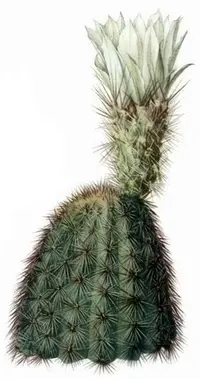
It typically forms robust, columnar stems with 6–9 broad ribs and short but sturdy yellowish spines that arise from closely spaced areoles, giving older stems a noticeably armored yet regular appearance.

Taxonomic complexity

Botanists debate its exact taxonomic boundaries, and it has been treated under different names or merged with closely related species, so accurate identification often requires attention to stem color, rib shape, and flower morphology rather than a single trait.

Botan icon

Did you know?

This cactus can develop very large, fragrant, nocturnal white flowers that may exceed 15–20 cm in length, opening for a single night to attract moth and possibly bat pollinators in its native Andean range.

FAQs about Sacred Column Cactus

Growth is moderate for a columnar cactus. In good outdoor conditions, expect roughly 10–30 cm per year. Seedlings and newly rooted cuttings grow more slowly, while established plants in the ground can extend faster during warm seasons.

Grow Healthy Plants with Botan Care

Keep your plants happy and healthy with plant identification, disease detection, and easy care guidance.

Botan plant care app — identify plants on mobile

Explore More Plants