Understory placement
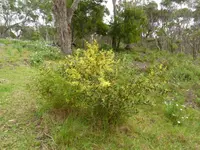
Site the shrub where it receives high open shade from taller trees to protect early spring flowers from late frosts and to keep the root zone cooler and moister through summer.

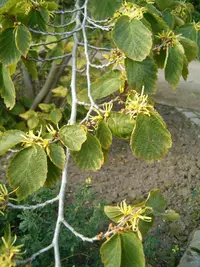
Hamamelis virginiana, commonly called witch-hazel, is a deciduous shrub or small tree known for its spidery yellow flowers that appear in fall or winter. It typically forms a multi-stemmed, vase-shaped plant with smooth gray bark and broad, wavy-edged leaves that turn warm yellow in autumn.
This species is native to woodlands and stream banks in eastern North America, where it grows in partial shade and evenly moist, well-drained soils. Its hardiness, tolerance of cold, and general pest resistance make it relatively straightforward to care for witch-hazel in many temperate gardens.
The plant prefers light, acidic to neutral soil and benefits from consistent moisture, especially while establishing. Once mature, it handles typical seasonal variation without much difficulty.

Care Difficulty
Moderate Care

Light Preference
Partial Sun

Water Requirements
Moderate Water

Temperature Preference
Cold Hardy

Hardiness Zone
3–8

Soil Texture
Loamy, Sandy, Clay

Soil pH
Strongly acidic (4.5–5.5), Acidic (5.5–6.5)

Soil Drainage
Moist but well-drained

Fertilization
Minimal (feed rarely)
Scan your plant to receive care tips personalized for your specific plant
Available on iOS and Android
This shrub performs best in cool, bright conditions with moderate direct sun exposure.
Hamamelis virginiana prefers evenly moist, well-drained soil that never stays soggy for long periods.
This hardy shrub is adapted to cold climates but still benefits from moderate, stable temperatures during active growth.
This shrub tolerates a wide humidity range and rarely needs special humidity control outdoors.
Hamamelis virginiana prefers consistently moist, deep, loamy soil with strong structure and moderate fertility.
This species can be grown in large outdoor containers but needs careful management of root space and stability.
This native shrub usually needs minimal feeding when grown in decent garden soil.
Pruning Hamamelis virginiana is usually light and focused on maintaining a natural, open framework.
This shrub is usually grown in the ground, so care focuses on transplanting young plants rather than frequent repotting.
Propagation of Hamamelis virginiana is slow and often left to specialist nurseries rather than casual home efforts.
This species is cold hardy and generally needs little winter care in most temperate gardens.

Plant Health Check
Not sure what's wrong with your plant? Check your plant's health inside the app.
This species is native to eastern North America and is the only witch-hazel that naturally flowers in autumn there, often from October into December when most shrubs have already gone dormant.
Its woody seed capsules dry and build tension until they burst open, flinging the shiny black seeds several meters away, a mechanism known as ballistic dispersal.
Although often found in forest understories, it maintains a relatively shallow, wide-spreading root system and responds strongly to canopy gaps, allowing it to form dense thickets in partially opened woodland.

The autumn-flowering habit of Hamamelis virginiana is so distinctive in its native range that early European botanists originally struggled to place it taxonomically, since most temperate shrubs flower in spring rather than at the same time they are shedding leaves.
Poor flowering often comes from too much shade, young age, or stress from drought, root disturbance, or heavy pruning. Ensure consistent moisture, minimal root disruption, and only light shaping right after bloom to support future flower bud formation.
Keep your plants happy and healthy with plant identification, disease detection, and easy care guidance.