southern crab apple Care (Malus angustifolia)

southern crab apple

About southern crab apple

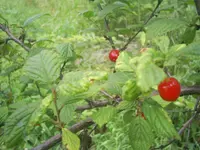
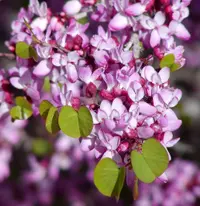
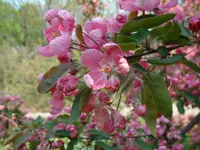
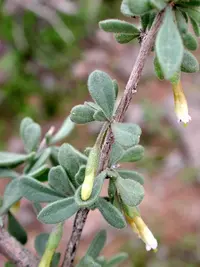
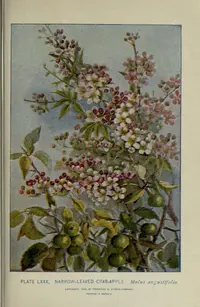
Southern crab apple, Malus angustifolia, is a small deciduous tree native to the southeastern United States. It is often found along woodland edges, fields, and roadsides. The tree forms a rounded, somewhat irregular crown with stiff branches. In spring it carries showy, fragrant pink to white blossoms, followed by small, tart fruits that attract birds and wildlife. Leaves are small, glossy, and turn yellow to bronze in autumn, giving additional seasonal interest. This species is generally hardy and tolerates a range of soils, including poorer, drier sites once established. Understanding how to care for southern crab apple starts with providing full sun, well-drained soil, and space for its mature size.

Main Plant Requirements

Care Difficulty

Moderate Care

Light Preference

Full Sun

Water Requirements

Moderate Water

Temperature Preference

Cold Hardy

Hardiness Zone

5–9

Soil Texture

Sandy, Loamy, Clay

Soil pH

Acidic (5.5–6.5), Slightly acidic (6.5–7.0)

Soil Drainage

Moist but well-drained

Fertilization

Minimal (feed rarely)

Get Personalized Care Plan

Scan your plant to receive care tips personalized for your specific plant

Available on iOS and Android

How to Care for the southern crab apple

This native crab apple thrives in full sun but accepts some light shade in warm climates.

  • Provide 6–8 hours of direct sun daily; 4–6 hours is acceptable but reduces flowering and fruiting for southern crab apple.
  • Favor morning sun with light afternoon shade, especially in hot regions, to limit leaf scorch and sunburn on young trees.
  • Avoid dense shade, which causes leggy growth and sparse blooms; in winter, unobstructed sun supports stronger bud formation for the next spring.

This species prefers consistently moist, well-drained soil rather than frequent shallow watering.

  • Allow the top 3–5 cm of soil to dry slightly before deep watering, especially during the first 2–3 years after planting Malus angustifolia.
  • In spring and early summer, monitor weekly and water slowly until the root zone is moist 20–30 cm deep, easing off during cooler, rainy periods.
  • Watch for stress signs: yellowing leaves and soft, soggy soil indicate overwatering, while crisp edges and premature leaf drop point to drought.

This hardy deciduous tree tolerates a wide temperature range once established outdoors.

  • Active growth is strongest around 60–80°F (16–27°C), with good performance in typical spring and fall conditions in temperate regions.
  • Fully dormant trees tolerate winter lows near -20°F (-29°C); brief drops slightly below this may damage flower buds but usually spare the main structure.
  • Mature trees handle summer heat up to about 90–95°F (32–35°C) if soil moisture is maintained; prolonged hotter periods may cause leaf scorch and reduced fruit set.

Humidity is not a major concern for Malus angustifolia, which adapts well to typical outdoor conditions in most climates.

Malus angustifolia prefers moderately moist, well-drained mineral soils with enough structure to anchor its roots and support long-term growth.

  • Use a loamy or sandy-loam soil with some organic matter from composted leaves or well-rotted compost for water retention and nutrients.
  • Aim for a slightly acidic to neutral pH around 5.5–7.0, avoiding strongly alkaline or saline soils that restrict nutrient uptake.
  • Improve drainage and aeration in heavier clay by incorporating coarse sand, fine gravel, or pine bark fines through the top 20–30 cm.
  • Avoid low-lying, waterlogged spots or compacted ground, which promote root rot and reduce oxygen availability to the root system.

This species can be grown in containers for a limited period, mainly for young trees or compact forms rather than long-term cultivation.

  • Choose a deep, heavy container that resists tipping as the tree gains height and develops a thicker canopy.
  • Select a pot with extra lateral space to accommodate a broad, fibrous root system without circling tightly around the wall.
  • Use a container mix that drains faster than typical garden soil but still holds moderate moisture to prevent rapid drought stress in full sun.

This native tree needs minimal feeding in average garden soil, but moderate fertilization improves flowering and fruit set in cultivated southern crab apple.

  • Apply a balanced slow-release fertilizer (around 8-8-8 to 10-10-10) once in early spring as new growth begins.
  • Use compost or well-rotted manure as a light surface dressing over the root zone, keeping it away from the trunk.
  • Avoid midsummer to fall fertilization to prevent tender late growth that may be winter-damaged; do not feed during winter dormancy.
  • On young or weak trees, use fertilizer at 1/2 label strength and water deeply afterward to reduce root burn risk.

Thoughtful pruning keeps Malus angustifolia healthy, structurally sound, and flowering well.

  • Carry out main pruning in late winter while the tree is dormant and branch structure is easy to see.
  • Remove dead, diseased, crossing, or inward-growing branches first, cutting back to healthy wood with clean, sharp bypass pruners or a pruning saw.
  • Thin crowded branches to open the canopy, which improves air flow, reduces disease risk, and allows better light penetration for flower and fruit production.
  • Limit cuts to smaller branches where possible to preserve natural form and reduce large wounds that heal slowly.

This species is usually field-grown or planted directly in the ground, so transplanting young trees correctly is more important than container repotting.

  • Transplant in late fall or very early spring when the tree is dormant, before buds break, to reduce stress.
  • Look for roots circling a nursery container or very slow growth as signs that a young Malus angustifolia is ready to move into the landscape.
  • Dig a wide hole no deeper than the root ball, loosen circling roots gently, and set the root flare at or slightly above soil level.
  • Water thoroughly after planting, mulch 5–8 cm deep around (not against) the trunk, and keep soil evenly moist for the first 1–2 growing seasons.

Malus angustifolia is typically propagated by seed or grafting rather than by home cuttings.

  • Collect ripe fruits in fall, clean the seeds, and use cold stratification at 34–41°F for 3–4 months to break dormancy.
  • Sow stratified seeds in a well-drained, slightly acidic medium, keeping it just moist and cool until germination in spring.
  • For clonal trees, use bench grafting in late winter, joining scion wood to compatible rootstock with a clean, tight graft union.
  • Young seedlings or grafts need full sun, regular watering, and careful weed control to establish strong root systems.

This tree is naturally cold hardy in much of its native range and generally needs little winter care once established.

  • In fall, apply a 5–8 cm layer of organic mulch over the root zone, leaving a gap around the trunk to prevent rot.
  • Newly planted or young Malus angustifolia benefit from consistent soil moisture before the ground freezes to limit winter desiccation.
  • Container-grown trees, if used, should be moved into an unheated but sheltered area where roots stay above about 20°F.

Care Tips

Rootstock selection

When planting new trees, choose a disease-resistant, size-appropriate rootstock (such as semi-dwarf for small yards) to improve anchorage, reduce excessive height, and simplify long-term management.

Early scaffold training

In the first 3–4 years, select 3–5 well-spaced lateral branches around the trunk as permanent scaffolds and remove steep, narrow crotched shoots to build a strong, storm-resistant framework.

Mummy fruit removal

During late winter, remove and dispose of any shriveled fruits left on branches or the ground to lower the inoculum of fungal diseases like apple scab and reduce spring infection pressure.

Targeted pest monitoring

From late spring through summer, hang simple sticky traps or pheromone traps at eye level and inspect weekly so you can spot and time control of key pests such as moth larvae and leafrollers before damage escalates.

Wind and wildlife protection

In exposed sites, stake young trees for the first 1–2 years and use a breathable trunk guard to reduce bark damage from rodents, rabbits, or string trimmers, which can otherwise weaken or girdle the tree when growing southern crab apple.

Common Pests and Diseases

Cedar-apple rust

This disease causes bright orange to rust-colored leaf spots and can lead to premature leaf drop on southern crab apple, especially where redcedar trees grow nearby.

Solution

Remove and destroy heavily infected leaves and pruned twigs, and if possible increase distance from or prune nearby juniper/redcedar hosts to reduce spore load; in areas with chronic issues, apply a labeled fungicide containing myclobutanil or propiconazole at bud break through petal fall, following local extension guidance for Malus angustifolia care.

Apple scab

This disease produces olive to dark brown, velvety spots on leaves and fruit, leading to distorted, cracked crab apples and early defoliation in wet spring weather.

Solution

Rake and remove fallen leaves and mummified fruit in autumn to lower spore carryover, prune to open the canopy for better airflow, and in regions with regular scab pressure use a protective fungicide program starting at green tip and continuing until early summer, timed to rainy periods.

Fire blight

This disease causes blackened, wilted shoot tips that look scorched and can kill blossoms and young twigs, especially after warm, wet bloom periods.

Solution

Prune out infected shoots during dry weather, cutting 20–30 cm below visible symptoms and disinfecting tools between cuts, avoid high-nitrogen fertilizer that stimulates soft new growth, and in high-risk areas consider a bloom-time antibacterial spray such as streptomycin where permitted and recommended by local extension services.

Woolly apple aphid

These insects form cottony white clusters on twigs, pruning cuts, and roots, causing galls, cracks, and dieback on stressed southern crab apples.

Solution

Encourage natural predators by minimizing broad-spectrum insecticides, wash off aboveground colonies with a strong stream of water, and for persistent infestations use a systemic insecticide labeled for woody ornamentals, targeting early-season nymphs before populations build up.

Tent caterpillar

This pest creates silk tents in branch crotches in spring and can rapidly defoliate sections of the canopy, especially on young or edge trees.

Solution

Physically remove and destroy tents by hand or pruning during the cool early morning or evening when caterpillars are inside, and if needed apply a targeted biological product containing Bacillus thuringiensis (Bt) to young larvae on foliage, avoiding spray drift onto non-target plants in bloom.

Interesting Facts

Southeastern native specialist

This crab apple is naturally restricted to the southeastern United States, especially the Coastal Plain and lower Piedmont, where it occurs in open woods, stream margins, and disturbed sites such as old fields and fencerows.

Unusually small fruits

Its crab apples are among the smallest in the genus, typically less than 1.5 cm across, with a high acidity and astringency that make them important for wildlife food and for traditional jellies rather than fresh eating.

High wildlife value

The dense, thorny branching and abundant fruit provide shelter and food for many songbirds, wild turkey, and small mammals, making it a notable native hedge and wildlife-supporting tree in its natural range.

Botan icon

Did you know?

In some southeastern states, naturally occurring hybrids between this species and other native crab apples (such as Malus coronaria and Malus ioensis) form complex hybrid swarms, which botanists use as case studies for understanding gene flow and species boundaries in wild rosaceous trees.

FAQs about southern crab apple

This species grows at a moderate rate, usually adding about 20–30 cm of height per year once established. Growth is slower in poor, dry, or compacted soils and faster in deep, well‑drained, moderately fertile ground.

Grow Healthy Plants with Botan Care

Keep your plants happy and healthy with plant identification, disease detection, and easy care guidance.

Botan plant care app — identify plants on mobile

Explore More Plants