Deep root establishment
During the first 2–3 years, give very occasional but slow, deep irrigation to encourage a vertical taproot and strong drought resilience rather than frequent shallow watering.

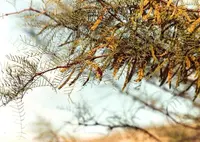
Algarrobo, Prosopis chilensis, is a drought-tolerant tree from arid and semi-arid regions of South America, especially Chile and Argentina. It belongs to the legume family and often grows with a broad, spreading canopy and a deep root system.
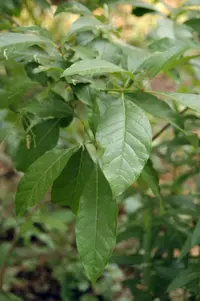
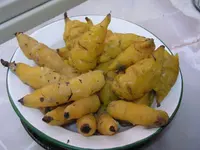
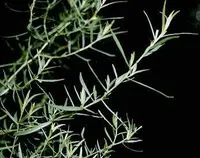
Mature trees develop a twisting trunk, thorny branches, and fine, feathery leaflets that give light, filtered shade. In suitable conditions it produces small, fragrant flowers followed by elongated pods.
This species is adapted to poor, dry soils and intense sun, which makes it resilient once established but less suited to small, humid gardens. Those who care for algarrobo should provide strong light, low to moderate moisture, and very well-drained, preferably sandy or rocky, soil.

Care Difficulty
Easy Care

Light Preference
Full Sun

Water Requirements
Low Water

Temperature Preference
Warm Climate

Hardiness Zone
8–11

Soil Texture
Sandy, Loamy, Rocky

Soil pH
Neutral (7.0), Slightly alkaline (7.0–7.5)

Soil Drainage
Well-drained

Fertilization
Minimal (feed rarely)
Scan your plant to receive care tips personalized for your specific plant
Available on iOS and Android
This desert tree thrives in strong sun and is highly drought-adapted.
This species is highly drought-tolerant and prefers infrequent, deep watering once established.
This desert-adapted tree handles heat well but is sensitive to severe frost.
Prosopis chilensis thrives in dry air and usually does not need extra humidity.
Prosopis chilensis prefers very well-drained, lean, mineral soil that mimics desert or semi-desert conditions.
This species can be grown in containers only for the short to medium term due to its eventual large size and deep root system.
This desert tree needs minimal feeding, but light nutrition supports healthy growth in containers or poor soils when caring for algarrobo.
Pruning Prosopis chilensis focuses on safety, structure, and access to light and air.
This species is usually grown in the ground, so focus on careful transplanting rather than frequent repotting.
Prosopis chilensis is most commonly propagated from seeds, which establish well under warm, dry conditions.
This tree is moderately frost tolerant and usually needs little winter care in mild, arid climates.

Plant Health Check
Not sure what's wrong with your plant? Check your plant's health inside the app.
This species can develop extremely deep taproots that allow it to access groundwater in very arid soils, which is why it establishes successfully in semi-desert regions of central Chile and neighboring areas.
Prosopis chilensis forms symbioses with nitrogen-fixing bacteria in its root nodules, improving soil fertility around it and helping other plants colonize degraded or overgrazed land.
Its sweet, floury seed pods have been used for centuries by Indigenous communities in Chile and Argentina as a nutrient-rich food source and for making traditional fermented beverages.

Individual Prosopis chilensis trees in favorable arid-zone conditions can live for several centuries, acting as long-term keystone structures that shape local microclimates by providing shade, organic matter, and habitat for a wide range of insects, birds, and mammals.
In favorable outdoor conditions, this species usually reaches 6–12 m tall with a similar spread, sometimes larger. Growth is often multi-stemmed, forming a broad, irregular crown suited to open, dry landscapes rather than small gardens.
Keep your plants happy and healthy with plant identification, disease detection, and easy care guidance.