Provide light trellis
Install a low, open trellis or shrub branches so vines can climb loosely while still allowing the lower, ground-hugging flowers that form underground pods to spread naturally.

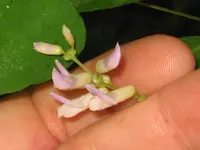
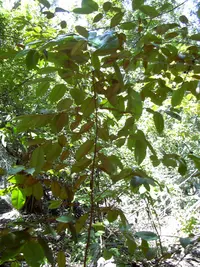
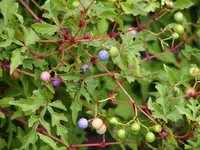
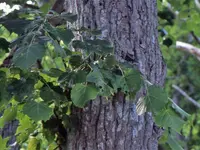
American hogpeanut, Amphicarpaea bracteata, is a native North American twining vine in the legume family. It typically grows through and over nearby plants rather than standing upright on its own.
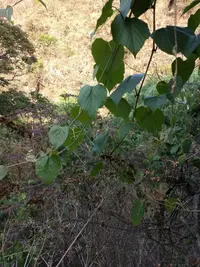
The plant has trifoliate leaves and small, pale flowers, followed by both above-ground pods and small underground seeds. Its delicate stems and modest size give it a light, scrambling appearance.
American hogpeanut is usually found in open woods, thickets, and edges with partial shade and consistent moisture. It prefers loose, humus-rich soil and can reseed itself where it is happy.
For gardeners who want to care for American hogpeanut successfully, the main considerations are providing gentle support, avoiding deep shade, and keeping the soil from drying out completely.

Care Difficulty
Moderate Care

Light Preference
Partial Shade

Water Requirements
Moderate Water

Temperature Preference
Cold Hardy

Hardiness Zone
3–8

Soil Texture
Loamy, Silty, Organic-rich

Soil pH
Acidic (5.5–6.5), Slightly acidic (6.5–7.0)

Soil Drainage
Moist but well-drained

Fertilization
Minimal (feed rarely)
Scan your plant to receive care tips personalized for your specific plant
Available on iOS and Android
This woodland vine prefers dappled conditions that mimic a light forest edge.
This species prefers consistently moist, but not saturated, soil through the growing season.
This temperate-climate legume grows best in mild to warm conditions with a cool winter rest.
This species is adapted to outdoor woodland air and usually does not need special humidity management.
This woodland annual vine prefers loose, moist, organic-rich soil that mimics a deciduous forest floor.
This species can be grown in containers for observation or small spaces if moisture and support are managed carefully.
This North American native usually thrives in average garden soil and needs only light feeding when grown in poorer substrates.
Pruning for Amphicarpaea bracteata is minimal and mainly helps manage spread and keep growth tidy.
This species is usually grown in the ground, so care focuses more on thoughtful transplanting than on frequent repotting.
Seed-based propagation is the standard method for this twining legume and suits most home growers.
This cold-hardy perennial usually needs little winter care in its native range across much of North America.

Plant Health Check
Not sure what's wrong with your plant? Check your plant's health inside the app.
This species produces both open, cross-pollinated flowers and small, self-fertilizing flowers that never open (cleistogamous flowers), an uncommon reproductive strategy in temperate vines.
It forms aerial pods along the climbing stems and separate underground pods that develop from flowers at or below the soil surface, so a single plant can set seed in two different soil layers.
The oil-rich appendages on its seeds attract ants and small mammals, which carry and bury the seeds, helping the plant spread and form new colonies in woodland habitats.

The underground seeds of this species routinely survive soil disturbance and can remain viable in the seed bank for years, allowing populations to reappear in forest edges and disturbed woodland sites long after the original vines seem to have disappeared.
This species grows as a twining vine that climbs over nearby plants or low supports, while also spreading along the ground. Stems are slender and flexible, so it does not form a rigid or self-supporting structure.
Keep your plants happy and healthy with plant identification, disease detection, and easy care guidance.

-200x150.webp)