Substrate pre-conditioning
Mix hardwood sawdust with a small portion of well-aged, fully decomposed leaf litter and pre-soak, then drain to field capacity so the substrate mimics the loose, humus-rich forest floor this species prefers.

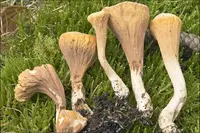
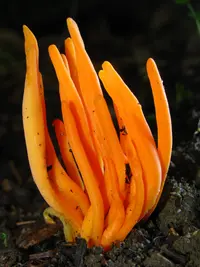
Clavariadelphus truncatus, known as truncated club, is a club-shaped woodland fungus rather than a leafy plant. It produces thick, upright, yellow to orange fruiting bodies with a flattened, “truncated” top. These often appear in groups on the forest floor, giving a small cluster effect. It naturally occurs in coniferous forests of North America and parts of Europe, usually in mossy or well‑decayed needle litter. The species prefers cool, moist, shaded habitats and relies on forest soil fungi relationships, which makes it difficult to cultivate at home. For most people, it is more practical to observe and learn how to care for truncated club in its natural habitat than to attempt active cultivation.

Care Difficulty
Hard Care

Light Preference
Partial Shade

Water Requirements
Keep Soil Moist

Temperature Preference
Cool Climate

Hardiness Zone
Unknown

Soil Texture
Loamy, Organic-rich

Soil pH
Acidic (5.5–6.5)

Soil Drainage
Moist but well-drained

Fertilization
Minimal (feed rarely)
Scan your plant to receive care tips personalized for your specific plant
Available on iOS and Android
This fungus prefers dappled forest light rather than direct, open sun.
This species relies on consistently moist, not waterlogged, forest substrate.
This fungus thrives in cool to mild conditions typical of shaded woodland floors.
This fungus is adapted to moist forest litter, so humidity around the substrate strongly affects fruiting quality.
This species fruits from forest litter and duff rather than true soil, but the underlying substrate still needs specific structure and chemistry.
This forest fungus is generally unsuitable for conventional container growing, since it relies on complex soil and mycorrhizal relationships that are hard to reproduce in pots.
This native mycorrhizal fungus relies mainly on its tree partners for nutrition and needs no direct fertilization.
Pruning is not applied to Clavariadelphus truncatus because it is a wild fungus, not a woody or leafy plant.
Cultivation in containers is atypical, so focus on carefully transplanting mycelium-colonized substrate rather than standard repotting.
Propagation of this fungus is specialized and rarely done successfully by home growers, so active methods are limited.
Outdoor colonies are naturally cold hardy in regions where they occur and generally require no special winter care.

Plant Health Check
Not sure what's wrong with your plant? Check your plant's health inside the app.
This fungus produces large, club-shaped fruiting bodies with a broad, flattened top that looks as if it has been cut off, which is the origin of the species name truncatus, meaning truncated or cut short.
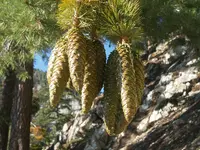
It forms mycorrhizal associations with conifer trees, especially firs, exchanging mineral nutrients from the soil for sugars produced by the tree through photosynthesis.
It is generally regarded as an edible species with mild flavor, but it is not highly prized as a culinary mushroom and can become tough and fibrous as it ages.

In some regions of western North America, this species can appear in large, scattered groups on the forest floor, creating conspicuous orange-yellow patches that stand out strongly against conifer needle litter during late summer and fall.
This fungus is considered edible but is usually rated as poor to fair quality. It has mild flavor and can become tough with age. Only harvest from clean areas and avoid specimens that are old, waterlogged, or heavily insect-damaged.
Keep your plants happy and healthy with plant identification, disease detection, and easy care guidance.