Snowy Mespilus Care (Amelanchier ovalis)

Also known as: European snowy mespilus
Snowy Mespilus

About Snowy Mespilus

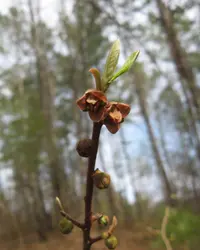
Snowy mespilus, Amelanchier ovalis, is a compact deciduous shrub or small tree known for its early white spring blossom and attractive edible berries. It usually forms a multi-stemmed, airy crown with fine branches and small oval leaves that develop good autumn color.

This species is native to sunny, rocky slopes and open woodlands in parts of Europe, so it tolerates poor, well-drained soils and moderate drought once established. It is generally undemanding and slow to moderate in growth, which makes it suitable for smaller gardens and naturalistic plantings.

Sheltered, sunny to lightly shaded positions with neutral to slightly alkaline, well-drained soil suit it best, and this adaptability simplifies how to care for Snowy Mespilus.

Main Plant Requirements

Care Difficulty

Easy Care

Light Preference

Full Sun

Water Requirements

Moderate Water

Temperature Preference

Cold Hardy

Hardiness Zone

4–8

Soil Texture

Sandy, Loamy, Rocky

Soil pH

Slightly acidic (6.5–7.0), Neutral (7.0)

Soil Drainage

Well-drained

Fertilization

Minimal (feed rarely)

Get Personalized Care Plan

Scan your plant to receive care tips personalized for your specific plant

Available on iOS and Android

How to Care for the Snowy Mespilus

Amelanchier ovalis prefers bright outdoor conditions that balance strong light with some protection.

  • Provide 6–8 hours of sun daily, with a preference for morning sun and light afternoon shade, especially in hotter regions.
  • Tolerates partial shade, but flowering and fruiting of Snowy Mespilus decrease if it receives less than about 4–5 hours of direct sun.
  • In hot summers, protect from intense late-afternoon sun to reduce leaf scorch, while in winter full sun exposure supports strong bud development.

This shrub prefers evenly moist but not saturated soil, especially during establishment.

  • Allow the top 3–5 cm of soil to dry before deep watering, ensuring moisture reaches the root zone rather than frequent shallow soaking.
  • In the first 1–2 years, monitor closely during warm, dry spells; drooping leaves and dry soil indicate the need for a thorough soak.
  • Yellowing leaves, soft shoots, and a sour smell suggest overwatering or poor drainage, while crisp leaf edges and dry, cracked soil indicate underwatering for Amelanchier ovalis.

This species is a hardy outdoor shrub that withstands a wide range of temperatures once established.

  • Optimal growth occurs around 55–75°F (13–24°C), with strong spring development and steady summer performance in these ranges.
  • Mature plants tolerate winter lows near -20°F (-29°C), but young shrubs benefit from mulch around the root zone during the first few winters.
  • In summer, it handles short periods up to about 90°F (32°C) if soil moisture is maintained; prolonged heat plus drought can cause leaf scorch and early leaf drop.

This shrub prefers outdoor ambient humidity and does not usually need special humidity management.

This species grows best in free-draining, moderately fertile mineral soil.

  • Use a loamy or sandy loam soil with some organic matter, such as compost, to support steady growth.
  • Ensure drainage is strong so water does not pool around the roots; avoid compacted or heavy clay soils.
  • Aim for slightly acidic to neutral pH around 6.0–7.5 for Amelanchier ovalis to optimize nutrient availability.
  • On heavy sites, improve structure and aeration by incorporating coarse sand or fine gravel into the top 20–30 cm.

This species can be grown in containers for several years, especially as a patio specimen.

  • Choose a deep, heavy container to provide root room and prevent wind from tipping over the shrub as it matures.
  • Use a gritty mix, such as loam-based compost blended with coarse sand or fine gravel, to keep drainage fast.
  • Raise the pot slightly on feet or bricks so water can exit freely and the drainage holes never sit in standing water.

Amelanchier ovalis usually needs only light feeding in average garden soil, as Snowy Mespilus is adapted to lean conditions.

  • Apply a thin layer of well-rotted compost around the root zone in early spring to support new growth.
  • Use a balanced slow-release fertilizer (around 10-10-10) only on poor soils, once in early spring.
  • Keep fertilizer away from the trunk and main stems to prevent burn and rot.
  • Avoid feeding in late summer and winter to prevent soft growth that may suffer in cold weather.

Pruning Amelanchier ovalis is mainly about light shaping and maintaining plant health.

  • Carry out structural pruning in late winter or very early spring before bud break.
  • Remove dead, diseased, crossing, or inward-growing branches with clean, sharp bypass pruners or loppers.
  • Thin crowded interior shoots to improve light and air, which supports flowering and reduces disease.
  • Limit cuts to smaller branches to preserve the plant’s natural multi-stemmed form and graceful habit.

Snowy Mespilus is usually grown in the ground, so focus on careful transplanting rather than frequent repotting.

  • Transplant young plants in early spring or early fall when soil is moist and temperatures are mild.
  • Look for signs such as circling roots, root-bound containers, or stalled growth before shifting to a larger pot or planting site.
  • Choose a site with well-drained soil, plant at the same depth, and water deeply to settle soil around roots.
  • Reduce transplant shock by keeping the root ball intact, mulching the root zone, and maintaining even moisture during the first growing season.

Amelanchier ovalis is commonly propagated from seed, softwood cuttings, or suckers taken from the base of mature plants.

  • Collect ripe berries, clean the seeds, and use cold stratification for several months before spring sowing.
  • Take softwood cuttings in late spring to early summer and root them in a free-draining, slightly moist medium.
  • Select basal suckers with their own roots in early spring and lift carefully to plant in a new site.
  • Provide bright, indirect light and stable moisture for young plants until established outdoors.

Amelanchier ovalis is cold hardy in much of the US and generally needs minimal winter care once established.

  • Apply a 5–8 cm layer of organic mulch over the root zone in late fall, keeping it away from the trunk.
  • Water well before the ground freezes, especially for first-year plants in lighter soils.
  • Move container-grown specimens into a sheltered, unheated but frost-free or slightly protected area in very cold climates.

Care Tips

Selective stem training

In the first 3–4 years, choose 3–5 well-spaced main stems and lightly remove competing shoots to build a stable, multi-stem framework that resists wind and supports heavy flowering and fruiting.

Understory planting strategy

Plant a thin ground layer of shallow-rooted perennials or mulch with 5–8 cm of composted bark to keep the root zone cool and moist while still allowing the shrub’s fine feeder roots to access air and water.

Blossom frost protection

During late-spring cold snaps, throw a breathable frost cloth or lightweight sheet over the shrub in the evening to protect flower buds and preserve the fruit set for the season.

Targeted fruit netting

As soon as fruits begin to blush, use fine, bird-safe netting secured around the canopy so birds cannot strip the crop, making sure the mesh is kept clear of the branches to avoid trapping wildlife.

Regular health monitoring

During the growing season, inspect leaves and young shoots every 1–2 weeks for early signs of leaf spot, mildew, or insect damage so that caring for Snowy Mespilus can include prompt pruning of affected parts and, if needed, localized treatment before problems spread.

Common Pests and Diseases

Fire blight

This disease causes sudden shoot dieback, blackened, wilted flowers and leaves that often remain hanging on the branches, giving a scorched appearance.

Solution

Prune out infected shoots at least 20–30 cm below visible symptoms during dry weather, disinfecting tools between cuts, and avoid high-nitrogen fertilization that stimulates soft, susceptible growth; in areas with a known history of fire blight, copper-based sprays at bud break and after flowering can reduce infection pressure.

Powdery mildew

This disease produces a white, powdery film on young leaves, shoots, and sometimes fruit, which can lead to leaf distortion and reduced vigor in dry, warm conditions.

Solution

Improve air circulation by thinning crowded branches, avoid overhead watering in the evening, and remove heavily infected shoots; in persistent cases, apply a labeled sulfur or potassium bicarbonate fungicide at the first signs of infection, repeating as directed during high-risk periods.

Leaf spot

Symptoms include small, dark, sometimes purple-edged spots on leaves that may coalesce and lead to early defoliation in mid to late summer, especially in humid weather.

Solution

Rake and dispose of fallen leaves to reduce overwintering spores, avoid wetting foliage when watering, and thin the canopy slightly to improve airflow; for severe, recurring outbreaks, use a registered broad-spectrum fungicide at leaf emergence and repeat as recommended during wet periods.

Aphids

These insects cluster on young shoots and leaf undersides, sucking sap and causing curling, sticky honeydew deposits, and sometimes sooty mold on foliage.

Solution

Spray colonies off with a firm jet of water, encourage natural predators such as lady beetles, and if needed treat young infestations with insecticidal soap or horticultural oil, ensuring thorough coverage of shoot tips and leaf undersides.

Pear sawfly (pear slug)

This pest feeds skeletonizing the upper leaf surface, leaving a window-pane effect and sometimes causing notable defoliation on smaller plants.

Solution

Wash larvae from foliage with a strong water spray or knock them off by hand, and allow birds and predatory insects to feed on fallen larvae; for heavier infestations, use a horticultural oil or spinosad-based product targeted to the undersides of affected leaves, following label directions carefully.

Interesting Facts

Calcicolous shrub specialist

This species is naturally restricted to dry, sunny slopes and rocky limestone or calcareous soils in central and southern Europe, making it more calcicole than many other Amelanchier species that prefer more acidic substrates.

Early insect resource

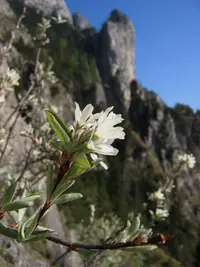
Its early spring white flowers open before or with leaf emergence and provide nectar and pollen for wild bees, hoverflies, and other early-season pollinators when few other shrubs are in bloom.

Edible serviceberries

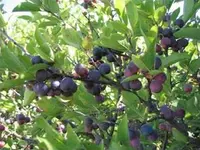
The dark blue to black pomes are edible, with a sweet flavor similar to blueberry, and are eaten by both humans and many bird species, which help disperse the seeds and support natural populations, a key aspect of Amelanchier ovalis care instructions in landscape settings.

Botan icon

Did you know?

In parts of its native range, especially in the Alps and other montane limestone regions, this species can form long-lived, low thickets that cling to cliffs and rocky outcrops, contributing to slope stabilization and creating microhabitats for specialized rock-dwelling plants and invertebrates.

FAQs about Snowy Mespilus

The small dark berries are edible when fully ripe and are often used in jams, jellies, or eaten fresh. They are sweet with mild almond-like notes. Avoid unripe fruit, which can be astringent and less palatable.

Grow Healthy Plants with Botan Care

Keep your plants happy and healthy with plant identification, disease detection, and easy care guidance.


Botan plant care app — identify plants on mobile

Explore More Plants