Berkeley's Polypore Care (Bondarzewia berkeleyi)

Berkeley's Polypore

About Berkeley's Polypore

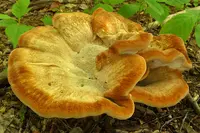
Berkeley's polypore, Bondarzewia berkeleyi, is a large bracket fungus rather than a leafy plant. It forms massive, overlapping, creamy to tan rosettes at the base of hardwood trees, especially oaks.

In nature it occurs across eastern North America, where it behaves as a weak parasite and wood decayer on living and dead trees. The fungus is not typically cultivated, and its specific needs and slow, specialized life cycle make it challenging for beginners who wish to care for Berkeley's Polypore.

It generally favors shaded woodland conditions, consistent moisture, and well-aerated, organic-rich substrates similar to forest soil and decaying wood.

Main Plant Requirements

Care Difficulty

Moderate Care

Light Preference

Partial Shade

Water Requirements

Keep Soil Moist

Temperature Preference

Cold Hardy

Hardiness Zone

4–9

Soil Texture

Loamy, Organic-rich

Soil pH

Acidic (5.5–6.5), Slightly acidic (6.5–7.0)

Soil Drainage

Moist but well-drained

Fertilization

Minimal (feed rarely)

Get Personalized Care Plan

Scan your plant to receive care tips personalized for your specific plant

Available on iOS and Android

How to Care for the Berkeley's Polypore

This wood-decay fungus prefers consistent shade with only limited direct sun exposure at the forest floor.

  • Aim for bright shade or dappled light under trees, with at most 1–2 hours of gentle early-morning sun and no harsh afternoon sun.
  • Site Berkeley's Polypore where surrounding canopy or shrubs filter light, mimicking mature woodland conditions with shifting, speckled light.
  • In late spring and summer, protect from drying sun that can overheat the substrate; in cooler seasons, slightly more open, indirect light is acceptable.

This fungus relies on steady ambient moisture and a consistently moist, not saturated, woody substrate.

  • Maintain host tree roots or buried wood pieces slightly moist, allowing the top 2–5 cm of surrounding soil to dry slightly between natural rain events or supplemental watering.
  • Increase watering frequency during hot, dry periods if the soil and wood feel dry to the touch, focusing on deep soaking rather than frequent light sprinkling.
  • Watch for signs of stress: cracked, very dry soil and shriveling fruiting bodies suggest underwatering, while foul odors and slimy, collapsing tissue may indicate waterlogged conditions.

This species fruits best in mild to warm conditions typical of temperate woodlands.

  • Optimal fruiting temperatures are about 60–75°F (16–24°C), with steady soil moisture and shade supporting reliable development.
  • The organism can survive colder periods down to around 20–25°F (-6 to -4°C) in dormant mycelial form, but fruiting bodies are damaged by hard freezes.
  • Sustained heat above 85°F (29°C), especially with low humidity, can dry and deform clusters, so provide extra shade and moisture buffering during hot spells.

Humidity is not a meaningful factor for Bondarzewia berkeleyi grown outdoors in typical climates.

This fungus needs consistently moist, organic-rich ground around suitable host trees rather than conventional potting soil.

  • Use deep, humus-rich woodland-type soil with abundant decomposed leaves or wood chips to mimic natural forest conditions.
  • Ensure moisture-retentive but not waterlogged conditions by combining loamy soil with coarse bark or chunky wood pieces for structure and aeration.
  • Maintain slightly acidic to neutral pH around 5.5–7.0, similar to many hardwood forest floors where Bondarzewia berkeleyi naturally occurs.
  • Avoid compacted, heavily tilled, or chemically treated soils, which reduce fungal colonization and can limit fruiting body development.

This species is not realistically suitable for container growing outside specialized research or cultivation setups.

This wood-decay fungus naturally feeds from its host tree and usually needs no deliberate fertilization in gardens or landscapes.

Pruning needs for Bondarzewia berkeleyi are minimal and focus mainly on hygiene and safety around host trees.

  • Remove old, decaying fruiting bodies with a sharp knife once they collapse or become mushy to reduce slipping hazards.
  • Cut close to the wood surface without gouging bark or living tissue on the host tree.
  • Collect and dispose of removed material in the trash if spore spread or aesthetics are a concern.

This fungus is a wood-decay organism that is rarely grown in containers, so management centers on transplanting host trees rather than the fungus itself.

  • Transplant only young, noninfected host trees; established trees with large brackets are best left undisturbed.
  • If a container-grown host shows circling roots or slow growth, shift to a slightly larger pot in late winter or early spring.
  • Handle roots gently, keeping the root ball intact and moist to minimize stress and reduce the chance of opportunistic decay.
  • Avoid moving trees already colonized by this fungus, since disturbance can worsen structural instability over time.

Practical propagation of this wood-decay fungus is rarely attempted in home settings and is usually left to natural spore spread in forests or research culture work.

This species is naturally cold hardy in its native range and generally needs no special winter care once established on a host tree.

Care Tips

Host tree choice

Select healthy, mature hardwoods such as oak or beech as hosts and avoid already heavily decayed or structurally compromised trees, since the fungus needs stable wood to form large, consistent fruiting bodies.

Controlled inoculation

Use sterilized dowel or wedge inoculation into fresh pruning cuts or drilled holes at the root flare, then seal with a breathable wax or tree wound compound to give the fungus a protected entry point while limiting contamination from competing fungi.

Moisture buffering mulch

Apply a 5–8 cm ring of coarse wood chips around the base of the host tree, keeping mulch 5–10 cm away from the trunk, to stabilize soil moisture and create a favorable microclimate for mycelium development.

Fruiting body management

Harvest brackets by cutting cleanly at the base rather than pulling, and leave some tissue attached so the organism conserves energy and is more likely to fruit again in future seasons.

Monitoring wood stability

Inspect the host tree annually for signs of structural weakness, such as cracking, excessive hollowing, or large dead limbs, since caring for Berkeley's Polypore also involves managing the safety risks that come with advanced heartwood decay.

Common Pests and Diseases

butt and root decay

This disease causes extensive white rot of the lower trunk flare and main structural roots of oak hosts, leading to decline and structural weakness. Symptoms include large overlapping rosettes of fruiting bodies at the base of the tree and progressive crown thinning in the host oak.

Solution

Management focuses on long-term tree risk assessment and removal of severely decayed or leaning host trees, since structural failure is common once this fungus is well established. Avoid mechanical injury and soil compaction around the root zone of susceptible oaks, and do not replant highly susceptible species in the same location if a large infection center is present.

secondary wood decay

This disease develops when the fungus colonizes already stressed or wounded trees, expanding existing decay pockets in the lower trunk and roots. This process accelerates the breakdown of structural wood but may show few external symptoms beyond basal fruiting bodies and subtle changes in bark texture or sound when tapped.

Solution

Management relies on early detection during regular tree inspections, followed by pruning of high-risk limbs and, when necessary, staged removal of compromised trees. Maintain overall tree vigor through proper watering, mulching, and avoidance of trunk injuries so that potential hosts are less vulnerable to colonization.

basal canker expansion

This disease occurs where pre-existing basal cankers or wounds on oaks are colonized, causing the necrotic area to widen and deepen into structural tissue. Symptoms include irregular dead patches at the trunk base, bark cracking, and formation of large fruiting bodies overlapping the affected area.

Solution

Management includes careful evaluation by a qualified arborist, removal of loose bark and dead tissue to inspect the extent of decay, and ongoing structural monitoring. Protect the trunk base from mower and string trimmer damage, maintain a mulch ring instead of turf against the trunk, and, if decay is advanced, schedule removal before failure risk becomes unacceptable.

sap beetle attraction

These insects are attracted to the moist, spore-rich surfaces of large fruiting bodies, where they feed and sometimes disperse spores. This activity does not usually damage the fungus directly but can indicate that fruiting bodies are aging and breaking down, and beetle tunneling can create minor nuisance swarms around the base of the tree.

Solution

Management is usually limited to physical removal and disposal of old fruiting bodies from the site before they collapse and attract large beetle populations. Keep the area around the trunk clean of decaying woody debris, and if beetles enter nearby structures, use door and window screens and vacuum removal rather than chemical treatments.

Interesting Facts

Massive rosette fruiting

This species forms huge, overlapping rosettes at the base of hardwoods, especially oaks, with single fruiting bodies often reaching 40–60 cm or more across.

White rot specialist

It is a white rot fungus that can degrade both lignin and cellulose in wood, contributing to heart rot in living trees and accelerating the breakdown of fallen trunks.

Summer and early fall

Unlike many fleshy polypores that appear mainly in cool, wet seasons, this species commonly fruits in warm, humid weather from mid-summer into early fall in eastern North America.

Botan icon

Did you know?

Individual fruiting bodies of this species can persist and slowly expand for several weeks, often reappearing for multiple years from the same underground mycelial colony at the base of an infected tree.

FAQs about Berkeley's Polypore

This fungus is best grown outdoors on suitable hardwood hosts or inoculated logs. It needs natural temperature fluctuations, high humidity, and decaying wood. Berkeley's Polypore indoor care is generally impractical except for specialized, controlled cultivation setups.

Grow Healthy Plants with Botan Care

Keep your plants happy and healthy with plant identification, disease detection, and easy care guidance.

Botan plant care app — identify plants on mobile

Explore More Plants