Smith's Bolete Care (Boletus smithii)

Smith's Bolete

About Smith's Bolete

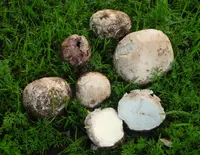
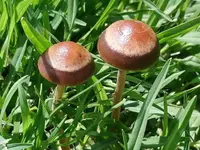
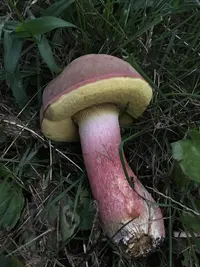
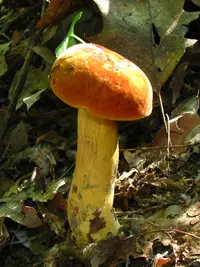
Smith's Bolete, Boletus smithii, is a wild mushroom-forming fungus rather than a traditional houseplant. It forms mycorrhizal partnerships with trees, meaning its roots and tree roots exchange nutrients. The fungus produces sturdy, medium-sized fruiting bodies with a brown, often slightly velvety cap and a thick, pale to yellowish stem.

In nature, it is usually found in forested areas of western North America, often in association with conifers. It is not suited to typical indoor culture, since it depends on complex soil life and living tree partners, so attempts to care for Smith's Bolete at home are usually unsuccessful.

It prefers undisturbed, moist, well-drained forest soils with consistent organic matter and natural shade patterns.

Main Plant Requirements

Care Difficulty

Hard Care

Light Preference

Partial Shade

Water Requirements

Keep Soil Moist

Temperature Preference

Cool Climate

Hardiness Zone

Unknown

Soil Texture

Loamy, Silty, Organic-rich

Soil pH

Acidic (5.5–6.5), Slightly acidic (6.5–7.0)

Soil Drainage

Moist but well-drained

Fertilization

Minimal (feed rarely)

Get Personalized Care Plan

Scan your plant to receive care tips personalized for your specific plant

Available on iOS and Android

How to Care for the Smith's Bolete

This ectomycorrhizal fungus prefers dappled woodland light rather than open, direct sun.

  • Provide bright, filtered light under a tree canopy, with 2–4 hours of gentle morning sun and shade or broken light for the rest of the day.
  • Avoid strong midday and afternoon sun; exposed sites can overheat and dry the soil, suppressing Smith's Bolete fruiting and damaging associated roots.
  • In summer, favor north or east-facing forest edges; in cooler seasons, slightly more open light is acceptable as long as the soil does not dry out quickly.

This mushroom species depends on consistently moist, well-drained soil around its host tree roots.

  • Aim for soil that stays evenly moist in the top 5–10 cm, never waterlogged; sandy or loamy soil with good drainage supports healthy mycelium growth.
  • Use rainfall as a guide; if the top 3–5 cm of soil are dry and crumbly, supplemental water is useful, especially during 3–7 day dry spells in the growing season.
  • Reduce extra watering in cool or wet seasons to prevent standing water, which encourages rot and reduces Boletus smithii fruiting; pale, shriveled caps suggest drought stress.

This species fruits best in mild to cool conditions typical of temperate woodlands.

  • Optimal fruiting usually occurs around 55–70°F (13–21°C), with mycelium remaining active as long as soil stays moist and not excessively hot.
  • The fungus tolerates short drops near 32°F (0°C), but repeated hard frosts below 28°F (-2°C) can halt fruiting and damage exposed fruiting bodies.
  • Prolonged heat above 80°F (27°C) with dry soil suppresses growth; in hot spells, shade and soil moisture buffers temperature swings and protect the underground network.

This ectomycorrhizal fungus requires fairly moist, forest-like air to fruit well.

  • Aim for 60–80% humidity around developing fruiting bodies, similar to a damp woodland floor.
  • Dry air causes caps to crack, pore surface to yellow and shrivel, and margins to harden prematurely.
  • Increase humidity by misting the surrounding substrate, using a humidifier nearby, or placing trays of wet perlite close to the Smith's Bolete patch.

This species depends on a loose, well-structured, forest-type substrate rather than compact, dense ground.

  • Use a friable, loamy to sandy-loam soil rich in organic matter, mimicking leaf-litter forest floors.
  • Target pH 5.0–6.5, adding pine needle compost or leaf mold to slightly acidify alkaline garden soil if needed.
  • Ensure fast drainage by avoiding clay-heavy sites and incorporating coarse sand or fine bark to increase pore space and aeration.
  • For Boletus smithii, avoid heavily fertilized or disturbed ground, since excess nutrients and compaction reduce mycorrhizal formation.

This species is not realistically suitable for container growing, because it relies on complex ectomycorrhizal relationships with tree roots that containers cannot support long term.

This ectomycorrhizal fungus relies mainly on its tree host, so direct fertilization of Boletus smithii is usually unnecessary.

Boletus smithii is a wild, mycorrhizal fungus and is not pruned in the way ornamental plants or shrubs are managed.

This species forms a symbiotic root association with trees, so Boletus smithii is not suited to conventional repotting or transplanting in containers.

  • Cultivation focuses on maintaining a healthy host tree and undisturbed soil rather than moving the fungus itself.
  • Avoid digging or tilling around known fruiting areas, which can break fungal mycelium and reduce future mushroom production.
  • If relocating a host tree, expect the fungal association to be disrupted, and do not rely on successful transfer of the bolete.

Propagation of Boletus smithii is challenging for home growers and is rarely done successfully outside specialized research or forestry settings.

This woodland bolete is naturally cold hardy in its native range and does not require targeted winter care in gardens or landscapes.

Care Tips

Host tree selection

Establish the fungus only with compatible conifer hosts, ideally mature firs or related species, and avoid disturbing their root zone once the mycorrhizal partnership has formed.

Minimal soil disturbance

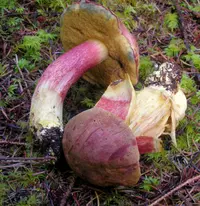
Mark the fruiting area and avoid digging, tilling, or heavy foot traffic there, since intact fine roots and fungal mycelium are essential for reliable future flushes.

Leaf litter management

Maintain a thin, natural layer of conifer needles and leaves over the soil rather than bare ground or thick mulch, which helps conserve moisture while still allowing fruiting bodies to emerge.

Targeted moisture monitoring

Use a simple soil probe or a narrow hand trowel to check moisture 5–10 cm deep near the dripline of the host tree, and only irrigate during extended dry periods to keep soil evenly moist but not saturated.

Careful harvest technique

Cut mushrooms cleanly at the base with a knife rather than pulling, then gently replace disturbed leaf litter so the underground mycelium remains protected for ongoing success in growing Smith's Bolete.

Common Pests and Diseases

Mycena overgrowth

This disease appears when small, pale mycena mushrooms colonize the same substrate and outcompete Boletus mycelium for nutrients and space. Symptoms include dense clusters of tiny caps and a noticeable decline or disappearance of Boletus smithii fruiting bodies.

Solution

Remove and discard heavily colonized substrate and fruiting bodies, then adjust moisture so the surface is moist but not constantly wet and reduce nutrient-rich debris that favors fast competitors. Improve airflow around the site or fruiting containers and, if cultivating, re‑inoculate fresh, well‑drained substrate with clean Boletus smithii spawn to restore dominance of the desired fungus.

Trichoderma green mold

This disease is caused by Trichoderma species that produce bright green, powdery patches on colonized substrate, leading to poor or aborted mushroom development. Symptoms include rapid spread of green mold, a musty odor, and collapse of young Boletus smithii primordia.

Solution

Promptly cut out and discard any visibly green, contaminated sections and avoid disturbing spores into clean areas. Lower overall moisture, increase air exchange, and improve hygiene by sterilizing tools and containers; for cultivation, start new culture from clean tissue or spores rather than trying to rescue heavily infected blocks.

Fungus gnat larvae

This pest lives in moist substrate where larvae feed on fungal mycelium and young fruiting bodies, creating tunnels and soft spots. Symptoms include small black adult gnats flying around the site and damaged or deformed mushroom caps and stems.

Solution

Reduce excess surface moisture, remove decaying organic debris, and cover substrate with a fine mesh or breathable cover to block egg‑laying adults. Use yellow sticky traps to capture flying gnats and, in controlled cultivation, allow the surface to dry slightly between mistings while maintaining internal humidity to limit larval survival without stopping Boletus smithii development.

Sciarid fly infestation

These insects are small dark flies whose larvae bore into mushroom stems and caps, leaving discolored, water‑soaked tissue that rots quickly. Symptoms include pinholes, internal tunneling, and a decline in both quality and number of fruiting bodies.

Solution

Place fine mesh or insect netting around outdoor beds or fruiting setups and use sticky cards to monitor and reduce adult populations. Remove and discard infested mushrooms promptly and keep substrate covered when possible; for structured cultivation, improve sealing of doors and vents and maintain clean, swept floors to reduce breeding sites.

Slug and snail damage

This pest damage occurs when slugs and snails feed on developing fruiting bodies, leaving irregular holes, slime trails, and sometimes complete loss of young mushrooms. Symptoms include chewed caps and stems, especially after rain or heavy watering.

Solution

Hand‑pick slugs and snails during evening or early morning, and use physical barriers such as copper tape, coarse sand, or rough mulch rings around the Boletus patch. Limit dense groundcover and keep nearby debris and boards off the ground to reduce moist hiding places and lower grazing pressure while growing Smith's Bolete in garden or woodland settings.

Interesting Facts

Pacific Northwest specialist

This bolete is native to coniferous forests of the Pacific Northwest, especially in coastal and montane areas where it associates mainly with spruce and fir trees through ectomycorrhizal symbiosis.

Subtle staining reaction

Unlike many blue-staining boletes, its pores and flesh show only very weak or slow color change when bruised, which helps distinguish it from some toxic lookalike species that stain rapidly and intensely.

Named for Alexander H. Smith

The species epithet smithii honors American mycologist Alexander H. Smith, who made major contributions to North American mushroom taxonomy and described numerous bolete species in detail.

FAQs about Smith's Bolete

This bolete is generally regarded as inedible or of unknown edibility. Identification within the Boletus genus is complex, and some related species can cause stomach upset. For safety, avoid consumption unless confirmed by an expert mycologist.

Grow Healthy Plants with Botan Care

Keep your plants happy and healthy with plant identification, disease detection, and easy care guidance.

Botan plant care app — identify plants on mobile

Explore More Plants