palmyra palm Care (Borassus aethiopum)

Also known as: borassus palm, African Fan Palm, African Palmyra Palm, Selati Palm
palmyra palm

About palmyra palm

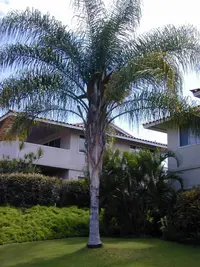
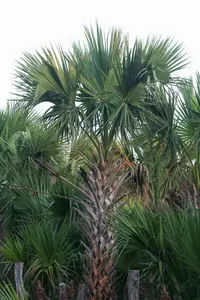
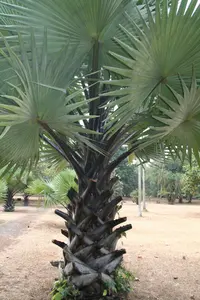
Palmyra palm, Borassus aethiopum, is a large, slow-growing fan palm that eventually forms a single thick trunk and a broad, rounded crown. Mature trees can dominate open landscapes and provide strong architectural structure.

This species is native to tropical Africa, where it grows in savannas, coastal plains, and seasonally dry areas. It is adapted to high heat, strong sun, and marked dry seasons, which influences how to care for palmyra palm in cultivation.

The palm is long-lived but demanding in space and time, so it suits large gardens rather than small yards or containers. It generally prefers full sun, warmth, and well-drained, sandy or loamy soils with only occasional water once established.

Main Plant Requirements

Care Difficulty

Hard Care

Light Preference

Full Sun

Water Requirements

Low Water

Temperature Preference

Tropical / Frost Sensitive

Hardiness Zone

11–13

Soil Texture

Sandy, Loamy, Organic-rich

Soil pH

Acidic (5.5–6.5), Slightly acidic (6.5–7.0)

Soil Drainage

Well-drained

Fertilization

Minimal (feed rarely)

Get Personalized Care Plan

Scan your plant to receive care tips personalized for your specific plant

Available on iOS and Android

How to Care for the palmyra palm

This sun-loving African palm develops best with strong, direct light from an early age.

  • Provide full sun for 8–10 hours per day once established; seedlings benefit from 4–6 hours of gentler morning sun plus bright light the rest of the day.
  • It tolerates light, shifting partial shade, but prolonged shade causes slow growth, sparse crowns, and weak, stretched trunks in palmyra palm.
  • In very hot regions, protect young plants from harsh afternoon sun with temporary shade cloth to reduce leaf scorch during the first 1–2 summers.

This drought-tolerant palm prefers deep, infrequent watering that allows the soil surface to dry between soakings.

  • In well-drained ground, water deeply when the top 5–8 cm of soil feel dry, aiming to moisten the root zone 30–40 cm down rather than applying small, frequent splashes.
  • Reduce watering in cooler seasons, supplying only enough to prevent complete soil desiccation; mature Borassus aethiopum can bridge long dry periods once roots are deep.
  • Watch for overwatering signs such as soft, yellowing lower fronds and sour-smelling soil, and underwatering signs like crisp leaflet tips and slow new frond expansion.

This species is adapted to hot tropical savannas and performs best in consistently warm climates.

  • Optimal growth occurs around 77–95°F (25–35°C), with steady warmth and a pronounced warm season supporting trunk thickening and robust leaf production.
  • Mature plants handle intense heat above 100°F (38°C) if soil moisture is sufficient, but young palms benefit from some protection from hot, drying winds.
  • The palm is highly frost sensitive; growth slows below 60°F (16°C), tissue damage can appear near 40°F (4°C), and repeated or hard frost may kill seedlings and young plants.

Humidity is rarely a limiting factor for Borassus aethiopum in typical outdoor conditions.

Soil for Borassus aethiopum must be fast-draining and structurally stable to support its deep root system.

  • Use sandy or sandy-loam soil with coarse texture to prevent waterlogging while allowing deep root penetration.
  • Aim for slightly acidic to neutral pH around 6.0–7.5, avoiding strongly acidic or saline substrates.
  • Mix sharp sand or fine gravel with a smaller portion of compost to improve drainage while supplying moderate nutrients.
  • Avoid compacted clay, peat-heavy mixes, or spots where water stands for more than a few hours after rain.

This species is generally unsuitable for long-term container growing, but short-term cultivation of young plants is possible.

  • Choose a tall, heavy pot that resists tipping as the stiff juvenile leaves become wind-catching and top-heavy.
  • Select a mineral-based mix in a deep container so the strong taproot can extend downward without circling early.
  • Position the container in a very bright, open spot outdoors where wind exposure helps strengthen the trunk without drying the substrate completely.

This species is adapted to low-nutrient soils, so palmyra palm needs only modest, careful feeding in cultivation.

  • Use a balanced slow-release fertilizer (around 10-10-10 or similar NPK) or a light topdressing of well-rotted compost in spring.
  • Feed once at the start of the warm growing season; large landscape specimens seldom need more.
  • Apply at half the label strength for palms, keeping fertilizer away from the trunk to avoid burn.
  • Do not feed in late fall or winter, when growth slows and unused nutrients may accumulate in the soil.

Borassus aethiopum needs very limited pruning, focused mainly on safety and hygiene rather than shaping.

  • Carry out any pruning in late dry season or late winter, when growth is slower and wounds dry quickly.
  • Remove only dead, broken, or badly diseased fronds, cutting them close to the trunk without damaging living tissue.
  • Avoid removing green, functional leaves, since this reduces photosynthesis and can weaken the palm.
  • Use clean, sharp loppers or a pruning saw, disinfecting blades between trees to reduce disease spread.

This palm is usually grown in the ground, and transplanting must be planned carefully due to its large taproot.

  • Transplant very young plants only, before the taproot becomes deep and rigid; older specimens rarely move successfully.
  • Choose late spring or early summer, when soil is warm and the plant can re-establish quickly.
  • Look for signs such as roots circling a nursery container or slowed growth, then shift into a deep, well-drained site.
  • Minimize root disturbance, keep the root ball moist, water deeply after planting, and provide temporary shade to reduce stress.

Propagation of Borassus aethiopum is done almost exclusively from seed and is slow but reliable under stable conditions.

  • Collect fresh, fully mature seeds; older, dried seeds germinate poorly.
  • Sow in late spring to early summer in a deep container or bed with very well-drained, sandy mix.
  • Maintain warmth around 77–86°F and steady moisture, not waterlogging, to support long germination periods.
  • Position seeds horizontally or with the eye slightly exposed, and avoid disturbing them once root emergence begins.

This tropical palm is frost-sensitive and needs thoughtful winter care in regions with cool or cold seasons.

  • In ground, it suits frost-free climates; even light frost can damage young foliage.
  • Apply a 5–10 cm mulch layer around the root zone, keeping it away from the trunk to moderate soil temperature.
  • For container plants, move indoors or into a heated greenhouse before temperatures drop below 50°F.
  • Reduce watering in winter, keeping the soil barely moist while growth is slow.

Care Tips

Deep taproot space

Plant young specimens in their final ground position or a very deep container at least 50–60 cm tall so the strong taproot can develop without circling, which reduces later transplant shock and growth potential.

Secure wind anchoring

In windy sites, stake the palm only for the first 12–18 months using 2–3 sturdy stakes and soft ties, then remove supports once the trunk thickens so the plant can sway slightly and build natural structural strength.

Maintain clear trunk

As older fronds die back and dry, prune them cleanly near the base and remove persistent leaf bases or skirts to improve air movement around the crown and reduce habitat for borers and rodents.

Rigorous weed control

Keep a vegetation-free ring of at least 60–90 cm around the base, using mulch or manual weeding, so grasses and aggressive herbs do not outcompete the slow-growing root system for water and nutrients.

Drought conditioning regime

Once established outdoors, gradually lengthen the interval between deep waterings during warm seasons to encourage deeper rooting and higher drought tolerance, which is essential for long-term success when growing palmyra palm in arid or semi-arid regions.

Common Pests and Diseases

Leaf spot fungi

This disease causes small water‑soaked or brown lesions on older fronds that may merge into larger dead patches under humid conditions. Symptoms include premature yellowing and drop of affected leaflets on stressed or crowded trees.

Solution

Remove and dispose of heavily spotted or dead fronds, keeping tools clean between cuts, and avoid overhead watering or dense planting that keeps foliage wet. For high‑value trees, improve airflow around the crown, reduce mechanical injury, and in plantations follow local extension guidance on registered palm fungicides if spots are rapidly expanding.

Palm weevils

This pest includes large borers such as African palm weevils whose larvae tunnel in the crown and upper stem, causing frond collapse and sometimes sudden plant death. Symptoms include oozing sap, fermenting odor, and the presence of large exit holes or fronds breaking at the base.

Solution

Regularly inspect the crown for boring holes, wilted young fronds, or sap exudation and remove and destroy heavily infested or dying trees to prevent spread. In plantation or landscape settings, use pheromone or bait traps away from healthy trees, promptly remove cut stumps that attract egg‑laying adults, and where permitted apply targeted stem or crown treatments recommended for palm weevil control.

Rhinoceros beetles

These insects bore into the crown to feed on unopened fronds, leaving V‑shaped cuts, shredded spear leaves, and sometimes a characteristic frass (chewed fiber) in leaf bases. Severe damage can slow growth and deform the canopy, especially in young or recently transplanted palms.

Solution

Physically remove adults found in the crown at night, destroy breeding sites such as rotting palm stumps or uncomposted organic piles, and keep the area around the trunk free of decaying woody material. In larger plantings, monitor with light or pheromone traps and, if recommended locally, apply biological controls such as entomopathogenic fungi or nematodes into crown areas where larvae hide.

Scale insects

These insects attach to leaflets, petioles, and sometimes young stems as small bumps, extracting sap and causing yellow stippling, reduced vigor, and sticky honeydew that supports sooty mold. Heavy infestations can make fronds look dull, dusty, and weakened, especially on stressed trees or nursery stock.

Solution

Prune and discard heavily infested fronds where practical, then wash remaining foliage with a strong stream of water to knock off mobile stages. For persistent infestations, apply a suitable horticultural oil or systemic insecticide labeled for palms during mild temperatures, and reduce plant stress with proper watering and balanced nutrition to help the palm tolerate minor populations.

Ganoderma butt rot

This disease is caused by wood‑decay fungi attacking the lower trunk and root collar, leading to gradual decline, canopy thinning, and possible structural failure. Symptoms include production of hard, shelf‑like fruiting bodies at the base of the trunk and progressive yellowing despite otherwise adequate care.

Solution

There is no curative treatment once decay is advanced, so affected palms should be assessed for safety and removed if structurally compromised. Avoid trunk wounds, do not plant palms on old infected stumps or in poorly drained, compacted sites, and dispose of infected stumps and fruiting bodies to reduce local inoculum when planning new plantings or growing palmyra palm in managed landscapes.

Interesting Facts

Deep taproot strategy

This palm develops an exceptionally strong taproot that can penetrate several meters, allowing it to access deep groundwater and survive long dry seasons in savanna climates.

Sexes on separate trees

It is dioecious, meaning individual palms are either male or female, so only female trees produce the large, fibrous fruits with edible jelly-like seeds.

Architectural leaf structure

The leaves are rigid, fan-shaped, and strongly costapalmate, with a prominent midrib that gives mechanical strength against wind in open landscapes.

Botan icon

Did you know?

In parts of West and Central Africa, this species is a keystone resource in traditional agroecosystems, where its long-lived palms can remain productive for many decades, providing fruits, sap, and materials while withstanding repeated seasonal droughts.

FAQs about palmyra palm

Growth is slow, especially in the first years. Seedlings and juveniles may add only 10–30 cm per year. Once established, trunk height still increases modestly, so planning long term is essential when growing palmyra palm.

Grow Healthy Plants with Botan Care

Keep your plants happy and healthy with plant identification, disease detection, and easy care guidance.

Botan plant care app — identify plants on mobile

Explore More Plants