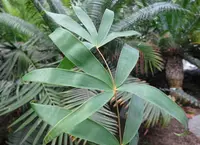
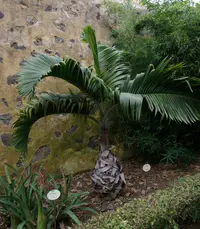
Palmiste poison Care (Hyophorbe indica)

Palmiste poison

About Palmiste poison

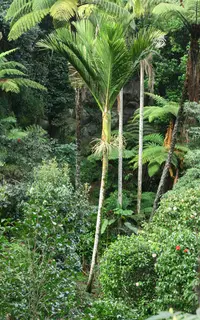
Hyophorbe indica, commonly called Palmiste poison, is a slow-growing palm from the Mascarene Islands, especially Réunion. It has a slender gray trunk topped with a neat crown of arching, feather-like fronds. Young plants show a more compact, ornamental form that gradually becomes an elegant small tree. In cultivation it is considered challenging, mainly due to its sensitivity to cold and need for stable, warm conditions. This species prefers bright light, evenly moist but well-drained soil, and good air movement. Gardeners who care for Palmiste poison often grow it in containers or protected gardens in mild, frost-free climates.

Main Plant Requirements

Care Difficulty

Moderate Care

Light Preference

Full Sun

Water Requirements

Moderate Water

Temperature Preference

Tropical / Frost Sensitive

Hardiness Zone

10–11

Soil Texture

Sandy, Loamy, Organic-rich

Soil pH

Acidic (5.5–6.5), Slightly acidic (6.5–7.0)

Soil Drainage

Well-drained

Fertilization

Light (every 4–6 weeks)

Get Personalized Care Plan

Scan your plant to receive care tips personalized for your specific plant

Available on iOS and Android

How to Care for the Palmiste poison

Hyophorbe indica prefers bright outdoor conditions with controlled direct sun exposure.

  • Provide 4–6 hours of morning sun with light shade or filtered light during harsh afternoon hours to protect fronds from scorch.
  • Tolerates light partial shade, but dense shade causes slow growth, weak trunks, and sparse, pale fronds in Palmiste poison plantings.
  • In hot summers, increase afternoon shade and mulch the root zone; in cooler seasons, allow more direct sun to maintain compact, healthy growth.

Hyophorbe indica prefers evenly moist but never waterlogged soil around its root zone.

  • Water deeply when the top 3–5 cm of soil feels dry, allowing moisture to reach the full root depth while avoiding standing water.
  • In summer or dry, windy weather, expect to water more often; in cooler or rainy seasons, extend intervals and rely on rainfall if soil drains well.
  • Watch for yellowing, mushy leaf bases as a sign of overwatering and browning, brittle leaflet tips as a sign the palm needs water sooner.

This palm grows best in warm, frost-free climates with stable temperatures.

  • Aim for 70–85°F (21–29°C) for active growth, with slightly cooler nights improving overall vigor.
  • Protect from temperatures below 45°F (7°C); brief dips to 40°F (4°C) may be tolerated but repeated chills stunt growth and can scar trunks.
  • In hot regions, it handles up to 95°F (35°C) if soil moisture is adequate and the crown receives some relief from extreme afternoon heat.

This palm prefers moderately humid air but usually adapts to typical indoor levels.

  • Aim for 40–60% humidity to support steady foliage development and minimize leaflet browning.
  • It tolerates short dry-air periods, but prolonged <30% humidity can cause brown tips and edges on fronds.
  • Increase humidity with a nearby humidifier or grouped plants; use pebble trays only if water never submerges the container base.

This species needs a sharply draining, airy mix that still holds moderate moisture around the roots.

  • Use a sandy or loamy mix with strong structure, such as 40% coarse sand, 30% compost, and 30% perlite or pumice.
  • Ensure fast drainage so water clears the pot within seconds; avoid mixes dominated by fine peat or clay that stay wet for days.
  • A slightly acidic to neutral pH of 6.0–7.0 suits Hyophorbe indica and supports balanced nutrient availability.
  • Improve aeration by including chunky components like pine bark or horticultural grit, and avoid any mix that compacts into a dense mass.

This palm adapts well to container growing when the pot is chosen for drainage and stability.

  • Choose a deep, heavy container (often terracotta) to counter the top-heavy crown and reduce tipping in wind or on balconies.
  • Select a pot only slightly wider than the root mass so the mix dries predictably instead of staying wet in unused outer zones.
  • Ensure large, unobstructed drainage holes and elevate the pot on feet so excess water escapes quickly and does not reabsorb from saucers.

Hyophorbe indica benefits from light, measured feeding in containers, while in-ground plants usually manage with modest nutrition.

  • Use a balanced slow-release fertilizer (around 10-10-10 or 14-14-14) or well-aged compost for Palmiste poison grown in pots.
  • Feed every 8–10 weeks during the warm growing season, avoiding midwinter applications.
  • Apply at half the label rate for palms to prevent salt buildup and nutrient burn.
  • Reduce or stop feeding in late fall and winter when growth slows.

Hyophorbe indica requires minimal pruning, focused on cleanliness and safety rather than shaping.

  • Carry out light pruning in late spring or early summer when growth is active.
  • Remove only dead, brown, or storm-damaged fronds; leave any green tissue intact.
  • Cut fronds close to the trunk with clean, sharp loppers or a pruning saw, avoiding cuts into live trunk tissue.
  • Avoid removing healthy lower fronds excessively, as this can stress the palm and slow growth.

Container-grown Hyophorbe indica or young nursery plants benefit from careful transplanting to limit root disturbance.

  • Transplant or up-pot in late spring or early summer, once night temperatures stay above 60°F.
  • Look for roots circling the container, poor drainage, or slow growth as signals the plant is pot-bound.
  • Move up only 1–2 pot sizes, keeping the root ball intact and setting the crown at the same soil level.
  • Water thoroughly after planting, shade lightly for 1–2 weeks, and avoid heavy fertilization until new growth appears.

Hyophorbe indica is propagated almost exclusively from seeds, which require warmth and patience to germinate.

  • Sow fresh, cleaned seeds in late spring or early summer for the best results.
  • Use a sterile, very well-drained mix (such as 50% coarse sand or perlite) in small pots or trays.
  • Maintain 75–85°F soil temperature, high humidity, and bright, indirect light during germination.
  • Keep the medium just moist, allow for slow, uneven germination, and transplant seedlings only after roots are firm.

This tropical palm is frost sensitive and needs thoughtful winter care outside USDA zones 10–11.

  • Avoid exposure to temperatures below 35–40°F, which can damage foliage and growing tips.
  • Mulch the root zone with 5–8 cm of coarse organic material, keeping it away from the trunk base.
  • Wrap young outdoor stems with breathable frost cloth during cold nights.
  • Move container plants indoors or into a heated greenhouse before the first frost, providing bright, indirect light.

Care Tips

Root zone protection

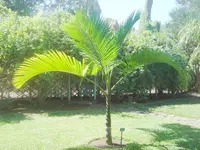
In ground, apply a 5–8 cm ring of coarse mulch around but not touching the trunk to buffer soil temperature, reduce splash that can spread fungal spores, and protect the shallow roots from mechanical damage during maintenance.

Wind exposure management

Site the palm where taller shrubs, fences, or windbreak netting reduce strong prevailing winds, which helps prevent leaflet shredding and minimizes stress on the slender trunk as it matures.

Trunk base hygiene

Keep the trunk base clear of soil, mulch, and debris and avoid piling substrate against it, which lowers the risk of bud and stem rot on this single-growing-point palm.

Container anchoring technique

For large potted specimens, use a wider, heavier container or place bricks in the pot base so the tall, narrow crown is less likely to tip over in gusts or when the substrate is dry and lighter.

Cold event preparation

In marginal climates, move container plants against a warm wall and wrap the crown lightly with breathable frost cloth before short cold spells, since this single-stem palm cannot recover if the growing tip is killed; this is a key step when growing Palmiste poison near its minimum temperature limits.

Common Pests and Diseases

Red palm mite

This pest feeds on the underside of leaflets, causing yellow speckling, bronzing, and eventual leaf drying, especially in hot, dry conditions. Infestations can progress quickly on young palms and stressed container plants.

Solution

Rinse leaf undersides thoroughly with a strong stream of water, then apply a horticultural oil or insecticidal soap, repeating every 7–10 days until new growth is clean. Improve humidity, reduce heat stress, and avoid overhead water that splashes between palms to limit spread when caring for Palmiste poison.

Palm aphids

These insects cluster on young fronds and flower stalks, sucking sap and excreting sticky honeydew that encourages sooty mold growth. Symptoms include distorted new growth and sticky, blackened leaf surfaces.

Solution

Prune and discard heavily infested fronds, then wash remaining foliage with water and a mild insecticidal soap, focusing on the bases of leaflets. Encourage airflow, avoid excess nitrogen fertilization, and if needed release or conserve natural enemies such as lady beetles in outdoor plantings.

Scale insects

This pest appears as small, fixed bumps along petioles and leaf midribs, where it extracts sap and weakens the palm over time. Symptoms include yellowing, reduced vigor, and sticky honeydew on leaves or nearby surfaces.

Solution

Gently scrape or wipe individual scales off with a cotton pad dipped in alcohol on light infestations. For larger problems, use repeated applications of horticultural oil, ensuring thorough coverage of stems and leaf bases, and remove severely affected fronds to reduce population pressure.

Fusarium wilt

This disease causes one-sided yellowing and browning of fronds, starting on older leaves and progressing upward, often affecting one side of the plant more than the other. Vascular tissue inside the stem may show brown streaking when cut.

Solution

Remove and destroy affected fronds and avoid cutting into wet or suspect tissue to reduce spread on tools. Disinfect pruning tools between plants, keep the palm in well-drained soil, and avoid reusing contaminated soil or planting new palms where a severely infected one has died.

Leaf spot

This disease produces small brown or gray spots on leaflets, sometimes with darker borders that can merge into larger dead areas under humid conditions. Affected fronds may look patchy and lose vigor but usually decline slowly.

Solution

Remove and discard heavily spotted or fallen fronds to reduce spore sources, and water at soil level instead of overhead to keep foliage dry. Improve spacing and airflow around the palm, and if spots continue to spread in humid climates, apply a labeled copper or chlorothalonil fungicide according to directions, focusing on young emerging fronds.

Interesting Facts

Endemic Mascarene relic

This palm is naturally restricted to the island of Réunion in the Mascarene archipelago and is considered a relict of the original lowland palm-rich forests that once covered much more of the island.

Distinctive swollen crownshaft

Mature plants often develop a conspicuously bulging green crownshaft, the smooth tube formed by the leaf bases, which clearly separates the dark, ringed trunk from the arching fronds above.

Threatened wild populations

In its native habitat this species is considered threatened due to habitat loss and fragmentation, and most plants now seen in cultivation come from a relatively narrow genetic base.

Botan icon

Did you know?

This species was historically confused with other Mascarene palms until closer morphological studies, including inflorescence structure and fruit characteristics, clarified its distinct identity and led to its current placement as Hyophorbe indica in modern palm taxonomy.

FAQs about Palmiste poison

Growth is slow. In suitable warm outdoor conditions, this palm may add only 10–20 cm of trunk height per year. Young plants often spend several years developing a thicker base before noticeable vertical growth begins.

Grow Healthy Plants with Botan Care

Keep your plants happy and healthy with plant identification, disease detection, and easy care guidance.

Botan plant care app — identify plants on mobile

Explore More Plants