Bamboo Cycad Care (Ceratozamia hildae)

Also known as: Cycad
Bamboo Cycad

About Bamboo Cycad

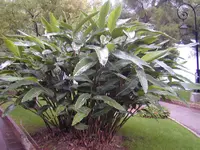
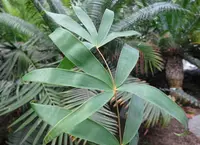
Bamboo cycad (Ceratozamia hildae) is a slow-growing, ancient cycad with a compact, clumping habit and upright, bamboo-like leaf stalks. Its glossy, arching fronds create a dense, architectural look that suits shaded gardens and large containers.

This species is native to cloud forests in eastern Mexico, where it grows under tree canopies in moist, well-drained soils. It prefers bright shade, steady moisture without waterlogging, and a protected spot, which makes it moderately demanding for beginners.

Understanding how to care for Bamboo Cycad mainly involves providing stable warmth, filtered light, and free-draining, organic-rich soil that never stays soggy for long periods.

Main Plant Requirements

Care Difficulty

Moderate Care

Light Preference

Partial Shade

Water Requirements

Moderate Water

Temperature Preference

Warm Climate

Hardiness Zone

9–11

Soil Texture

Loamy, Sandy, Organic-rich

Soil pH

Acidic (5.5–6.5), Slightly acidic (6.5–7.0)

Soil Drainage

Moist but well-drained

Fertilization

Minimal (feed rarely)

Get Personalized Care Plan

Scan your plant to receive care tips personalized for your specific plant

Available on iOS and Android

How to Care for the Bamboo Cycad

This cycad prefers bright, indirect light with protection from harsh midday sun.

  • Provide 3–5 hours of gentle morning sun with dappled or filtered shade for the rest of the day, especially in warmer climates.
  • Site Bamboo Cycad under light tree canopy, shade cloth, or on an east-facing exposure to avoid intense afternoon sun that can scorch new fronds.
  • In summer, increase filtered light for stronger growth; in winter, move to the brightest frost-free spot available to compensate for shorter days.

Water to keep the root zone evenly moist but never waterlogged.

  • Before watering, let the top 3–5 cm of soil dry, then water slowly so it soaks through and excess drains away from the root area.
  • During active growth in spring and summer, expect to water more often; in cooler months, reduce frequency as growth slows and soil dries more slowly.
  • Watch for overwatering signs such as yellowing, soft leaf bases, or sour-smelling soil, and underwatering signs such as drooping, crisp leaflet tips, and shrinking new fronds on Ceratozamia hildae.

This species prefers warm, stable conditions and is sensitive to frost.

  • Aim for 65–80°F (18–27°C) for steady growth, with slightly cooler nights improving resilience and reducing stress.
  • Protect from temperatures below 45°F (7°C); brief dips to 40°F (4°C) may be tolerated, but repeated cold or any frost can damage fronds and buds.
  • In hot regions, plants handle 90°F (32°C) if shaded and well watered; avoid heat buildup near walls or paving and ensure good airflow in midsummer.

This species prefers moderately humid air and reacts if kept too dry for long periods.

  • Aim for 50–70% humidity, as Bamboo Cycad comes from naturally moist habitats.
  • Tolerates short spells of drier indoor air, but prolonged <40% humidity can cause brown leaflet tips and edges.
  • Increase humidity with a nearby humidifier, grouped plants, or a pebble tray, rather than misting, to limit fungal issues.

This cycad needs a loose, sharply drained yet moisture-retentive mix that mimics forest floor conditions.

  • Use a mix of roughly 40% pine bark fines, 30% coarse perlite or pumice, and 30% organic matter such as composted bark or coco coir.
  • Ensure water drains through the pot in seconds, not minutes, to prevent oxygen-poor, stagnant conditions around the roots.
  • Keep pH slightly acidic to neutral, around 6.0–7.0, avoiding strongly alkaline mixes that can restrict nutrient uptake in Ceratozamia hildae.
  • Avoid heavy clay, peat-only, or compacted mixes that hold water tightly and collapse structure, reducing aeration and root health.

This species adapts well to container growing when the pot supports its slow, heavy root system.

  • Choose a deep, weighted container or wider base to prevent tipping as the thick caudex and fronds gain mass.
  • Select a pot material with moderate breathability, such as unglazed clay, to reduce waterlogging in the dense root zone.
  • Raise the container slightly on pot feet or bricks so drainage holes clear quickly and do not sit in collected runoff water.

Ceratozamia hildae benefits from light, measured feeding rather than heavy fertilization.

  • Use a balanced, slow-release fertilizer (for example 10-10-10) or a light top-dressing of compost in spring as new fronds emerge.
  • Feed every 6–8 weeks during the active growing season, keeping overall nutrient input modest.
  • Apply at 1/2 the label-recommended strength for container cycads to avoid root burn and lanky growth.
  • Stop feeding the Bamboo Cycad in late summer to allow tissues to harden before cooler weather.

Ceratozamia hildae needs minimal pruning, focused mainly on health and cleanliness.

  • Carry out any pruning in late winter or early spring, before strong new growth starts.
  • Remove only dead, yellowing, or damaged fronds at the base using clean, sharp pruners.
  • Avoid cutting green, healthy fronds since this reduces energy reserves stored in the stem and roots.
  • Trim old frond stubs close to the crown without injuring living tissue to maintain a tidy outline.

This cycad prefers stable conditions and only occasional repotting or transplanting.

  • Check for crowded, circling roots, cracked pots, or slowed growth as signals it needs a larger container or planting spot.
  • Plan repotting or transplanting in late spring to early summer, when soil is warm and the plant can re-establish quickly.
  • Aim for repotting intervals of about 3–5 years, stepping up only 1 pot size with a very free-draining mix.
  • Handle the root ball gently, keep roots shaded and moist during the move, then water thoroughly once and allow soil to partially dry.

Ceratozamia hildae plant care rarely includes home propagation, as it is slow and technically demanding.

  • Most propagation relies on seed, usually produced under controlled or specialist conditions for conservation.
  • Sow fresh, cleaned seeds in a warm medium (75–85°F) with excellent drainage and stable moisture, then expect very slow germination.
  • Keep seedlings in bright, indirect light and avoid overpotting so the young roots stay aerated and healthy.

This species dislikes hard frost and benefits from basic winter protection in cooler climates.

  • In regions below about 25–30°F, grow in containers so the plant can be moved indoors or to a frost-free space.
  • For in-ground plants in mild climates, apply a 5–8 cm mulch layer over the root zone, keeping it slightly away from the crown.
  • During cold snaps, cover the crown and fronds with breathable fabric to limit freezing injury and leaf scorch.

Care Tips

Root crown protection

Plant with the crown slightly above the soil line and mulch lightly around, not over, the base to keep the caudex dry and reduce risk of rot in cool or wet climates.

Container weight management

Use a wide, heavy pot or add a layer of gravel at the bottom of the container to prevent toppling as the stiff fronds elongate and act like a sail in windy or high-traffic areas.

Frond handling technique

When inspecting or cleaning, support each frond with one hand near the base and avoid bending the rachis sharply, since damage to young fronds can permanently distort the plant’s symmetrical canopy.

Winter light adjustment

In regions with low winter light, gradually move potted plants closer to bright windows or to a bright, cool greenhouse in autumn to maintain compact growth without forcing soft, weak fronds.

Slow acclimation outdoors

If moving a plant from indoors to a shaded outdoor site, increase outdoor exposure by 30–60 minutes every few days over 2–3 weeks to avoid frond scorch and stress while growing Bamboo Cycad in seasonal climates.

Common Pests and Diseases

Scale insects

This pest feeds on leaf and petiole surfaces, causing yellowing, reduced vigor, and sticky honeydew that can lead to sooty mold. Infestations often start along the leaflet midrib and at the base of the fronds.

Solution

Physically remove visible scales with a soft cloth or cotton swab dipped in isopropyl alcohol, then wash foliage with lukewarm water and mild insecticidal soap. For persistent cases, repeat soap or horticultural oil treatments every 7–10 days and isolate the plant from others until new growth appears clean.

Mealybugs

These insects hide in leaflet bases and crown folds, sucking sap and leaving cottony white clusters and sticky residue. Symptoms include distorted new growth and slow overall growth.

Solution

Flush leaf bases and the crown with a firm stream of water, then spot-treat remaining colonies with cotton swabs dipped in isopropyl alcohol. Follow up with 2–3 applications of insecticidal soap or neem oil at 7–10 day intervals, and inspect regularly to catch small reinfestations early as part of consistent Ceratozamia hildae plant care.

Armored scale (cycad aulacaspis)

This pest forms dense white crusts on leaf undersides and along petioles, leading to bronzing, premature leaf drop, and decline of the crown if untreated. Heavy infestations can cover both old and new fronds.

Solution

Remove and discard heavily encrusted fronds and thoroughly wash remaining leaves, especially undersides, with insecticidal soap or horticultural oil. Repeat treatments at 7–14 day intervals, keeping the plant isolated and monitoring new flushes of growth for early signs of reinfestation.

Sooty mold

This disease grows on honeydew excreted by sap-sucking insects, forming black, powdery coatings on leaf surfaces. Symptoms include reduced photosynthesis and a dull, dirty appearance on fronds.

Solution

Control underlying pests such as scale or mealybugs first, then gently wash the foliage with lukewarm water and a small amount of mild soap to remove mold deposits. Improve airflow and light around the plant so foliage dries quickly after watering and cleaning.

Leaf spot fungi

This disease produces small brown to dark purple spots on leaflets that may merge into larger patches, especially in warm, humid conditions with poor air movement. Symptoms include premature yellowing and shedding of older leaflets.

Solution

Remove and discard affected fronds or leaflet sections to reduce spore spread, and avoid wetting the foliage when watering. Increase airflow, space the plant away from crowded groupings, and, if needed, use a targeted copper or broad-spectrum fungicide labeled for ornamentals, applied according to label directions.

Interesting Facts

Endemic to Huasteca canyons

This cycad occurs naturally only in a very restricted region of the Sierra Madre Oriental in Mexico, mainly in steep, humid canyons of the Huasteca area in the states of Hidalgo, Querétaro, and San Luis Potosí.

Distinctive clustered leaflets

Its leaflets are grouped in tight clusters along the leaf rachis rather than evenly spaced, giving the fronds a strongly tufted, bamboo-like appearance that is unusual among Ceratozamia species.

Cool-tolerant montane cycad

In the wild it often grows at higher elevations in montane forest, where it experiences cooler conditions than many tropical cycads and can tolerate brief exposure to near-freezing temperatures if kept dry.

Botan icon

Did you know?

Ceratozamia hildae is classified as Endangered on the IUCN Red List, largely due to its very small natural range, habitat loss from forest clearing, and historical over-collection for the horticultural trade, which together have caused severe fragmentation of its wild populations.

FAQs about Bamboo Cycad

This species has a slow to moderate growth rate. New leaves typically appear once or twice a year, and trunk thickening is gradual. Expect only small size increases each season, even in favorable outdoor conditions.

Grow Healthy Plants with Botan Care

Keep your plants happy and healthy with plant identification, disease detection, and easy care guidance.

Botan plant care app — identify plants on mobile

Explore More Plants