Rotate container
Rotate the pot or tub 90° every 4–6 weeks during active growth so the crown develops evenly and the fronds do not lean permanently toward the strongest light source.

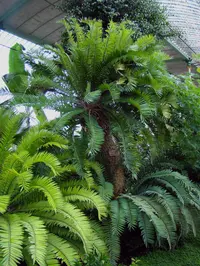
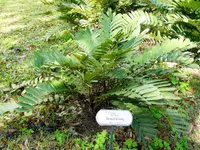
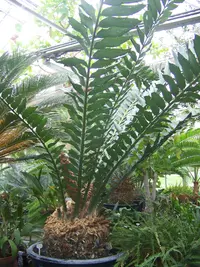
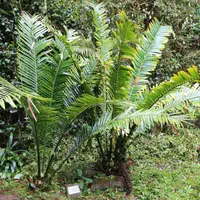
The Eastern Cape giant cycad, Encephalartos altensteinii, is a long-lived, palm-like cycad with a thick trunk and strong, glossy green fronds. It forms a bold, architectural shape that suits large containers and outdoor landscapes in warm climates.
This species is native to coastal and riverine habitats in South Africa, where it grows on rocky slopes and cliffs. It is slow growing but tough once established, tolerating sun, wind, and short dry periods.
Because it grows slowly and dislikes root disturbance, it can be expensive and sensitive when young. Understanding how to care for Eastern Cape giant cycad focuses mainly on stable light, free-draining soil, and protection from severe cold.

Care Difficulty
Moderate Care

Light Preference
Full Sun

Water Requirements
Moderate Water

Temperature Preference
Warm Climate

Hardiness Zone
9–11

Soil Texture
Sandy, Loamy, Rocky

Soil pH
Slightly acidic (6.5–7.0), Neutral (7.0)

Soil Drainage
Well-drained

Fertilization
Minimal (feed rarely)
Scan your plant to receive care tips personalized for your specific plant
Available on iOS and Android
This cycad prefers bright, outdoor light that mimics its native, open coastal habitats.
This species prefers deep but infrequent watering with consistently fast-draining soil.
This cycad favors warm, frost-free conditions with only brief exposure to colder temperatures.
This cycad tolerates a wide humidity range and rarely needs special humidity management indoors or outdoors.
Encephalartos altensteinii prefers sharply drained, mineral-rich soil that never stays waterlogged.
This species can be grown in containers for many years if provided with a stable, deep, and well-drained setup.
This cycad benefits from light, steady feeding during the warm growing season.
Pruning Encephalartos altensteinii is minimal and mainly focused on hygiene and safety.
This cycad dislikes frequent disturbance, so repotting or transplanting should be infrequent and carefully planned.
Propagation of Encephalartos altensteinii is specialized and usually done by experienced growers or nurseries.
This species is moderately frost sensitive and benefits from basic winter protection in cooler climates.

Plant Health Check
Not sure what's wrong with your plant? Check your plant's health inside the app.
This South African cycad is one of the classic examples used in botany to illustrate living representatives of very ancient seed plant lineages that were already present in the Jurassic period, although the current species itself is not a fossil remnant. Its woody cone-bearing stems and stiff fronds show many traits considered primitive among modern seed plants, such as slow growth and simple vascular architecture.
It naturally forms large, often dense stands on rocky coastal slopes and river valleys of South Africa’s Eastern and Western Cape provinces, where it can dominate the vegetation structure. These populations are important for stabilizing shallow, rocky soils and providing habitat structure for invertebrates and small vertebrates.
The species is primarily pollinated by specific beetles that visit the male and female cones, a mutualism common in cycads but involving distinct local insect partners in its native range. The cones produce heat and scent compounds that attract these beetles, improving pollination efficiency in often windy coastal habitats.

A specimen of this species planted in the Palm House at Kew Gardens in London around 1775 is among the oldest cultivated pot plants in the world, and has been documented for centuries as a long-term example of cycad longevity and resilience under glasshouse conditions.
Browning leaves often result from old fronds aging naturally, sun scorch, or root stress from waterlogged or very dry soil. Check drainage, adjust watering, and remove only completely brown, dry fronds to prevent disease entry.
Keep your plants happy and healthy with plant identification, disease detection, and easy care guidance.