


Rotate For Symmetry
Turn the pot 90° every 2–3 weeks so new leaves do not all lean toward the main light source and the crown stays balanced and stable in its container.

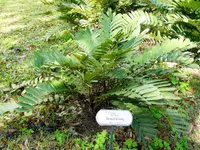
Cardboard palm, Zamia furfuracea, is a slow-growing cycad, not a true palm. It forms a low, symmetrical rosette of thick, stiff, feather-like leaves. The leaflets are broad, leathery, and slightly fuzzy, giving the plant its “cardboard” texture and a distinctly architectural look. Over time, it develops a short, chunky trunk at the base.
This species is native to coastal regions of eastern Mexico, where it grows in sandy, well-drained soils. It is adapted to bright light, periodic dry spells, and relatively poor substrates, which makes it quite tolerant indoors. Understanding how to care for Cardboard palm mainly involves avoiding overwatering and providing stable, bright conditions.

Care Difficulty
Moderate Care

Light Preference
Partial Sun

Water Requirements
Low Water

Temperature Preference
Tropical / Frost Sensitive

Hardiness Zone
9–11

Soil Texture
Sandy, Loamy, Organic-rich

Soil pH
Acidic (5.5–6.5), Slightly acidic (6.5–7.0)

Soil Drainage
Well-drained

Fertilization
Minimal (feed rarely)
Scan your plant to receive care tips personalized for your specific plant
Available on iOS and Android
Zamia furfuracea prefers bright, filtered light that mimics open woodland conditions.
This cycad prefers infrequent, deep watering and drying slightly between waterings.
This species thrives in consistently warm, frost-free conditions.
Zamia furfuracea handles typical indoor humidity but benefits from slightly elevated moisture in very dry homes.
Zamia furfuracea prefers a fast-draining, mineral-rich mix that mimics sandy, rocky soils.
This species is well suited to container growing due to its slow, compact root system.
Zamia furfuracea is a slow-growing cycad that benefits from light, controlled feeding during the warm growing season.
Zamia furfuracea needs minimal pruning focused on health and safety rather than shaping.
Cardboard palm forms a stout underground caudex and dislikes frequent disturbance, so repotting or transplanting should be infrequent and deliberate.
Propagation of Zamia furfuracea is possible but slow, mainly by seed and occasionally by carefully removing offsets from mature plants.
This subtropical cycad is sensitive to hard frost and needs thoughtful winter care in regions with cold winters.

Plant Health Check
Not sure what's wrong with your plant? Check your plant's health inside the app.
This species is a true cycad, not a palm, and represents a very old plant lineage that has changed relatively little since the time of the dinosaurs, as shown by both fossil and anatomical studies.
Its thick, stiff leaflets are covered in a fine, short fuzz that gives a dry, cardboard-like feel, a trait that helps reduce water loss in its native dry scrub habitats in eastern Mexico.
It produces separate male and female plants, each forming stout cones instead of flowers; pollination in the wild is linked to small insects that move between these cones rather than to wind alone.

In the wild, this species has a very restricted natural range along the coastal lowlands of Veracruz, Mexico, and habitat loss has contributed to its listing as Vulnerable on the IUCN Red List, which is why wild populations are considered of conservation concern.
Leaf browning usually comes from chronic underwatering, very low humidity, excess fertilizer salts, or strong direct sun scorch. Check soil moisture, flush the pot occasionally, avoid midday sun, and trim only fully dead leaf sections.
Keep your plants happy and healthy with plant identification, disease detection, and easy care guidance.

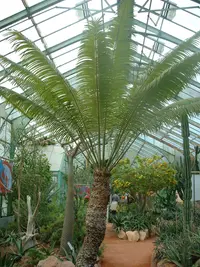
Madagascar cycad
Cycas thouarsii
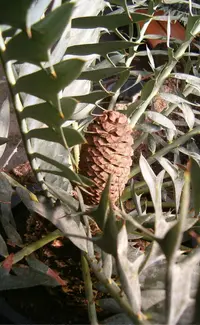
Eastern Cape blue cycad
Encephalartos horridus
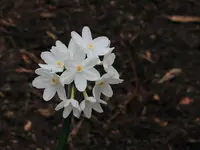
paperwhite narcissus
Narcissus papyraceus
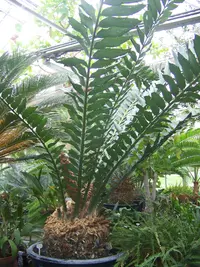
Tongaland cycad
Encephalartos ferox
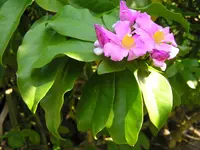
rose cactus
Rhodocactus grandifolius
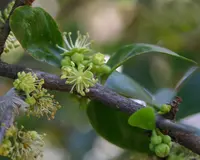
Kei apple
Dovyalis caffra
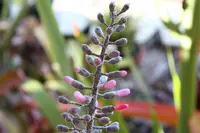
Aechmea lueddemanniana
Aechmea lueddemanniana
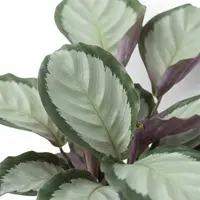
Goeppertia picturata 'Argentea'
Goeppertia picturata 'Argentea'