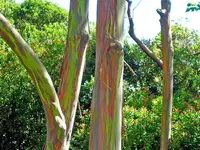
Trunk training
In the first 2–3 years, select 3–5 evenly spaced main branches and remove low or crossing shoots to form a strong open-center canopy that can carry heavy fruit clusters without splitting.

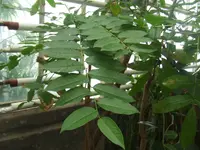
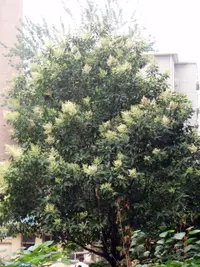
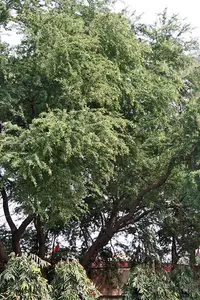
The Tahitian gooseberry tree, Phyllanthus acidus, is a small tropical fruit tree grown for its very sour, ribbed yellow berries. It usually has a rounded crown with many slender branches and light green, closely spaced leaves that give a soft, feathery look.
This species is believed to originate from Madagascar and Southeast Asia and is now widely grown in tropical and subtropical regions. It is generally easy to care for Tahitian gooseberry tree in warm climates, provided it receives ample sun, moderate water, and a well-drained soil.
The tree is fast growing under suitable conditions and can fruit while still relatively small. Its tolerance of pruning and compact size make it suitable for small gardens or container growing in frost-free areas.

Care Difficulty
Moderate Care

Light Preference
Full Sun

Water Requirements
Regular Water

Temperature Preference
Tropical / Frost Sensitive

Hardiness Zone
10–11

Soil Texture
Sandy, Loamy, Organic-rich

Soil pH
Acidic (5.5–6.5), Slightly acidic (6.5–7.0)

Soil Drainage
Moist but well-drained

Fertilization
Minimal (feed rarely)
Scan your plant to receive care tips personalized for your specific plant
Available on iOS and Android
Phyllanthus acidus thrives in strong light typical of tropical and subtropical climates.
Phyllanthus acidus prefers evenly moist, well-drained soil and does not tolerate prolonged drought or saturation.
This species grows best in stable, warm conditions with no exposure to frost.
This species prefers moderately humid air but usually adapts to typical indoor humidity.
Phyllanthus acidus grows best in loose, well-drained, moderately fertile soil.
This species can be grown successfully in containers when provided with adequate root space and drainage.
Phyllanthus acidus benefits from light, consistent feeding during warm weather for steady growth and fruiting.
Thoughtful pruning keeps Phyllanthus acidus healthy, productive, and easy to manage.
Phyllanthus acidus is usually grown in the ground, but young or container plants benefit from careful transplanting.
Phyllanthus acidus is commonly propagated from seeds or semi-hardwood cuttings for home and orchard use.
Phyllanthus acidus is frost-sensitive and needs protection in regions with cool or freezing winters.

Plant Health Check
Not sure what's wrong with your plant? Check your plant's health inside the app.
This species often develops characteristically star-like leaf clusters due to its many closely spaced leaflets along the branchlets, giving the canopy a fine, feathery texture when viewed from a distance.
The tree responds vigorously to pruning by producing dense new shoots along the branches, which is why it is frequently shaped as a compact fruit tree in home gardens and small orchards.
This species tolerates saline winds and sandy soils better than many other fruit trees, so it is commonly planted in coastal tropical areas as both a fruit source and a landscape tree.

The fruit of this species contains high levels of organic acids, especially oxalic acid and citric acid, which make it extremely sour when raw and have led to its traditional use almost exclusively in pickles, preserves, and cooked dishes rather than as a fresh dessert fruit.
Container culture is possible if a large, deep pot is used and roots are not allowed to become pot-bound. Regular pruning controls size and maintains structure. This approach suits patios, small gardens, and urban settings.
Keep your plants happy and healthy with plant identification, disease detection, and easy care guidance.