rambutan Care (Nephelium lappaceum)

rambutan

About rambutan

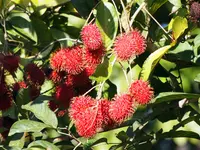
Rambutan, Nephelium lappaceum, is a tropical evergreen fruit tree from Southeast Asia, related to lychee and longan. It is typically grown in warm, humid climates. The tree forms a dense, rounded canopy with glossy green leaves and produces clusters of colorful, hairy-skinned fruits with sweet, translucent flesh. In suitable outdoor conditions it can reach substantial height, so it is not a compact houseplant. Rambutan prefers consistently warm temperatures, ample light, and evenly moist, well-drained soil. These needs make care for rambutan more demanding in temperate regions, where it is usually grown in greenhouses or very sheltered microclimates.

Main Plant Requirements

Care Difficulty

Hard Care

Light Preference

Full Sun

Water Requirements

Keep Soil Moist

Temperature Preference

Tropical / Frost Sensitive

Hardiness Zone

10–11

Soil Texture

Sandy, Loamy, Organic-rich

Soil pH

Strongly acidic (4.5–5.5), Acidic (5.5–6.5)

Soil Drainage

Moist but well-drained

Fertilization

Moderate (every 2–4 weeks)

Get Personalized Care Plan

Scan your plant to receive care tips personalized for your specific plant

Available on iOS and Android

How to Care for the rambutan

This tropical fruit tree needs consistent bright light to flower and fruit well.

  • Provide 6–8 hours of sun daily, with morning sun and light afternoon shade; young rambutan trees benefit from 30–50% filtered light in very hot regions.
  • Allow partial shade, but avoid dense shade, which causes weak, elongated shoots and sparse flowering over time.
  • Protect leaves from intense, dry afternoon sun, which can scorch foliage; increase light gradually at the end of cloudy or rainy seasons.

This species needs evenly moist but not waterlogged soil to support steady growth and fruiting.

  • Water when the top 3–5 cm of soil feels slightly dry, aiming for consistently damp soil around the root zone, not soggy conditions.
  • Use deep, thorough watering on well-drained soil so moisture reaches 20–30 cm deep, then allow slight surface drying to limit root rot risk.
  • In hot, dry seasons, increase frequency and monitor for drooping leaves (too dry); reduce watering in cool, wet periods to avoid yellowing leaves and mushy roots in Nephelium lappaceum.

This tropical tree performs best in warm, frost-free climates with stable temperatures.

  • Aim for 75–90°F (24–32°C) during active growth; flowering and fruit development are most reliable in this range.
  • Avoid temperatures below 50°F (10°C); exposure near 40°F (4°C) can cause leaf drop, and any frost can kill young shoots or entire young trees.
  • In hot spells above 95°F (35°C), provide extra mulching and wind protection to limit heat stress and leaf scorch, especially on exposed sites.

This species needs consistently high humidity to grow well in most homes and greenhouses.

  • Aim for 60–80% humidity, as rambutan is adapted to humid tropical air and declines in dry rooms.
  • Dry air causes leaf tip burn, brown margins, slow growth, and increased leaf drop, especially on young plants.
  • Increase humidity with grouped plants, a nearby humidifier, or a wide pebble tray under the pot without submerging the base.

Nephelium lappaceum prefers deep, aerated, organic-rich soil that drains freely yet holds steady moisture.

  • Use a loamy mix of roughly 40% compost, 40% coarse sand, and 20% perlite or fine bark to balance moisture and drainage.
  • Keep pH slightly acidic, around 5.5–6.5, as higher pH can reduce nutrient availability and cause chlorosis (pale leaves).
  • Incorporate coarse materials like perlite or pine bark to improve pore space so roots receive enough oxygen and resist rot.
  • Avoid heavy clay, compacted mixes, or pots that stay waterlogged after rain or watering, which quickly damage fine feeder roots.

This species can be grown in large containers when given ample root space and stable support.

  • Choose a tall, heavy container that resists tipping as the canopy enlarges and fruits add weight on outer branches.
  • Select a pot depth that allows a strong taproot and lateral roots to expand without circling tightly near the base.
  • Ensure generous drainage holes so excess irrigation water exits within minutes, preventing chronic saturation of deeper root zones.

This tropical fruit tree benefits from moderate, consistent feeding during active growth for healthy foliage and reliable crops.

  • Use a balanced granular or slow-release fertilizer (such as 10-10-10 or 14-14-14) or well-rotted compost around the drip line, avoiding direct contact with the trunk.
  • Feed rambutan every 6–8 weeks in the warm growing season, adjusting rates to tree size and soil fertility tests when available.
  • Apply fertilizers at half to three-quarter label strength for container plants, and water thoroughly afterward to prevent root burn.
  • Reduce or stop feeding in cooler months when growth slows, especially in subtropical areas or indoors, resuming once active growth restarts.

Pruning Nephelium lappaceum focuses on structure, light penetration, and removal of weak growth rather than heavy cutting.

  • Carry out main pruning in late winter to early spring in frost-free climates, before strong new growth starts.
  • Remove dead, diseased, crossing, or inward-growing branches to improve air flow and reduce fungal problems.
  • Thin crowded interior branches to allow more light into the canopy, which supports flowering and fruit quality.
  • Use clean, sharp bypass pruners or a pruning saw, making smooth cuts just outside the branch collar to aid healing.

This species is usually field-grown, so transplanting young trees at the right time is more important than frequent repotting.

  • Transplant in late spring or early summer once soil is consistently warm, choosing a sunny, wind-sheltered site with free-draining, slightly acidic soil.
  • Move container-grown seedlings when roots circle the pot, drainage slows, or growth stalls despite good care.
  • Handle the root ball gently, keeping it intact, and water deeply before and after transplanting to limit shock.
  • Set the tree at the same soil level as before, backfill with native soil, mulch 5–8 cm away from the trunk, and keep evenly moist while new roots establish.

Propagation of Nephelium lappaceum is mainly done from seed or by air layering, with grafting used in commercial production for named varieties.

  • Sow fresh seeds in warm conditions around 75–85°F, in a free-draining, slightly acidic mix, and keep evenly moist but not waterlogged.
  • Expect variable seedlings; grafting onto vigorous seedling rootstocks helps maintain fruit quality and tree size.
  • For air layering, girdle a semi-woody branch in late spring, apply rooting hormone, wrap with moist sphagnum and plastic, and keep shaded until roots form.
  • Transplant rooted layers or seedlings carefully into individual containers, harden off gradually, and maintain high humidity and warmth during establishment.

This tropical tree is highly frost-sensitive and requires careful winter management outside true lowland tropical climates.

  • Avoid exposure below 40°F; young trees can be damaged or killed near freezing, especially with wind.
  • Mulch 5–10 cm around the root zone in the ground to moderate soil temperature and conserve moisture, keeping mulch off the trunk.
  • For container plants, move indoors or into a heated greenhouse before cold spells, providing bright light and reduced watering.
  • In marginal climates, wrap young trunks with breathable frost cloth and support light canopy covers during short cold events.

Care Tips

Windbreak establishment

Plant a semi-permeable windbreak (shrubs, slatted fence, or shade cloth) on the prevailing wind side to reduce leaf scorch and flower drop, especially in the first 3–5 years.

Canopy training

Start training the young tree to 3–5 main scaffold branches at 45–60° angles using soft ties or spreaders so the mature canopy is low, strong, and easy to harvest from.

Fruit load thinning

Once fruit clusters set and reach marble size, selectively remove some clusters or individual fruits on heavily loaded branches to reduce breakage risk and improve remaining fruit size and sweetness.

Moisture monitoring ring

Create a shallow soil ring at the drip line and install 2–3 moisture probes or simple finger-test spots around it to keep the active root zone evenly moist and to detect dry pockets before stress occurs when growing rambutan.

Ant and scale control

Regularly inspect new growth and fruit clusters for scale insects and accompanying ants, then use sticky barriers on the trunk and targeted horticultural oil sprays to break this partnership before it spreads.

Common Pests and Diseases

Fruit borer

This pest tunnels into young and maturing fruits, causing internal feeding damage, premature fruit drop, and poor-quality rambutan harvests.

Solution

Collect and destroy infested and fallen fruits regularly, bag developing fruit clusters with fine mesh where practical, and prune the canopy to improve light and airflow; in outdoor orchards, use pheromone or light traps and apply a targeted Bacillus thuringiensis (Bt) or other fruit-borer-specific product according to label directions when larvae are active.

Pink disease

This disease, caused by the fungus Erythricium salmonicolor, leads to dieback of branches, whitish to pink crusty fungal growth on twigs, and gradual canopy thinning.

Solution

Prune and destroy affected twigs and branches well below visible symptoms, disinfect pruning tools between cuts, and improve airflow and light penetration; in humid outdoor plantings, apply a copper-based or other registered fungicide to the trunk and main branches during wet periods following local label guidance.

Anthracnose

This disease produces dark, sunken lesions on leaves, twigs, flowers, and fruits, which may merge and cause blight or fruit rot under humid conditions.

Solution

Remove and dispose of infected leaves and mummified fruits, avoid overhead watering, and keep the canopy open with careful pruning; during prolonged wet weather or in areas with a history of anthracnose, use a protectant fungicide such as copper or mancozeb according to label instructions for Nephelium lappaceum care outdoors.

Shoot and leaf miner

These insects create winding tunnels inside young shoots and leaves, leading to distortion, reduced leaf area, and weakened flush growth.

Solution

Prune and destroy heavily infested shoot tips and young leaves, encourage natural predators by maintaining plant diversity nearby, and use yellow sticky traps to monitor adult activity; if damage is severe in outdoor trees, apply a systemic insecticide labeled for leaf miners, timing treatments to coincide with new leaf flushes.

Mealybugs

These insects feed on plant sap, excrete sticky honeydew, and promote sooty mold growth on leaves, which reduces photosynthesis and weakens the tree, especially in sheltered or container-grown plants.

Solution

Inspect stems, leaf axils, and under leaves regularly, remove small colonies with a cotton swab dipped in alcohol, and wash foliage with a strong but gentle stream of water; for heavier infestations, use insecticidal soap or horticultural oil, repeating applications at 7–14 day intervals while also controlling nearby ants that protect and farm mealybugs for honeydew.

Interesting Facts

Native rainforest canopy tree

This species naturally grows as a large evergreen tree in lowland tropical rainforests of Southeast Asia, where it can reach over 20 m and forms part of the upper canopy layer.

Relatives of lychee

Rambutan belongs to the soapberry family Sapindaceae and is closely related to lychee and longan, which explains the similar translucent, sweet aril surrounding a single large seed.

Spiny hairs for attraction

The fruit’s soft, hair-like spines, called spinterns, are outgrowths of the fruit skin that change color from green to red or yellow as they ripen, helping signal ripeness to animals that disperse the seeds.

Botan icon

Did you know?

Commercial rambutan cultivation often relies on grafted or air-layered trees rather than seedlings because seed-grown plants vary widely in fruit quality and can take many years to produce, while clonal trees bear earlier and more reliably.

FAQs about rambutan

Lack of flowering often comes from young age, unsuitable climate, or irregular dry and cool cues before the season. Heavy nitrogen fertilization and deep shade also delay flower initiation, so balanced nutrition and adequate light are important for this species.

Grow Healthy Plants with Botan Care

Keep your plants happy and healthy with plant identification, disease detection, and easy care guidance.

Botan plant care app — identify plants on mobile

Explore More Plants