


Rotate For Symmetry
Rotate the pot 90° every 1–2 weeks so new leaves track the light evenly, which keeps the petioles from leaning hard to one side and reduces the risk of the plant becoming lopsided and tipping over.

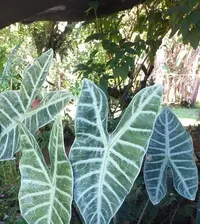
Alocasia × mortfontanensis is a tropical aroid grown mainly as an ornamental foliage plant. It is likely a hybrid related to Alocasia longiloba and Alocasia sanderiana, sometimes grouped with so-called jewel alocasias. Plants form upright clumps with arrow-shaped leaves, often with glossy, dark green blades and contrasting pale veins. It is usually kept as a compact houseplant rather than a large landscape specimen. This hybrid prefers warm, humid, sheltered conditions and steady moisture without waterlogging, so it can be moderately challenging for beginners in dry homes. Understanding how to care for Alocasia × mortfontanensis helps prevent leaf loss and root problems over time.

Care Difficulty
Moderate Care

Light Preference
Bright Indirect Light

Water Requirements
Keep Soil Moist

Temperature Preference
Tropical / Frost Sensitive

Hardiness Zone
10–12

Soil Texture
Loamy, Peaty, Organic-rich

Soil pH
Acidic (5.5–6.5), Slightly acidic (6.5–7.0)

Soil Drainage
Moist but well-drained

Fertilization
Moderate (every 2–4 weeks)
Scan your plant to receive care tips personalized for your specific plant
Available on iOS and Android
This plant prefers bright, indirect light with some protection from intense midday sun.
Watering should keep the soil evenly moist but not saturated at any time.
Stable warmth is essential for this plant to maintain active growth and healthy foliage.
This hybrid prefers consistently high humidity and reacts quickly to dry indoor air.
This plant needs an airy, moist, yet fast-draining substrate rather than dense potting soil.
This species is well suited to container culture for controlled moisture and root conditions.
This hybrid benefits from light, consistent feeding during active growth for steady foliage production.
Pruning is mainly hygienic and helps maintain neat, vigorous foliage.
Repotting supports healthy tuber growth and prevents root binding in containers.
Propagation is most reliable by division of tubers or offsets rather than from seed.
This plant is very frost sensitive and needs warm, protected conditions through winter.

Plant Health Check
Not sure what's wrong with your plant? Check your plant's health inside the app.
This nothospecies is a deliberate or accidental hybrid between Alocasia longiloba and Alocasia sanderiana, combining the elongated, arrow-shaped blade of A. longiloba with the deeply cut, ornamental margins of A. sanderiana.
Plants within this hybrid show noticeable variation in leaf size, lobing depth, and vein contrast from specimen to specimen, reflecting the genetic segregation typical of interspecific Alocasia hybrids.
In horticulture it is frequently sold under incorrect or vague names such as Alocasia 'Sanderiana', Alocasia 'Kris', or simply Alocasia hybrid, which complicates tracking of accurate Alocasia × mortfontanensis care instructions in collections and plant records.
Drooping leaves usually point to root stress from overwatering, underwatering, or recent repotting. Check the potting mix moisture, drainage holes, and root health. Adjust watering, trim any rotten roots, and provide stable indoor conditions.
Keep your plants happy and healthy with plant identification, disease detection, and easy care guidance.


Chinese Evergreen
Aglaonema 'Emerald Bay'

Coelogyne cristata
Coelogyne cristata
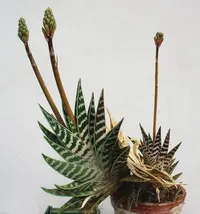
Partridge-breast Aloe
Gonialoe variegata
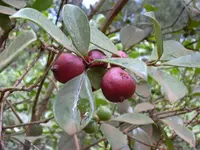
strawberry guava
Psidium cattleyanum
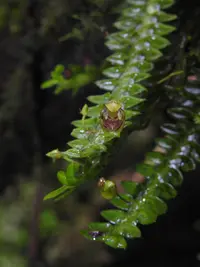
Dichaea neglecta
Dichaea neglecta
Jelly Melon
Cucumis metuliferus
Tillandsia violacea
Tillandsia violacea
 POPULAR
Philodendron verrucosum
Philodendron verrucosum