


Pup management
Allow offsets to reach about one-third to one-half the height of the mother rosette before detaching, then cut cleanly with a sterile knife and pot into a free-draining mix to maintain the clump’s vigor and appearance.

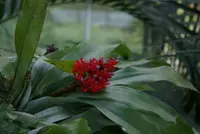
Coralberry bromeliad (Aechmea fulgens) is an evergreen epiphytic bromeliad valued for its colorful bracts and compact rosette of arching, strap-like leaves. It typically forms a broad vase shape that collects water in the center, with flower spikes held above the foliage and followed by ornamental berry-like fruits.
This species is native to the Atlantic Forest of eastern Brazil, where it grows on trees or in leaf litter under bright, filtered light. Its slow growth, tolerance of typical indoor humidity, and modest nutrient needs make it relatively straightforward to care for Coralberry bromeliad in homes and offices.
It prefers bright indirect light, a free-draining potting mix suitable for bromeliads, and consistently lightly moist conditions without waterlogging the roots.

Care Difficulty
Moderate Care

Light Preference
Bright Indirect Light

Water Requirements
Moderate Water

Temperature Preference
Tropical / Frost Sensitive

Hardiness Zone
10–12

Soil Texture
Sandy, Loamy, Organic-rich

Soil pH
Acidic (5.5–6.5), Slightly acidic (6.5–7.0)

Soil Drainage
Well-drained

Fertilization
Light (every 4–6 weeks)
Scan your plant to receive care tips personalized for your specific plant
Available on iOS and Android
Aechmea fulgens prefers bright, indirect light that mimics dappled forest conditions.
Watering for Aechmea fulgens focuses on a moist but not saturated root zone and a clean central cup.
This species prefers warm, stable temperatures similar to tropical understory conditions.
This bromeliad prefers moderately humid air, with added moisture helpful in heated or air-conditioned homes.
Aechmea fulgens grows best in a loose, airy, fast-draining mix that mimics an epiphytic or orchid-style substrate.
This species is very suitable for container growing due to its compact root system and tank-forming rosette.
Aechmea fulgens benefits from light, controlled feeding rather than heavy fertilization.
Pruning Aechmea fulgens focuses on hygiene and managing offsets rather than shaping.
Repotting Aechmea fulgens is infrequent and mainly needed when offsets crowd the container or roots fill the pot.
Propagation of Aechmea fulgens is most reliable by division of pups rather than by seed.
Aechmea fulgens is frost-sensitive and needs protection in regions with cold winters.

Plant Health Check
Not sure what's wrong with your plant? Check your plant's health inside the app.
This species is naturally found in Brazilian coastal restinga habitats, growing among sandy, nutrient-poor soils and scrub vegetation near the Atlantic Ocean.
Its showy inflorescences start with bright reddish to coral bracts that gradually fade to a softer pink and then greenish tones as the flowering period ends.
The leaves have a subtle waxy bloom that can give them a bluish or silvery cast, an adaptation that helps reduce water loss and reflect intense sunlight in its native range.

In its native Brazilian habitats, this species often acts as a small tank bromeliad, with its leaf rosette collecting rainwater that forms tiny reservoirs supporting micro-ecosystems of insects, microorganisms, and sometimes amphibian larvae.
Lack of flowering usually comes from insufficient plant age, low light, or nutrient imbalance. It normally blooms once when mature, then produces offsets. Stable conditions, modest feeding, and patience are more important than forcing blooms.
Keep your plants happy and healthy with plant identification, disease detection, and easy care guidance.

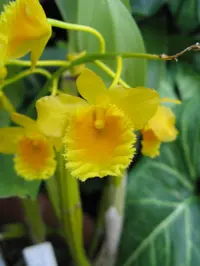
fried-egg orchid
Dendrobium chrysotoxum
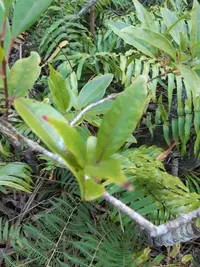
Antidesma madagascariense
Antidesma madagascariense
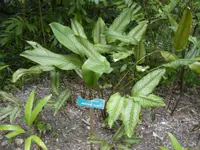
Pin-stripe calathea
Goeppertia ornata
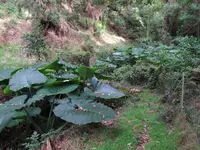
capote
Xanthosoma robustum
 POPULAR
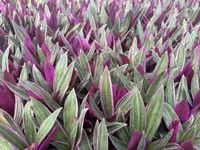
Moses-in-the-cradle
Tradescantia spathacea
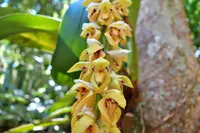
Bulbophyllum occlusum
Bulbophyllum occlusum
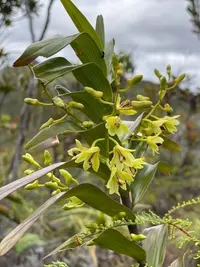
Dendrobium closterium
Dendrobium closterium
Climbing Aroid
Pothos scandens