Houpu Magnolia Care (Magnolia officinalis)

Also known as: Magnolia-bark
Houpu Magnolia

About Houpu Magnolia

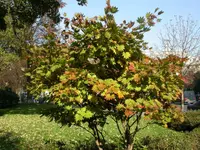
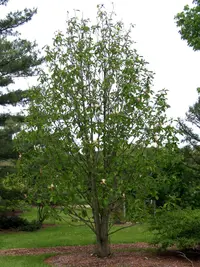
Houpu magnolia, Magnolia officinalis, is a deciduous tree valued for its medicinal bark and large, fragrant, creamy-white flowers. It develops a broad, upright crown with thick, leathery green leaves that give it a bold, architectural look.

This species is native to mountain forests of central and southern China, where it grows in moist, well-drained, slightly acidic soils. In gardens it can be moderately demanding, mainly due to its eventual size and need for consistent moisture and shelter from strong winds.

Understanding how to care for Houpu Magnolia starts with providing a cool to mild climate, sun to light shade, and soil that does not dry out completely or stay waterlogged.

Main Plant Requirements

Care Difficulty

Moderate Care

Light Preference

Partial Sun

Water Requirements

Regular Water

Temperature Preference

Cool Climate

Hardiness Zone

6–9

Soil Texture

Loamy, Clay, Organic-rich

Soil pH

Acidic (5.5–6.5), Slightly acidic (6.5–7.0)

Soil Drainage

Moist but well-drained

Fertilization

Minimal (feed rarely)

Get Personalized Care Plan

Scan your plant to receive care tips personalized for your specific plant

Available on iOS and Android

How to Care for the Houpu Magnolia

Magnolia officinalis performs best as an outdoor tree with ample light but some protection from harsh extremes.

  • Provide 4–6 hours of sun daily, ideally with morning sun and light afternoon shade, especially in hotter regions.
  • Tolerates partial shade, but flowering and growth decline in dense shade; choose a site with dappled or filtered light under taller trees for Houpu Magnolia.
  • In hot summers, protect from intense midday sun to reduce leaf scorch; in cooler climates, a more open, sunnier position supports stronger growth.

Magnolia officinalis prefers evenly moist, deep soil with good drainage rather than frequent shallow watering.

  • Water when the top 3–5 cm of soil feels dry, applying a slow, deep soak to reach the root zone rather than quick surface sprinkling.
  • Increase watering during hot, dry periods and the first 2–3 growing seasons; reduce frequency in cool, rainy weather and during dormancy.
  • Signs of underwatering include drooping, dull leaves and dry soil; overwatering shows as yellowing leaves, soft new growth, and persistently soggy or sour-smelling soil.

This magnolia is a hardy, deciduous tree that handles cool winters and mild to warm summers when sited correctly.

  • Optimal growing-season temperatures are around 60–80°F (16–27°C), with steady spring warmth supporting leaf and flower development.
  • Established trees typically tolerate winter lows to about -10°F to -20°F (-23 to -29°C), depending on provenance and shelter from wind.
  • Young plants are more sensitive to late frosts and extreme heat above 90°F (32°C); provide mulch for root insulation and avoid highly exposed, baking sites.

Magnolia officinalis handles a fairly wide humidity range but benefits from moderately moist air.

  • Aim for 40–60% humidity, similar to average outdoor conditions in many temperate regions.
  • Houpu Magnolia tolerates short dry spells but prolonged very dry air can crisp leaf edges and tips.
  • Increase humidity outdoors by mulching the root zone and grouping plants; indoors, use a pebble tray rather than misting leaves.

Magnolia officinalis prefers deep, moisture-retentive but well-drained, slightly acidic soil.

  • Use a loamy mix with roughly equal parts garden loam, compost, and pine bark fines to provide structure and organic matter.
  • Ensure drainage by avoiding heavy, unamended clay and by raising the planting area into a broad, low mound if soil is dense.
  • Target a pH of 5.5–6.5; add elemental sulfur in alkaline soils and avoid planting near fresh concrete, which can raise pH.
  • Improve aeration by blending in coarse sand or fine gravel only when native soil is compacted and sticky when wet.

This species can be grown in containers for some years, but long-term culture is challenging due to its eventual size.

  • Choose a tall, heavy container to give deep root room and prevent the plant from becoming top-heavy and tipping in wind.
  • Use a chunky, woody-based potting mix that drains freely yet stays evenly moist to support sustained woody growth.
  • Position the pot where it will not overheat on hard surfaces, since excess root-zone heat stresses large containerized trees.

Magnolia officinalis benefits from light, thoughtful feeding but grows reasonably well in fertile ground without heavy fertilizer use.

  • Apply a balanced slow‑release fertilizer (for example 10‑10‑10) once in early spring as new growth starts.
  • In richer soils, use compost or well‑rotted manure as a thin top‑dressing around the root zone.
  • During the main growing season, avoid more than 1–2 light applications to prevent lush, weak growth.
  • Reduce or stop feeding in late summer and winter, and if using liquid fertilizer, dilute to half strength.

Magnolia officinalis needs only light structural pruning to maintain health and a natural form.

  • Time any pruning for late winter or just after flowering to limit stress and preserve buds.
  • Remove dead, diseased, crossing, or storm‑damaged branches first, cutting back to healthy wood.
  • Thin congested interior shoots slightly to improve airflow while keeping the tree’s broad outline.
  • Use clean, sharp bypass pruners or a pruning saw, making smooth cuts without leaving stubs.

This species is usually grown in the ground, so focus on careful transplanting rather than frequent repotting.

  • Transplant young trees in late winter or early spring while dormant to reduce shock.
  • Look for signs such as circling roots, very slow growth, or a pot that dries out quickly before moving a container plant.
  • Shift container specimens only every 2–3 years, stepping up 1 pot size with a free‑draining, fertile mix.
  • Water thoroughly before and after moving, keep the root ball intact, and shade the tree for 1–2 weeks to limit stress.

Magnolia officinalis is usually propagated by seed or semi‑ripe cuttings, both requiring patience and stable conditions.

  • Collect ripe seeds in autumn, clean the flesh, and cold stratify at 35–40°F for 2–3 months before sowing.
  • Sow seeds in a moist, free‑draining mix and keep temperatures around 65–70°F with gentle, consistent moisture.
  • Take semi‑ripe cuttings in midsummer, using 7–10 cm pieces treated with rooting hormone and placed in high humidity.
  • Air‑layering on a healthy branch in spring is another method, encouraging roots before detaching the new plant.

This deciduous tree is fairly cold hardy in much of its range and usually needs only modest winter care.

  • Established in‑ground trees tolerate typical winters in USDA zones roughly 6–8 with minimal intervention.
  • Apply a 5–8 cm mulch layer over the root zone in late fall, keeping it slightly away from the trunk.
  • Young or borderline‑hardy trees benefit from burlap windbreaks to reduce drying winds and freeze‑thaw stress.
  • Container plants of Houpu Magnolia should be moved into a sheltered, unheated space where roots stay just above freezing.

Care Tips

Windfirm training

In the first 3–5 years, selectively stake and loosely tie the young trunk on windy sites so the tree develops a straight, stable leader that can better support its heavy canopy at maturity.

Root zone protection

Maintain a wide, permanent, undisturbed mulch ring and avoid planting turf or bedding plants under the canopy so the shallow feeder roots are not damaged by digging, edging, or heavy foot traffic.

Calcium and pH monitoring

Test soil every 2–3 years and, if pH begins to drop below about 5.5, use a measured application of garden lime to maintain a slightly acidic to neutral range that supports strong wood and flower bud development.

Flower bud safeguarding

In late winter, delay any nearby construction, soil compaction, or heavy pruning until after flowering, since stress during bud formation can cause bud drop and a sparse spring display.

Trunk and bark care

Keep string trimmers, mowers, and irrigation heads away from the trunk, and consider a light-colored tree guard on young trees in exposed sites to prevent bark damage and reduce sunscald risk when growing Houpu Magnolia.

Common Pests and Diseases

Scale insects

This pest feeds on sap along stems and leaves, often appearing as small brown or gray bumps and causing leaf yellowing and reduced vigor.

Solution

Prune out heavily infested twigs, then gently scrub remaining scales off bark with a soft brush and mild soapy water, taking care not to damage the smooth magnolia bark. For persistent infestations, use a horticultural oil spray during the dormant season and repeat as needed to target young crawlers while monitoring nearby plants for reinfestation as part of Magnolia officinalis plant care.

Magnolia leaf spot

This disease causes scattered brown or black lesions on leaves, which may coalesce and lead to early leaf drop in humid or wet conditions.

Solution

Collect and dispose of fallen leaves to reduce fungal spores, and avoid overhead watering so foliage dries quickly. If the problem recurs annually, apply a labeled copper or chlorothalonil fungicide at bud break and repeat according to label directions, focusing on good spacing and airflow around the tree.

Aphids

These insects cluster on young shoots and leaf undersides, sucking sap and producing sticky honeydew that can lead to sooty mold growth.

Solution

Spray colonies off tender growth with a strong stream of water and pinch back heavily infested shoot tips. If needed, apply insecticidal soap or horticultural oil to the undersides of leaves, and encourage natural predators such as lady beetles by avoiding broad-spectrum insecticides nearby.

Magnolia scale

This pest is a large, specialized soft scale that infests magnolia branches, excretes heavy honeydew, and can cause branch dieback over time.

Solution

Inspect branches in late summer for waxy, lump-like scales and prune out the most affected shoots. During the dormant season, treat trunks and branches with horticultural oil to smother overwintering stages, and in midsummer target crawler stages with a second oil or insecticidal soap spray while monitoring plant vigor and watering during dry spells.

Leaf scorch

Symptoms include browning of leaf edges and tips, often on exposed sides of the tree, linked to heat, wind, or moisture stress in shallow-rooted magnolias.

Solution

Mulch the root zone with 5–8 cm of organic material, keeping it away from the trunk, and maintain consistent soil moisture during hot, dry weather. Avoid heavy pruning that exposes interior leaves to sudden full sun, and if possible provide some shelter from hot afternoon winds to reduce stress on foliage.

Interesting Facts

Relict from ancient forests

Magnolia officinalis is considered a relict species, meaning it is a survivor of ancient broadleaf forests that were widespread in East Asia millions of years ago and has changed relatively little in its basic floral structure since early angiosperm evolution.

Distinctive leaf morphology

This species develops very large, obovate leaves that are often 20–40 cm long, forming a dense canopy that shades its own trunk and understory plants, a trait that helps it compete in mixed montane forests of central China.

Restricted natural range

Magnolia officinalis occurs naturally only in certain montane regions of central and southwestern China, where it typically grows on slopes and valleys at mid-elevations, and wild populations are considered vulnerable due to habitat loss and overharvesting.

Botan icon

Did you know?

In traditional Chinese pharmacopoeias, Magnolia officinalis was formally recorded more than 1,000 years ago and has since been cultivated in temple and medicinal gardens, leading to the development of regionally distinct forms such as Magnolia officinalis var. biloba with a characteristically notched leaf tip.

FAQs about Houpu Magnolia

Lack of flowering usually comes from insufficient plant age, heavy pruning of flower buds, or low light. Avoid pruning in late summer–spring, protect from hard frosts, and maintain steady nutrition to support bud formation and opening.

Grow Healthy Plants with Botan Care

Keep your plants happy and healthy with plant identification, disease detection, and easy care guidance.

Botan plant care app — identify plants on mobile

Explore More Plants