Borassus akeassii Care

Borassus akeassii

About Borassus akeassii

Borassus akeassii is a large, slow-growing palm tree native to West Africa, where it occurs in savanna and dry woodland regions. It develops a tall, straight trunk topped with a compact, rounded crown of stiff, fan-shaped leaves.

This species is adapted to hot, seasonal climates and tolerates drought once established, but young plants need regular moisture and good drainage. It prefers full sun and open space, which makes it more suitable for large outdoor landscapes rather than small gardens or containers. These traits mean it can be long-lived but requires patience and planning to care for Borassus akeassii successfully.

Main Plant Requirements

Care Difficulty

Hard Care

Light Preference

Full Sun

Water Requirements

Low Water

Temperature Preference

Tropical / Frost Sensitive

Hardiness Zone

11–12

Soil Texture

Sandy, Loamy, Rocky

Soil pH

Slightly acidic (6.5–7.0), Neutral (7.0)

Soil Drainage

Well-drained

Fertilization

Minimal (feed rarely)

Get Personalized Care Plan

Scan your plant to receive care tips personalized for your specific plant

Available on iOS and Android

How to Care for the Borassus akeassii

This sun-loving palm thrives in open, bright sites in warm climates.

  • Provide full sun for 6–10 hours daily; young plants benefit from light afternoon shade in very hot, dry regions to reduce leaf scorch.
  • Allow some tolerance for light, open shade, but growth slows and crowns become sparse if shaded for more than 3–4 hours each day.
  • In the first 1–2 years, gradually transition Borassus akeassii from partial shade to full sun to prevent sudden sunburn on tender fronds.

Watering should support deep rooting while avoiding prolonged soil saturation.

  • In the ground, irrigate deeply when the top 5–8 cm of soil are dry, then allow the soil to almost fully dry before the next soak.
  • Use free-draining, sandy or loamy soil so water does not pool around the root zone, which increases risk of root rot and trunk base decay.
  • During hot, dry seasons, watch for folding or drooping fronds as a cue to water; yellowing, soft bases or foul smell indicate overwatering issues.

This species prefers consistently warm, tropical to subtropical conditions.

  • Aim for 77–95°F (25–35°C) during the main growing season, where the palm shows strongest trunk and leaf development.
  • Mature plants tolerate brief drops to about 41–45°F (5–7°C), but growth slows sharply below 59°F (15°C).
  • Avoid frost, as tissues are easily damaged at 32°F (0°C) and below; in extreme heat above 104°F (40°C), provide occasional deep irrigation to limit stress.

This species is adapted to hot, relatively dry savanna climates, so humidity is only a minor concern in cultivation.

This palm prefers deep, well-drained, sandy to loamy mineral soils with ample rooting depth.

  • Use a mix of 50–60% coarse sand, 20–30% loam, and 10–20% well-rotted compost to balance drainage and nutrient retention.
  • Aim for slightly acidic to neutral pH, around 6.0–7.2, which supports nutrient availability without excessive lime stress.
  • Improve aeration by including coarse materials such as gravel or pumice in the subsoil zone, especially where native soil is heavy.
  • Avoid compacted clay, standing water, or sites where water lingers after rain, as Borassus akeassii is sensitive to chronic waterlogging.

This species is generally unsuitable for long-term container growing due to its eventual size and very deep root system.

This savanna palm benefits from light, infrequent feeding when cultivated, as Borassus akeassii is naturally adapted to low-nutrient soils.

  • Use a balanced slow-release fertilizer (around 10-10-10) or well-rotted compost at the start of the warm growing season.
  • Apply once per growing season for in-ground plants; container specimens may receive a second light dose if growth is pale or weak.
  • Reduce or stop feeding in cool or dormant periods, as low temperatures and slow growth increase risk of salt buildup.
  • For liquid feeds on young or potted plants, dilute to 50% strength and apply to moist soil to limit root burn.

Pruning needs are minimal and mainly focused on safety and cleanliness for Borassus akeassii.

  • Carry out pruning at the end of the dry or coolest season, before strong new growth begins.
  • Remove only dead, diseased, or badly damaged fronds and flower stalks, leaving healthy green leaves to support photosynthesis.
  • Use clean, sharp loppers or a pruning saw, cutting close to the trunk without injuring living tissue.
  • Avoid excessive canopy thinning, which can stress the palm, increase sunscald risk, and weaken the crown structure.

This deep-rooted palm is usually grown in the ground, so management focuses on careful transplanting of young Borassus akeassii plants.

  • Transplant only when roots fill the nursery container or growth stalls despite good care, usually at the juvenile stage.
  • Schedule moves for the warm, rainy season so soil moisture is stable and root recovery is faster.
  • Dig a wide planting hole, disturb the root ball as little as possible, and keep the original soil level at the same height.
  • Water deeply after planting, shade the crown for 1–2 weeks if sun is intense, and maintain evenly moist (not waterlogged) soil to limit transplant shock.

Propagation of this palm is done almost exclusively from seed and is slow, which makes routine home propagation of Borassus akeassii uncommon.

This tropical palm has low frost tolerance and needs protection in regions with cool or freezing winters.

  • In areas below about 50°F, grow in large containers that can be moved into a bright, frost-free space for winter.
  • For in-ground plants in marginal climates, apply a 5–10 cm mulch layer around the root zone, keeping it off the trunk.
  • During cool periods keep soil slightly drier, avoiding waterlogged conditions that increase root and trunk rot risk.

Care Tips

Deep root training

During the first 3–5 years, water less frequently but very thoroughly so moisture penetrates at least 40–60 cm, encouraging a deep taproot that improves drought and wind resistance.

Wind-hardening strategy

In open, windy sites, gradually expose young plants to stronger winds over several months instead of using permanent solid windbreaks, which helps develop a sturdier trunk and more flexible fronds.

Mulch for trunk flare

Maintain a 5–8 cm layer of coarse organic mulch in a wide circle but always keep it 10–15 cm away from the trunk base to prevent rot and allow the trunk flare to develop properly.

Basal sucker management

Inspect the base yearly and remove unwanted basal suckers with a clean, sharp tool when they are still small, directing the plant’s energy into a single strong trunk unless a clump form is desired.

Long-term spacing planning

When planning a landscape, allow at least 8–10 m clearance from buildings, power lines, and other large trees, since caring for Borassus akeassii becomes difficult and hazardous once the palm reaches full size.

Common Pests and Diseases

Borassus leaf blight

This disease causes large, irregular brown lesions on older fronds that may coalesce, giving the crown a scorched appearance. Symptoms include premature drying and breakage of affected leaf segments, especially during humid, warm weather.

Solution

Remove and destroy heavily spotted or blighted fronds to reduce inoculum, and avoid overhead irrigation that keeps foliage wet for long periods. Improve spacing and air movement around the palm, and apply a copper-based fungicide to the crown and leaves at the start of the rainy season if leaf blight has been a recurring problem.

Fusarium wilt

This disease leads to one-sided yellowing and browning of leaves, progressive leaf death, and sometimes internal browning of the vascular tissue in the trunk. Symptoms include slow decline of the crown, even when water and nutrients are adequate.

Solution

Prune and discard affected fronds with clean, disinfected tools, and do not reuse soil or debris from symptomatic palms. There is no reliable cure, so focus on preventing spread by sterilizing cutting tools with 70% alcohol or a 10% bleach solution between plants and avoiding planting new palms in soil where Fusarium wilt has been confirmed.

Rhinoceros beetle

This pest bores into the crown and young leaf bases, leaving V-shaped cuts or holes in emerging fronds and sometimes killing the growing point. Symptoms include distorted new leaves, frond collapse, and accumulations of fibrous frass in the crown.

Solution

Inspect the crown at night with a flashlight, manually remove adult beetles with gloved hands, and destroy them. Eliminate nearby breeding sites such as decomposing organic heaps or unprocessed palm residues, and use pheromone or light traps around plantations when growing Borassus akeassii at scale in endemic regions.

Palm weevils

These insects lay eggs in leaf bases or trunk wounds; larvae tunnel inside and weaken internal tissues. Symptoms include oozing sap, foul-smelling decay at entry points, and sudden collapse of fronds or, in severe cases, the entire crown.

Solution

Regularly inspect trunks and leaf bases for fresh holes, sap exudation, and soft areas, and remove and destroy severely infested palms to prevent spread. Seal large pruning cuts promptly, avoid unnecessary trunk injuries, and use pheromone traps and sanitation of nearby palm residues to lower local weevil populations.

Scale insects

These insects appear as small, fixed bumps on leaf surfaces and leaf stalks, sucking sap and causing yellowing, reduced vigor, and sticky honeydew that can lead to sooty mold. Symptoms include patchy chlorosis and a dull, dirty look on fronds where honeydew and mold accumulate.

Solution

Wipe infested fronds with a soft cloth or sponge dipped in mild soapy water, or spray with horticultural oil to smother scales, taking care to coat leaf undersides. For heavy outdoor infestations, encourage natural predators such as lady beetles, and repeat oil treatments every 7–14 days until new growth appears clean.

Interesting Facts

Seasonal sap harvesting

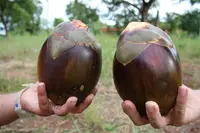
In parts of West Africa, especially Burkina Faso, local communities tap the inflorescences of this palm to collect a sweet sap that is consumed fresh or fermented, without felling the tree. Management of tapping intensity is important because overexploitation has been linked to local population declines.

Semi-arid woodland specialist

This species is strongly associated with dry Sudanian woodlands and open savannas, where it tolerates high temperatures and seasonal drought. It often grows scattered in parkland landscapes, contributing shade, organic matter, and habitat structure for wildlife.

Distinctive trunk pattern

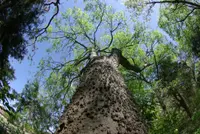
Mature individuals develop a massive, straight trunk with a characteristic checkerboard pattern formed by the persistent leaf-base scars. The large, fan-shaped leaves are held in a dense crown, making the tree a prominent visual element in its native landscapes.

Botan icon

Did you know?

Ethnobotanical surveys from Burkina Faso and neighboring countries describe this palm as a multi-use species, providing not only tapped sap but also edible fruits, construction materials from its wood, and weaving material from leaf parts, which together make it a key resource in traditional rural livelihoods.

FAQs about Borassus akeassii

Yes, this species is usually propagated from fresh seeds. They need warm temperatures, consistent moisture, and patience, as germination is slow. Seedlings develop a strong taproot early, so use deep containers and avoid repotting too often.

Grow Healthy Plants with Botan Care

Keep your plants happy and healthy with plant identification, disease detection, and easy care guidance.

Botan plant care app — identify plants on mobile

Explore More Plants