guavaberry Care (Myrciaria floribunda)

guavaberry

About guavaberry

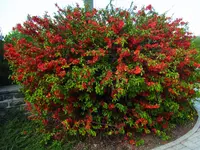
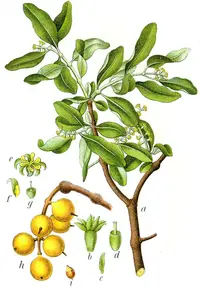
Guavaberry, Myrciaria floribunda, is a small to medium tropical fruit tree in the myrtle family, valued for its aromatic, cherry-sized berries. It typically has a rounded crown, smooth bark, and small glossy leaves, giving it a neat, ornamental appearance. Native to the Caribbean and parts of northern South America, it is commonly grown in home gardens and small orchards in warm climates. The plant is generally slow to moderate in growth and can be somewhat finicky in cooler or very dry conditions. It prefers warm temperatures, good light, and well-drained, slightly acidic soil. With the right conditions, it is not difficult to care for guavaberry and can be a long-lived fruiting tree.

Main Plant Requirements

Care Difficulty

Moderate Care

Light Preference

Full Sun

Water Requirements

Regular Water

Temperature Preference

Tropical / Frost Sensitive

Hardiness Zone

10–11

Soil Texture

Sandy, Loamy, Organic-rich

Soil pH

Acidic (5.5–6.5), Slightly acidic (6.5–7.0)

Soil Drainage

Moist but well-drained

Fertilization

Minimal (feed rarely)

Get Personalized Care Plan

Scan your plant to receive care tips personalized for your specific plant

Available on iOS and Android

How to Care for the guavaberry

This tropical fruit tree performs best with bright, gentle sun and some protection from intense afternoon exposure.

  • Provide 4–6 hours of direct morning sun with light afternoon shade or filtered light, especially in hot climates above 85°F (29°C).
  • Tolerates partial shade (around 3–4 hours of direct sun) but flowering and fruiting of guavaberry may decrease in too much shade.
  • Watch foliage: pale, sparse growth indicates insufficient light, while scorched, crispy leaf edges signal excessive midday or afternoon sun.

This species prefers evenly moist, well-drained soil and reacts quickly to extremes of drought or saturation.

  • Water when the top 3–5 cm of soil feels dry, allowing deeper soil to stay slightly moist but never waterlogged.
  • During warm growing seasons, check soil moisture 2–3 times per week; in cooler months reduce frequency as evaporation and growth slow.
  • For Myrciaria floribunda, drooping, dull leaves and dry, hard soil indicate underwatering, while yellowing leaves and a sour smell from soil suggest overwatering or poor drainage.

This subtropical tree thrives in warm, stable conditions and is sensitive to frost and sudden cold drops.

  • Aim for 70–85°F (21–29°C) for active growth, with best flowering and fruit set near the middle of this range.
  • Protect from temperatures below 40°F (4°C); foliage and young wood can be damaged near 32°F (0°C), and hard frost may kill small plants.
  • Tolerates short heat waves up to 95°F (35°C) if soil moisture is maintained and roots are mulched, but prolonged extreme heat can stress flowers and developing fruit.

This species prefers moderately high humidity and reacts if air stays very dry.

  • Aim for 50–70% humidity, as prolonged levels below 40% can slow growth and reduce leaf gloss.
  • Watch for crisp leaf edges, stalled new growth, and premature fruit drop as signs of low humidity stress.
  • Increase humidity with grouped plants, a pebble tray kept below the pot base, or a room humidifier rather than frequent misting.

This species performs best in deep, moist, well-aerated soil that does not stay waterlogged.

  • Use a loamy mix rich in organic matter, such as 50–60% composted bark or compost plus 40–50% coarse material like perlite or sand.
  • Aim for slightly acidic to neutral pH around 5.5–7.0 to support nutrient availability for Myrciaria floribunda.
  • Ensure fast drainage by avoiding fine, compacted mixes and by incorporating coarse particles that keep pore spaces open.
  • Do not use heavy clay-only soil or peat-heavy mixes that stay saturated, as this promotes root rot and weak growth.

This species adapts reasonably well to container growing when root volume and stability are managed.

  • Choose a deep, heavy pot that resists tipping as the woody canopy becomes denser and fruit load increases.
  • Select a container material that moderates moisture swings, such as thick-walled plastic or glazed clay, to prevent rapid drying.
  • Leave a clear drainage layer above the pot base rather than adding gravel, so water moves freely out through the holes.

This species benefits from light, steady feeding during warm growth periods, especially in containers.

  • Use a balanced NPK fertilizer (such as 10-10-10) or well-rotted compost for caring for guavaberry grown in pots or poor soil.
  • Feed every 4–6 weeks in spring and summer with liquid fertilizer diluted to 1/2 strength.
  • Apply slow-release granules at the start of the growing season if preferred, following label rates.
  • Reduce or stop feeding in fall and winter when growth slows, to avoid soft, frost-tender shoots.

Myrciaria floribunda responds well to light structural pruning to keep the canopy healthy and productive.

  • Carry out main pruning in late winter or early spring before vigorous new growth begins.
  • Remove dead, diseased, crossing, or inward-growing branches to open the canopy and improve airflow.
  • Shorten overly long shoots to maintain a balanced shape and manageable height for harvesting.
  • Use clean, sharp bypass pruners or loppers, making smooth cuts just above outward-facing buds or branch junctions.

This species is often grown in the ground but can adapt to containers and benefits from careful transplanting.

  • Check for roots circling the pot, emerging from drainage holes, or stalled growth as signs repotting is needed.
  • Plan repotting or transplanting for late winter to early spring, before strong new growth starts.
  • Move to a container 2–5 cm wider or into a well-drained planting hole, keeping the root flare at soil level.
  • Water thoroughly after moving, shade from intense sun for 3–7 days, and avoid heavy fertilization until new growth resumes.

This plant is most commonly propagated from seed, with some growers also using semi-hardwood cuttings.

  • Sow fresh seeds in late spring in a warm medium at 70–80°F, as older seeds lose viability quickly.
  • Use a well-drained, slightly acidic mix and keep evenly moist but not waterlogged for steady germination.
  • Provide bright, indirect light and stable warmth; germination may take several weeks or longer.
  • For cuttings, take semi-hardwood pieces, apply rooting hormone, and root under high humidity with bottom warmth.

This subtropical species has low frost tolerance and needs thoughtful winter management in cool climates.

  • Avoid exposure to temperatures below about 28–30°F, which can damage foliage and young wood.
  • Mulch the root zone with 5–8 cm of organic material, keeping it slightly away from the trunk.
  • Wrap young trunks with horticultural fleece or similar material during cold snaps in marginal climates.
  • Move container plants indoors or into a greenhouse before first frost, ensuring bright light and reduced watering.

Care Tips

Wind-form training

In windy sites, selectively prune and lightly stake young branches on the windward side for 1–2 seasons so the plant develops a low, sturdy framework that resists breakage when fruit loads become heavy.


Mulch for shallow roots

Apply a 5–8 cm layer of coarse organic mulch out to the drip line, keeping it 5–8 cm away from the trunk, to protect the shallow feeder roots, moderate soil temperature, and reduce competition from turf.

Fruit-thinning practice

On heavily flowering branches, remove a portion of immature fruit clusters by hand so the remaining fruit size and quality improve and branches are less likely to snap under weight.

Targeted micro-irrigation

Install low-flow drip lines or micro-sprinklers arranged in a ring under the outer canopy to keep the active root zone evenly moist without saturating soil around the trunk flare.

Soil salinity monitoring

In coastal or high-salt irrigation areas, periodically test soil electrical conductivity and, if elevated, leach the root zone with low-salinity water during the warm season to prevent leaf tip burn and reduced flowering when growing guavaberry.

Common Pests and Diseases

Guavaberry fruit fly

This pest lays eggs under the skin of ripening berries, leading to soft, discolored, and collapsing fruit. Symptoms include small sting marks on the skin and watery or brown flesh with maggots inside.

Solution

Collect and destroy all infested and fallen fruit promptly to break the life cycle, and use fine mesh fruit bags on clusters as they start to color. In outdoor plantings, monitor with yellow sticky traps, harvest fruit as soon as it ripens, and keep the area under the tree clean and free of rotting fruit to reduce populations.

Fruit‑boring caterpillars

These insects tunnel into developing berries, causing premature fruit drop, frass (sawdust‑like droppings), and misshapen, partly hollow fruit. Damage is often patchy within the canopy, with some branches affected more than others.

Solution

Remove and discard any damaged or prematurely dropped fruit, and prune out heavily affected branch tips to remove larvae hiding inside. Encourage natural predators by avoiding broad‑spectrum insecticides, and if pressure is high, apply a targeted biological product containing Bacillus thuringiensis (Bt) to young foliage and developing fruit according to label directions.

Anthracnose

This disease causes dark, sunken spots on young shoots, leaves, flowers, and fruit, often with a tan center and dark border. In humid, warm weather, lesions may expand rapidly and lead to fruit cracking and flower drop, reducing yield when growing guavaberry outdoors.

Solution

Prune to open the canopy and improve airflow, remove and destroy infected twigs and mummified fruit, and avoid overhead watering that leaves foliage wet for long periods. During extended wet or humid periods, apply a registered copper‑based fungicide or other labeled fungicide at flowering and early fruit development, following local guidelines.

Guava rust

This disease produces yellow to orange powdery pustules on the undersides of leaves and young shoots, which later turn brown and cause leaf distortion, defoliation, and reduced growth. Severe infections can weaken young plants and reduce fruit set.

Solution

Promptly remove and destroy heavily infected leaves and any self‑sown Myrtaceae hosts (such as volunteer guava seedlings) around the planting to limit spore sources. Maintain good spacing and airflow, avoid overhead irrigation, and in areas where rust is persistent, use preventative applications of an appropriate systemic or copper fungicide during warm, humid periods as permitted by local regulations.

Scale insects

These insects attach firmly to stems and leaf undersides, appearing as small bumps that excrete sticky honeydew and encourage sooty mold growth. Infestations can cause yellowing leaves, reduced vigor, and twig dieback, especially on container‑grown plants or those under stress.

Solution

Wipe small infestations from stems and leaves with a cloth or cotton pad dipped in mild soapy water, and prune out heavily infested twigs. For larger populations, release or conserve natural predators such as lady beetles and parasitic wasps, or use repeated applications of horticultural oil or insecticidal soap, ensuring thorough coverage of stems and leaf undersides.

Interesting Facts

Widespread Caribbean native

This species is naturally distributed across many Caribbean islands and parts of northern South America, where it often grows in coastal forests and seasonal woodlands, showing good tolerance of sandy and sometimes slightly saline soils.

Cauliflorous fruiting habit

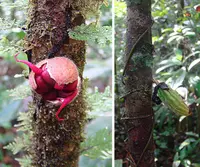
The plant produces its small orange to red berries directly on older branches and sometimes the main trunk, a trait called cauliflory that makes ripe fruits easy for small mammals and birds to access.

Important wildlife resource

Its sweet, thin-skinned berries are eaten by a wide range of birds and small mammals, which then disperse the seeds and help maintain genetic exchange between wild populations.

Botan icon

Did you know?

Genetic studies have shown that this species belongs to a complex group within the myrtle family (Myrtaceae), and its fruit and flower traits have been used by botanists to better understand evolutionary relationships among other jaboticaba-like trees in the Neotropics.

FAQs about guavaberry

Yes, this species adapts well to large containers with good drainage. Use a sturdy pot, slightly acidic mix, and repot as roots fill the space. Container culture also helps manage size and simplifies Myrciaria floribunda care.

Grow Healthy Plants with Botan Care

Keep your plants happy and healthy with plant identification, disease detection, and easy care guidance.

Botan plant care app — identify plants on mobile

Explore More Plants