jagua Care (Genipa americana)

Also known as: Genipap Tree, genip tree
jagua

About jagua

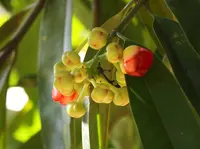
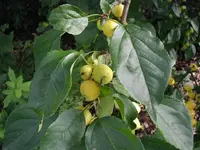
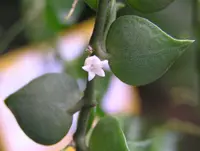
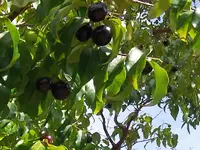
Jagua, Genipa americana, is a tropical fruit tree native to Central and South America and the Caribbean. It is part of the coffee family, Rubiaceae. The tree forms a rounded canopy with glossy, medium to dark green leaves and produces pale, tubular flowers followed by greenish fruits that darken as they mature. In suitable climates it can become a sizable landscape tree. It is generally moderate in difficulty for home growers, since it prefers warm, frost-free conditions and consistent moisture. It grows best in bright light, well-drained soil, and sheltered outdoor spots; these traits shape how to care for jagua successfully.

Main Plant Requirements

Care Difficulty

Moderate Care

Light Preference

Full Sun

Water Requirements

Regular Water

Temperature Preference

Tropical / Frost Sensitive

Hardiness Zone

10–12

Soil Texture

Loamy, Sandy, Organic-rich

Soil pH

Acidic (5.5–6.5), Slightly acidic (6.5–7.0)

Soil Drainage

Moist but well-drained

Fertilization

Minimal (feed rarely)

Get Personalized Care Plan

Scan your plant to receive care tips personalized for your specific plant

Available on iOS and Android

How to Care for the jagua

Genipa americana grows best in bright, warm conditions with consistent daily sun exposure.

  • Provide 6–8 hours of direct sunlight daily, ideally with gentle morning sun and some light afternoon shade in hot climates.
  • Young trees handle partial shade, but jagua fruits and branches more densely in full sun once established.
  • Avoid intense, reflected midday sun in very hot regions, which can scorch new leaves; ensure at least 4 hours of direct light in cooler seasons.

Genipa americana prefers evenly moist, never stagnant, soil.

  • Water when the top 3–5 cm of soil feels dry, soaking the root zone deeply rather than applying light, frequent splashes.
  • In hot, dry seasons, expect to water more often as leaves may droop slightly when thirsty; reduce frequency in cool or rainy periods.
  • Use well-drained soil to prevent standing water; yellowing, soft leaves suggest overwatering, while crisp edges and leaf drop suggest drought stress.

This tropical tree needs consistently warm conditions to grow and fruit well.

  • Aim for 70–88°F (21–31°C) for active growth, which supports healthy foliage and steady development.
  • Protect from temperatures below 40°F (4°C); growth slows below 60°F (16°C) and young plants can be damaged by brief cold snaps.
  • Genipa americana tolerates short heat waves up to about 95°F (35°C) if soil moisture is stable, but it is very sensitive to frost at any age.

This species prefers moderately humid air but copes with typical indoor conditions if not kept too dry.

  • Aim for 50–70% humidity, especially for young jagua plants or actively growing foliage.
  • In very dry air below 40%, leaf tips may brown, edges may curl, and new growth can appear smaller or distorted.
  • Increase humidity with a nearby humidifier, grouped plants, or a wide pebble tray under the pot, avoiding wet contact with the drainage holes.

This species grows best in deep, moisture-retentive yet well-drained soil with ample organic matter.

  • Use a loamy mix based on compost and pine bark with roughly 30–40% coarse material such as perlite or pumice to keep pores open.
  • Genipa americana prefers slightly acidic to neutral conditions around pH 6.0–7.0, so avoid heavy liming and alkaline potting bases.
  • Ensure rapid drainage by avoiding dense clay-only substrates; mix in coarse sand or small bark chips where native soil is heavy.
  • Do not allow the root zone to sit in compacted, waterlogged ground, which promotes root rot and reduces oxygen around fine roots.

This tree can be grown in containers when young or kept smaller, but needs careful pot selection for root space and stability.

  • Choose a tall, heavy container that lowers the center of gravity so the tree does not tip as the canopy and trunk gain mass.
  • Select a pot material with moderate porosity, such as thick-walled terracotta or concrete, to buffer moisture swings and heat on sunny patios.
  • Use a container wide enough to accommodate a spreading root flare, preventing circling roots that can constrict the trunk base over time.

Genipa americana benefits from moderate feeding in cultivation, especially in containers.

  • Use a balanced liquid fertilizer (for example 10-10-10) at 1/2 strength every 4–6 weeks during the warm growing season.
  • Apply a thin layer of well-rotted compost over the root zone once each spring for slow, steady nutrition when growing jagua outdoors.
  • Stop synthetic feeding in fall and winter, when growth slows, to avoid weak, elongated shoots.
  • Flush the pot with plain water a few times per season to reduce salt buildup, especially in indoor or nursery containers.

Genipa americana responds well to light structural pruning to maintain a strong framework and safe size.

  • Carry out main pruning at the end of the dry or cool season, just before vigorous new growth begins.
  • Remove dead, diseased, crossing, or storm-damaged branches with clean, sharp bypass pruners or a pruning saw.
  • Thin crowded interior shoots to improve airflow and light penetration, which supports healthier foliage and fruiting wood.
  • Shape young trees by shortening competing leaders and keeping a single dominant trunk for better long-term structure.

This species is usually field-grown, so care focuses on moving young trees from containers to permanent ground sites with minimal root stress.

  • Transplant when roots circle the pot, growth slows, or the root ball dries out very quickly, typically every 1–2 years for seedlings and young trees.
  • Choose late spring or early summer, once soil is warm and frost risk has passed, to support rapid root establishment.
  • Water the plant thoroughly before transplanting, slide out the root ball gently, and loosen only lightly compacted outer roots.
  • Plant at the same soil level, backfill with native soil, water deeply, then keep the root zone evenly moist and mulched for several months.

Genipa americana is most often propagated from seeds, which maintain genetic diversity for orchard and reforestation use.

  • Collect fully ripe fruits, remove pulp, and clean seeds before sowing for best viability.
  • Sow fresh seeds in warm conditions around 75–85°F, using a free-draining but moisture-retentive mix such as peat and sand or fine compost.
  • Maintain consistent moisture and bright, indirect light; germination can take several weeks, so patience is required.
  • Transplant seedlings into individual containers once they develop 2–3 true leaves, handling roots gently to avoid damage.

This tropical tree is frost sensitive and needs protection in regions with cool or freezing winters.

  • In ground, it suits frost-free or very mild climates; even brief dips below 32°F can damage young growth.
  • Apply 5–8 cm of organic mulch around the root zone, keeping it a few cm from the trunk, to buffer soil temperature.
  • Grow container plants in large pots and move them indoors or into a heated greenhouse before the first frost is forecast.
  • In indoor winter quarters, provide as much light as possible, reduce watering, and avoid cold drafts near windows or doors.

Care Tips

Early canopy training

In the first 2–3 years, select 3–5 well-spaced main branches and remove steep, crossing, or low branches to build a strong, open canopy that supports future fruit load and improves airflow.

Wind and fruit support

In windy sites or when branches carry heavy fruit, use soft ties to secure young limbs to sturdy stakes or neighboring branches to prevent splitting and to keep scaffold branches at a wide, stable angle.

Mulch management zone

Maintain a 5–10 cm deep ring of coarse organic mulch around but not touching the trunk to stabilize soil moisture and temperature, and pull mulch back from the base once a year to check for pests or rot.

Seasonal root inspection

Every 1–2 years on established trees, gently excavate the top 3–5 cm of soil near the trunk flare to look for circling or girdling roots and cut or redirect them before they become thick and constrictive.

Fruit-thinning practice

When fruit set is heavy on young or small trees, remove some developing fruits so clusters are spaced 10–15 cm apart along a branch, which reduces limb stress and improves average fruit size and quality when growing jagua.

Common Pests and Diseases

Fruit borer

This pest tunnels into developing jagua fruits, causing premature fruit drop, internal feeding damage, and contamination with frass. Symptoms include small entry holes, darkened spots, and distorted or shriveled fruits.

Solution

Collect and destroy infested fruits promptly to break the life cycle, and remove any fallen fruit from the ground. Use fine insect netting on fruiting branches where practical, and apply targeted Bacillus thuringiensis (Bt) or spinosad sprays to young fruits according to label directions when moth activity is detected.

Fruit fly

These insects lay eggs under the skin of ripening jagua fruits, and the hatching larvae feed inside, leading to soft, watery patches and rapid fruit decay. Symptoms include tiny oviposition punctures, sunken areas on the peel, and maggots inside affected fruits.

Solution

Harvest fruits as they approach maturity rather than leaving them on the tree, and promptly remove and dispose of any fallen or infested fruits in sealed bags. In outdoor production, use baited traps and protein or sugar-based lures placed around the canopy, and consider bagging individual fruits with paper or fabric sleeves once they reach half size.

Anthracnose

This disease causes dark, sunken lesions on young leaves, shoots, and fruits, and can lead to leaf blight and fruit spotting in warm, humid conditions. Symptoms include brown to black spots with defined edges that may coalesce, sometimes with a lighter center.

Solution

Prune and discard infected twigs, leaves, and fruits, and thin dense growth to improve air movement through the canopy. Avoid overhead irrigation, water early in the day so foliage dries quickly, and apply a copper-based fungicide or other labeled anthracnose product during wet periods if the disease recurs.

Leaf spot

This disease produces scattered circular to irregular spots on jagua leaves, often with yellow halos and occasional premature leaf drop in severe cases. Symptoms include a stippled appearance on older foliage and gradual thinning of the canopy from repeated defoliation.

Solution

Rake and remove fallen leaves to reduce fungal or bacterial inoculum, and keep the area under the tree free of dense debris. Improve air circulation by selective pruning, avoid wetting foliage during irrigation, and use a broad-spectrum foliar fungicide if new spots continue to appear on young leaves.

Scale insects

These insects attach to stems and leaf midribs, sucking sap and weakening branches, while secreting honeydew that promotes sooty mold growth. Symptoms include rough or crusty bumps on twigs, sticky residue on leaves, and black fungal coating on affected surfaces.

Solution

Gently scrub small infestations off twigs with a soft brush and soapy water, and prune out heavily infested branches. For larger trees, use horticultural oil sprays applied thoroughly to branches and leaf undersides during mild temperatures, repeating as needed to target newly hatched crawlers while following all label instructions.

Interesting Facts

Natural blue dye source

The unripe fruit pulp oxidizes to a dark blue pigment that has been used traditionally as a skin dye and body paint in parts of tropical America.

Specialist butterfly host

Its leaves serve as a key larval food source for certain sphinx moths and butterflies, so stands of this tree support specialized insect populations in lowland forests.

Large rainforest canopy tree

In native habitats this species can form part of the upper canopy, developing a straight trunk and a broad crown that provides shade and habitat for many birds and epiphytes.

Botan icon

Did you know?

Archaeological and ethnobotanical studies indicate that Indigenous peoples in Amazonia have managed and possibly semi-domesticated this species for centuries, selecting it around settlements for its useful fruit, pigment, and cultural value.

FAQs about jagua

The ripe fruit is edible and traditionally used for beverages, flavoring, and natural blue body dye. Only fully mature fruit should be consumed. Seeds and unripe parts are not commonly eaten and may cause digestive discomfort.

Grow Healthy Plants with Botan Care

Keep your plants happy and healthy with plant identification, disease detection, and easy care guidance.

Botan plant care app — identify plants on mobile

Explore More Plants