Scots pine Care (Pinus sylvestris)

Also known as: Scotch Pine, Eurasian red pine, Scotch Fir, northern pine
Scots pine

About Scots pine

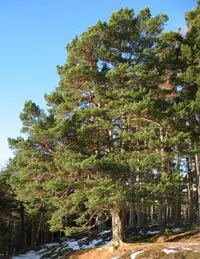
Scots pine, Pinus sylvestris, is a hardy evergreen conifer known for its tall, straight trunk and distinctive orange-brown upper bark. It typically forms an open, irregular crown with long, paired needles and woody cones.

This species is native to northern Europe and parts of Asia and is widely planted in temperate landscapes, forests, and windbreaks. It adapts well to cold climates and poor, sandy soils, which makes it relatively easy to establish.

Scots pine prefers full sun, good air circulation, and well-drained soil, and it does not tolerate prolonged waterlogging. Understanding these basic needs is the foundation of how to care for Scots pine in gardens or larger properties.

Main Plant Requirements

Care Difficulty

Easy Care

Light Preference

Full Sun

Water Requirements

Low Water

Temperature Preference

Cold Hardy

Hardiness Zone

2–7

Soil Texture

Sandy, Loamy, Rocky

Soil pH

Strongly acidic (4.5–5.5), Acidic (5.5–6.5)

Soil Drainage

Well-drained

Fertilization

Minimal (feed rarely)

Get Personalized Care Plan

Scan your plant to receive care tips personalized for your specific plant

Available on iOS and Android

How to Care for the Scots pine

Pinus sylvestris grows best in open, bright conditions with long daily sun exposure.

  • Aim for 6–10 hours of direct sun per day; full sun from morning to late afternoon supports dense, healthy growth.
  • Young trees tolerate light partial shade, but long-term shade causes sparse foliage and weak, elongated shoots.
  • In hot southern climates, give some protection from intense late-afternoon sun to limit needle scorch, while in winter unobstructed sun helps maintain vigor.

Pinus sylvestris prefers evenly moist, well-drained soil and is more sensitive to excess water than brief dryness.

  • At planting and during the first 1–2 years, water when the top 5–8 cm of soil feel dry, then soak deeply rather than giving frequent shallow drinks.
  • Established trees usually rely on rainfall; irrigate only during prolonged drought when needles dull, curl slightly, or lower branches start to yellow.
  • Ensure sharply drained soil or sloped ground; signs of overwatering include persistent wet soil, limp or yellowing needles, and dieback on fine roots.

This species is a hardy conifer adapted to cold climates but also manages moderate summer heat.

  • Active growth is strongest around 55–75°F (13–24°C), with cool springs and mild summers supporting dense needles and sturdy shoots.
  • Mature trees tolerate winter lows near -40°F (-40°C), though young plants benefit from protection from drying winds in very exposed sites.
  • In hot regions, Scots pine copes with short heat waves up to about 95°F (35°C) if soil is not waterlogged and roots are mulched to keep them cooler.

This species tolerates a wide humidity range and usually needs no special humidity management indoors or outdoors.

  • Aim for 30–60% air humidity, which suits typical home and outdoor conditions for Scots pine.
  • Dry indoor air is generally tolerated, but prolonged exposure to hot, very dry air can brown needle tips.
  • If air is extremely dry, increase humidity slightly by grouping plants together rather than misting the foliage.

Pinus sylvestris prefers mineral, well-drained soil that mimics its natural sandy, rocky habitats.

  • Use a gritty mix such as 50–70% coarse sand or fine gravel with the rest loam and a small amount of compost.
  • Ensure very sharp drainage; the mix should drain within seconds, not minutes, after watering.
  • Keep pH slightly acidic to neutral, around 5.5–7.0, avoiding strongly alkaline or salty substrates.
  • Avoid heavy clay, dense peat mixes, or waterlogged spots, which limit aeration and encourage root rot.

This species can be grown in containers for many years if given sufficient root space and excellent drainage.

  • Choose a deep, heavy container to balance the tall, wind-catching canopy and reduce tipping risk.
  • Select mineral-based mixes that dry out relatively quickly to prevent chronic moisture around the root collar.
  • Position the container where wind exposure is moderated by a wall or other barrier to reduce mechanical stress on roots.

Pinus sylvestris usually needs modest feeding, especially when grown in poor or disturbed soils.

  • Apply a balanced slow-release fertilizer (around 10-10-10) once in early spring as new growth begins.
  • Use light rates only; avoid high-nitrogen lawn products that can cause weak, overly fast growth.
  • On established trees, a 2–5 cm layer of compost over the root zone every 1–2 years is usually sufficient.
  • Do not feed in late summer or winter, since Scots pine should harden growth before cold weather.

Pinus sylvestris benefits from light, well-timed pruning to maintain structure and safety.

  • Carry out main pruning in late winter or very early spring, before active growth resumes.
  • Remove dead, diseased, crossing, or storm-damaged branches using clean, sharp bypass pruners or a pruning saw.
  • Limit cuts to smaller branches; avoid large trunk cuts that heal poorly and invite decay.
  • Pinch or shorten new candles in late spring only if modest shaping or size control is needed.

Transplanting is more relevant than repotting for Pinus sylvestris, since it is usually grown in the ground.

  • Plan major moves for late fall or early spring when the tree is dormant and soil is workable.
  • Transplant every many years only when clearly root-bound, with circling roots or stunted growth in a container.
  • Dig a wide root ball, keeping as many fine feeder roots intact as possible to limit transplant shock.
  • Replant at the same depth in well-drained soil, water thoroughly, then maintain even moisture while new roots establish.

Pinus sylvestris is mainly propagated from seed in professional or nursery settings.

  • Collect ripe cones, extract seeds, and cold-stratify them for 6–8 weeks at about 35–40°F in moist medium.
  • Sow seeds in spring in a free-draining, sandy mix, just barely covered, and keep evenly moist but not waterlogged.
  • Provide bright light, good air flow, and cool conditions; germination may be slow and uneven.
  • Vegetative methods like cuttings or grafting are specialized and mainly used for selected forms.

Pinus sylvestris is a cold-hardy conifer that usually needs minimal winter care in temperate climates.

  • In the ground, normal frost is tolerated; problems arise mainly from extreme wind or desiccation.
  • Apply a 5–8 cm mulch layer over the root zone in late fall, keeping mulch away from the trunk.
  • For container plants, use frost-resistant pots and move them to a sheltered, unheated but cold location.

Care Tips

Root flare check

When planting or repotting, ensure the top of the root flare sits just at or slightly above the soil surface, since burying it deeper increases risk of rot and storm instability.

Wind-hardening young trees

During the first 2–3 seasons, avoid staking unless absolutely necessary and, if used, remove stakes as soon as the tree stands on its own so the trunk can strengthen in natural wind.

Needle litter mulching

Leave a thin layer (2–5 cm) of fallen needles or use conifer bark as mulch around the base to conserve moisture, suppress weeds, and slightly acidify the root zone without touching the trunk.

Candle selection pruning

In late spring, shorten only some of the new candle tips by 30–50% with fingers or clean shears to control size and encourage denser branching without removing whole branches.

Winter stress reduction

In exposed sites, place temporary windbreaks on the prevailing-wind side and water well before ground freeze to reduce winter desiccation, which is a key part of caring for Scots pine in cold climates.

Common Pests and Diseases

Pine woolly aphid

This pest forms white, cottony clusters on twigs and at the base of needles, feeding on sap and causing yellowing or stunted shoots. Symptoms include sticky honeydew and sooty mold on bark or nearby surfaces.

Solution

Prune and destroy heavily infested shoots, then hose down reachable branches with a strong jet of water to dislodge colonies. For persistent infestations, apply a horticultural oil or insecticidal soap labeled for conifers, ensuring thorough coverage of twig bases in early spring or early summer when nymphs are active.

Pine sawfly larvae

These insects feed in groups on needles, often stripping branches and leaving only short nubs, which weakens the tree over time. Symptoms include chewed or missing older needles while new growth may initially remain intact.

Solution

Hand-pick or shake larvae into a container of soapy water on small trees, especially in early stages. For larger or repeated infestations, use a targeted biological insecticide containing spinosad or a registered conifer-safe product, focusing sprays on infested branches in spring when young larvae first appear as part of broader Pinus sylvestris care instructions.

Sphaeropsis (Diplodia) tip blight

This disease causes browning and death of new shoots and needles, starting near the base of the crown and moving upward. Symptoms include stunted, crooked candles, resin-soaked shoot bases, and tiny black fungal fruiting bodies on dead needles and cones.

Solution

Prune out and destroy infected shoots and cones during dry weather, disinfecting tools between cuts. Improve tree vigor with proper watering and reduced stress, and in high-risk sites consider preventative fungicide sprays labeled for tip blight at bud break and again as candles elongate.

Dothistroma needle blight

This disease produces yellow to tan spots on needles that turn into dark bands with red-brown centers, leading to premature needle drop. Over time, lower branches thin out and the crown can look sparse, especially in humid or poorly ventilated sites.

Solution

Rake and remove fallen needles and thin nearby vegetation to improve air movement around the tree. In areas with a history of infection, apply a copper-based fungicide or other labeled product in late spring and early summer to protect new needle growth, following local guidance on timing and repeat applications.

Pine needle cast (Lophodermium)

This disease causes yellowing, browning, and early shedding of 1–2-year-old needles, giving the tree a thin, tufted appearance on branch tips. Symptoms include tiny dark fruiting bodies forming on dead needles, often visible with a hand lens.

Solution

Collect and discard fallen needles to reduce the source of spores and avoid overhead irrigation that keeps foliage wet for long periods. If the problem recurs and tree value is high, use a registered fungicide for needle cast on pines, timing applications to protect newly emerging needles in spring and, if recommended, again in early summer.

Interesting Facts

Extreme cold tolerance

Scots pine naturally ranges into Arctic regions and can survive winter air temperatures below −40°F, thanks to antifreeze-like compounds in its cells and very flexible needles and shoots.

Orange flaky bark

Mature trees develop a distinctive orange to orange-red flaky bark on the upper trunk and crown, which helps reflect intense sunlight and is a key field mark used by foresters to identify this species at a distance.

Pioneer on poor soils

This species readily colonizes sandy, rocky, or nutrient-poor soils, forming open, light pine forests that stabilize substrates and prepare conditions for later forest communities, which is important for ecological restoration and growing Scots pine in challenging sites.

Botan icon

Did you know?

Some individual Scots pines in northern Europe have been dated to over 700 years old, making this species one of the longest-lived native trees in its range and allowing single trees to record centuries of climate history in their growth rings.

FAQs about Scots pine

Growth is usually moderate. Young trees often add 25–45 cm in height per year, sometimes up to 60 cm in ideal conditions. Rate slows with age, especially on dry, poor, or compacted sites.

Grow Healthy Plants with Botan Care

Keep your plants happy and healthy with plant identification, disease detection, and easy care guidance.

Botan plant care app — identify plants on mobile

Explore More Plants

How to Care for Scots pine (Pinus sylvestris)