Plan root space
Allow a wide, open area at least 9–12 m from buildings, septic systems, and paved surfaces so the aggressive root system can expand without lifting structures or competing too hard with nearby plants.

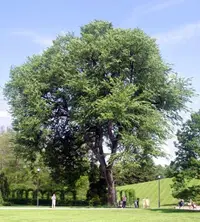
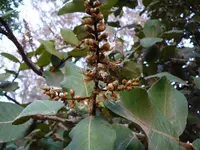
American elm, Ulmus americana, is a large, deciduous shade tree native to eastern and central North America. It is known for its tall, arching form and broad, vase-shaped crown. The leaves are oval, serrated, and turn yellow in autumn, giving the tree a clear seasonal rhythm in temperate climates. Bark on mature trees becomes gray and deeply ridged, providing strong visual texture in landscapes. In cultivation, it prefers full sun, moderate moisture, and well-drained, fertile soil. Modern selections are often chosen for disease resistance, which influences how reliable and long-lived a planting will be and how to care for American elm in managed settings.

Care Difficulty
Moderate Care

Light Preference
Full Sun

Water Requirements
Moderate Water

Temperature Preference
Cold Hardy

Hardiness Zone
3–9

Soil Texture
Loamy, Silty, Clay

Soil pH
Acidic (5.5–6.5), Slightly acidic (6.5–7.0)

Soil Drainage
Moist but well-drained

Fertilization
Minimal (feed rarely)
Scan your plant to receive care tips personalized for your specific plant
Available on iOS and Android
This species is a large, sun-loving shade tree that performs best with strong outdoor light exposure.
This species prefers evenly moist, deep soil but becomes more drought-tolerant as roots mature.
This hardy deciduous tree is adapted to a wide outdoor temperature range with distinct seasonal changes.
This species tolerates a wide humidity range and usually does not need special humidity control outdoors or in large, airy spaces.
Ulmus americana grows best in deep, moist, well‑aerated mineral soil with stable structure.
This species can be grown in containers only as a temporary or youth stage option, not as a long‑term full‑size tree.
Ulmus americana benefits from modest, targeted feeding rather than heavy fertilization.
Ulmus americana responds well to structured pruning that maintains a strong, open crown.
American elm is usually grown in the ground, so focus on careful transplanting of young trees.
Ulmus americana is typically propagated by seeds or softwood cuttings under controlled conditions.
Ulmus americana is a cold-hardy deciduous tree that generally needs minimal winter care in the ground.

Plant Health Check
Not sure what's wrong with your plant? Check your plant's health inside the app.
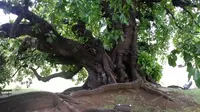
Mature American elm trees naturally develop a high, arching canopy that meets over streets and paths, creating a vase-like form that once defined many North American townscapes.
This species is highly susceptible to Dutch elm disease, a fungal infection spread by elm bark beetles, which caused widespread mortality of American elms across North America in the 20th century.
In nature, American elm commonly grows on moist bottomlands, stream banks, and floodplains, showing strong tolerance to periodic flooding and wet soils compared with many other temperate trees.

American elm was historically one of the most widely planted street and shade trees in North America, to the point that entire avenues were often lined almost exclusively with this single species before Dutch elm disease reshaped urban forestry practices.
This species is generally fast-growing, often adding 30–60 cm in height per year in good conditions. Growth slows with age. Rate depends on soil quality, moisture availability, light, and freedom from Dutch elm disease.
Keep your plants happy and healthy with plant identification, disease detection, and easy care guidance.