Wind-smart siting
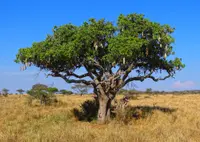
Place young plants where they receive some shelter from strong prevailing winds, or use temporary windbreak netting for the first 2–3 years to reduce branch breakage and wind scorch while roots establish.

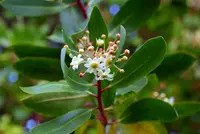
Winter's bark, Drimys winteri, is an evergreen tree or large shrub valued for its aromatic bark and glossy, dark green leaves. It develops clusters of creamy white flowers that contrast with its red stems, giving it strong ornamental interest in mild, temperate gardens.
This species is native to the cool, moist forests of southern Chile and Argentina, where it grows on well-drained yet consistently damp soils. It is generally hardy and wind-tolerant but dislikes hot, dry conditions and poor drainage.
Gardeners who learn how to care for Winter's bark usually find it manageable, provided it receives cool conditions, regular moisture, and protection from extreme heat and prolonged drought.

Care Difficulty
Moderate Care

Light Preference
Partial Shade

Water Requirements
Regular Water

Temperature Preference
Cool Climate

Hardiness Zone
8–10

Soil Texture
Loamy, Sandy, Organic-rich

Soil pH
Strongly acidic (4.5–5.5), Acidic (5.5–6.5)

Soil Drainage
Moist but well-drained

Fertilization
Minimal (feed rarely)
Scan your plant to receive care tips personalized for your specific plant
Available on iOS and Android
This evergreen shrub prefers cool, bright conditions with protection from harsh midday sun.
This species prefers evenly moist, cool soil but reacts poorly to waterlogged conditions.
This cool-temperate shrub favors mild conditions and does best without temperature extremes.
This species prefers moderately moist air but adapts to a range of household conditions.
This shrub grows best in deep, moisture-retentive but free-draining soil.
This species can be grown in containers where space or soil conditions are limiting.
This slow-growing tree needs only modest feeding, especially when grown in the ground.
Pruning Drimys winteri is mainly corrective, aimed at maintaining a healthy, open structure.
This species is usually grown in the ground, so transplanting young trees correctly is more important than frequent repotting.
New plants are most often raised from semi-ripe cuttings or seeds, both of which need patience and stable conditions.
This cool-climate tree is moderately hardy but benefits from some winter preparation, especially when young or container-grown.

Plant Health Check
Not sure what's wrong with your plant? Check your plant's health inside the app.
Drimys winteri belongs to one of the most ancient lineages of flowering plants (family Winteraceae) and lacks true vessels in its wood, which makes its water-transport system more similar to early angiosperms than to most modern trees.
Although native to cool-temperate rainforests of southern Chile and Argentina, this evergreen tree withstands moderate frost and cold, an unusual trait for a species adapted to high rainfall and sheltered forest conditions.
The bark and leaves have a strong, spicy aroma and a peppery taste due to aromatic compounds, which historically led to their use as a spice substitute in South America and by early European explorers.

The species was named after Captain John Winter, whose crew used the bark during Sir Francis Drake’s 16th-century expedition to treat symptoms consistent with scurvy, making it one of the earliest South American woody plants documented for its antiscorbutic potential in European records.
Growth is moderate rather than rapid. In suitable outdoor conditions it typically puts on about 20–40 cm of new growth per year, slowing as it matures. Cooler summers and dry spells can reduce this rate noticeably.
Keep your plants happy and healthy with plant identification, disease detection, and easy care guidance.