Early framework training
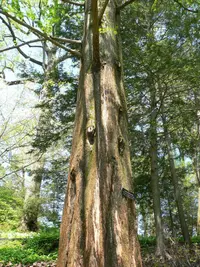
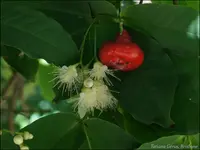
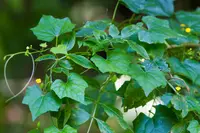
In the first 3–5 years, select 3–5 strong primary branches spaced around the trunk and remove competing shoots to build a stable, open canopy that can support the heavy sausage-like fruits later.

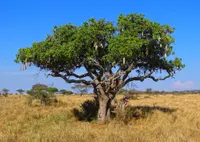
The sausage tree, Kigelia africana, is a tropical, broadleaf tree known for its large hanging fruits that resemble sausages. It develops a wide, spreading crown and showy reddish flowers that open mostly at night.
This species is native to sub-Saharan Africa, where it grows in riverine woodlands and savannas. In cultivation it is often grown as an ornamental feature tree in warm climates.
Sausage trees can be slow to establish and need space, warmth, and strong light, which makes them challenging outside tropical or subtropical regions. Understanding how to care for sausage tree starts with providing full sun, evenly moist but well-drained soil, and protection from frost.

Care Difficulty
Moderate Care

Light Preference
Full Sun

Water Requirements
Moderate Water

Temperature Preference
Tropical / Frost Sensitive

Hardiness Zone
10–12

Soil Texture
Sandy, Loamy, Clay

Soil pH
Slightly acidic (6.5–7.0), Slightly alkaline (7.0–7.5)

Soil Drainage
Moist but well-drained

Fertilization
Minimal (feed rarely)
Scan your plant to receive care tips personalized for your specific plant
Available on iOS and Android
Kigelia africana develops best flowering and canopy density in consistently bright outdoor light.
Kigelia africana prefers deep, infrequent watering that allows the soil surface to dry slightly between soakings.
This species is a warmth-loving tree that performs best in climates without hard frost.
Kigelia africana tolerates a wide humidity range but grows best with moderately moist air.
Kigelia africana prefers deep, well-drained, moderately fertile soil that still retains some moisture.
This species can be grown in containers when kept as a juvenile or managed specimen.
Kigelia africana benefits from moderate feeding to support leafy growth and flowering in cultivation.
Pruning Kigelia africana is mainly used to manage size, structure, and safety.
Transplanting this tree is infrequent and should be done carefully due to its strong root system.
Propagation of Kigelia africana is possible from both seeds and semi-hardwood cuttings but is relatively slow.
Kigelia africana is frost sensitive and needs protection in regions with cold winters.

Plant Health Check
Not sure what's wrong with your plant? Check your plant's health inside the app.
The large, maroon, night‑scented flowers are mainly pollinated by bats, which visit for nectar and brush against the pollen‑bearing anthers while feeding.
Its sausage‑shaped fruits can reach over 50 cm in length, are extremely fibrous and woody, and are not normally eaten by humans in the raw state due to their hardness and bitterness.
In the wild it most often grows along rivers, seasonal streams, and floodplains in sub‑Saharan Africa, where its deep roots help stabilize soil and access groundwater during dry periods.

The heavy, pendulous fruits can pose a hazard when they fall, so in some African regions trees near paths or gathering places are sometimes pruned or the young fruits removed to reduce the risk of injury from falling fruit.
Lack of flowering usually comes from insufficient light, cool temperatures, or a plant that is still immature. Nutrient-poor or very dry soil can also reduce flower production. Stable warmth and strong light typically improve blooming over time.
Keep your plants happy and healthy with plant identification, disease detection, and easy care guidance.