Pot-size strategy
Use a pot only 2–4 cm wider than the root mass and repot infrequently, as a slightly tight pot helps control top growth and supports a compact caudex form when growing Red Elephant Tree.

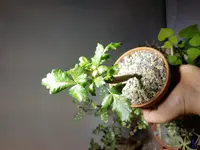
Red elephant tree, Bursera hindsiana, is a small, drought-adapted tree or large shrub from arid regions of Baja California and northwestern Mexico. It belongs to the frankincense and myrrh family and is valued as a caudiciform, a plant that stores water in a swollen trunk or base.
The plant has smooth, peeling bark in gray, red, or copper tones and small, aromatic leaves that may drop in very dry or cool conditions. Growth is slow to moderate, with a sculptural, branching form that suits containers and dry gardens.
It is generally considered easy to grow for those who understand desert plants. To care for Red Elephant Tree, provide very fast-draining soil, bright light, and careful, infrequent watering to avoid root rot.

Care Difficulty
Moderate Care

Light Preference
Full Sun

Water Requirements
Low Water

Temperature Preference
Tropical / Frost Sensitive

Hardiness Zone
10–11

Soil Texture
Sandy, Loamy, Rocky

Soil pH
Slightly acidic (6.5–7.0), Neutral (7.0)

Soil Drainage
Well-drained

Fertilization
Minimal (feed rarely)
Scan your plant to receive care tips personalized for your specific plant
Available on iOS and Android
This desert shrub prefers strong light with some protection from harsh extremes.
This drought-adapted species needs infrequent, deep watering and fast-draining soil.
This species thrives in warm, arid climates and is sensitive to frost.
This species tolerates dry indoor air and has low humidity demands.
This desert shrub needs very fast-draining, gritty soil to prevent root rot.
This species is well suited to container growing when drainage and stability are prioritized.
This desert shrub needs only light feeding in cultivation; caring for Red Elephant Tree focuses more on light and drainage than on nutrients.
Pruning Bursera hindsiana is mainly corrective, keeping the canopy open and the structure sound.
This species dislikes frequent disturbance, so repot or transplant only when clear signs appear.
Bursera hindsiana is most often propagated by semi-hardwood cuttings or seed under warm, dry-leaning conditions.
This warm-desert tree is only lightly frost tolerant and benefits from basic winter precautions outside its native range.

Plant Health Check
Not sure what's wrong with your plant? Check your plant's health inside the app.
This species is native to the Sonoran Desert region of northwestern Mexico and adjacent Baja California, where it grows on hot, rocky slopes and arroyos with very low rainfall.
Its smooth, coppery bark peels in thin curls and releases a resinous, often pleasantly pungent scent typical of the genus, which helps protect tissues from insects and pathogens.
The plant develops a thickened, water-storing trunk and main branches (a pachycaulous habit) that allow it to survive long dry periods with minimal leaf area.

In parts of its native range, this tree is known to form characteristic low, open scrub communities together with other drought-adapted species such as elephant trees, organ pipe cactus, and various agaves, shaping a distinctive Sonoran foothill landscape type that is strongly tied to local geology and aridity patterns.
Lack of blooms usually comes from insufficient light, excess watering, or the plant being too young. It often flowers only once established and stressed slightly by dry periods, similar to many other drought-adapted shrubs.
Keep your plants happy and healthy with plant identification, disease detection, and easy care guidance.