Persian silk tree Care (Albizia julibrissin)

Also known as: Persian silk tree, pink silk tree, Ružičasto svileno drvo, mimosa, silky acacia
Persian silk tree

About Persian silk tree

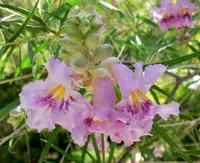
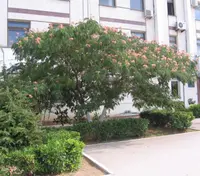
The Persian silk tree, Albizia julibrissin, is a small deciduous tree known for its airy, spreading canopy and silky, pink, powder-puff flowers. Its fine, fern-like leaves give it a light, graceful look in the landscape.

This species is native to parts of Asia, including Iran, the Caucasus, and East Asia, and is now widely planted in warm and temperate regions. It grows quickly, which makes it appealing but can also lead to a somewhat short lifespan.

Albizia julibrissin prefers full sun, well-drained soil, and moderate moisture, and it tolerates summer heat once established. It is generally easy to grow, but learning how to care for Persian silk tree helps maintain good structure and flowering.

Main Plant Requirements

Care Difficulty

Moderate Care

Light Preference

Full Sun

Water Requirements

Moderate Water

Temperature Preference

Warm Climate

Hardiness Zone

6–9

Soil Texture

Sandy, Loamy, Clay

Soil pH

Acidic (5.5–6.5), Slightly acidic (6.5–7.0)

Soil Drainage

Well-drained

Fertilization

Minimal (feed rarely)

Get Personalized Care Plan

Scan your plant to receive care tips personalized for your specific plant

Available on iOS and Android

How to Care for the Persian silk tree

Albizia julibrissin thrives in strong light to support fast growth and flowering.

  • Provide 6–8 hours of direct sun daily; full sun is best, with morning and midday sun ideal in most climates.
  • Tree tolerates light partial shade, especially in hot regions, but dense shade leads to weak growth, sparse blooms, and leggy branches.
  • Young Persian silk tree saplings can scorch in intense late-afternoon sun; use nearby plants or structures for light filtering in the first 2–3 years.

This species prefers deep, infrequent watering once established rather than constant surface moisture.

  • Allow the top 5–8 cm of soil to dry before watering, then irrigate slowly so moisture reaches 20–30 cm deep.
  • In the first 1–2 growing seasons, water when new leaves start to droop slightly, especially during dry spells, then reduce as roots spread.
  • Signs of excess water include yellowing leaves and soft new growth; poor drainage or standing water around the trunk increases root rot risk.

This tree is adapted to warm temperate climates with distinct seasonal changes.

  • Optimal growing temperatures are 70–85°F (21–29°C) during the active season, with good airflow in hot, humid weather.
  • Mature trees tolerate brief lows down to about 5°F (−15°C), but young plants are damaged below 20°F (−6°C) and should be sheltered.
  • New growth is sensitive to late frosts; in regions with hot summers above 95°F (35°C), provide soil mulch to keep roots cooler and reduce heat stress.

Albizia julibrissin handles a wide humidity range and usually does not need special humidity management outdoors.

Albizia julibrissin prefers loose, well-drained, moderately fertile soil that does not stay waterlogged.

  • Aim for a loamy or sandy loam structure, using roughly 50% garden soil, 30–40% compost, and 10–20% coarse sand or grit.
  • Keep drainage sharp; avoid spots where water pools after rain or where heavy clay stays wet for more than 24 hours.
  • Target a slightly acidic to neutral pH around 6.0–7.5; add compost and a small amount of agricultural lime if soil is very acidic.
  • Improve aeration in compact soils by working in coarse sand or fine gravel through the top 20–30 cm, not just at the surface.

This species can be grown in large containers for several years, especially in cooler climates or where space is limited.

  • Choose a heavy, stable container (such as thick ceramic or concrete) to counterbalance the broad, spreading canopy in wind.
  • Use a deep pot, at least 45–60 cm tall, to accommodate the taproot and reduce stress from restricted root depth.
  • Fill the container with a fast-draining, woody mix, blending standard potting mix with 20–30% coarse bark and 10–20% grit or perlite to limit waterlogging.

Albizia julibrissin benefits from light, targeted feeding rather than heavy fertilization.

  • Use a balanced slow-release fertilizer (for example 10-10-10) or well-rotted compost once in early spring as new growth starts.
  • In average garden soil, a single application per growing season is usually enough for healthy flowering and foliage.
  • Reduce or stop feeding in late summer to allow wood to harden; do not fertilize in winter dormancy.
  • If using liquid feed for container-grown Persian silk tree, apply at half strength every 4–6 weeks during active growth.

Pruning Albizia julibrissin focuses on safe structure, clearance, and flower display.

  • Carry out main pruning in late winter or very early spring before bud break to reduce stress and sap bleed.
  • Remove dead, diseased, storm-damaged, or crossing branches first, cutting back to healthy wood with clean, sharp tools.
  • Thin congested interior growth to improve light penetration and air flow, which supports better flowering and reduces fungal issues.
  • Shape the canopy by shortening overly long shoots to outward-facing buds, keeping a balanced, open, umbrella-like form.

This tree is usually grown in the ground, so focus on correct transplanting rather than frequent repotting.

  • Plan major transplanting for late winter or early spring while the tree is still dormant but soil is workable.
  • Move only young Albizia julibrissin specimens; older trees resent disturbance and establish poorly after transplanting.
  • Look for signs such as roots circling the pot, slow growth, or the plant drying out quickly as cues to up-pot container trees.
  • Reduce root stress by watering deeply before and after moving, keeping the root ball intact, and shading the canopy for 1–2 weeks.

Albizia julibrissin is commonly propagated from seed and, less often, from softwood cuttings.

  • Collect ripe seeds in late summer, then scarify lightly or soak in warm water 12–24 hours to improve germination.
  • Sow seeds in a free-draining mix, keep at 70–80°F, and maintain lightly moist but not waterlogged conditions.
  • Take softwood cuttings in late spring to early summer, use rooting hormone, and place in high humidity with bright, indirect light.
  • Pot on seedlings or rooted cuttings once roots fill the starter cell, handling roots gently to avoid transplant shock.

Mature Albizia julibrissin is moderately cold hardy but young trees and container plants benefit from simple winter protection.

  • In regions colder than about USDA zone 6–7, expect dieback of young top growth after severe freezes.
  • Apply 5–8 cm of organic mulch over the root zone in late fall, keeping it a few cm away from the trunk.
  • For container plants, move pots to an unheated garage, cold frame, or sheltered wall area once temperatures stay below freezing.
  • Avoid late-season nitrogen feeding or heavy pruning, which can stimulate tender growth that is more vulnerable to winter injury.

Care Tips

Wind-strong training

During the first 2–3 years, allow the young tree to experience moderate, unsheltered wind and avoid staking unless it leans badly, which encourages a sturdier trunk and stronger anchoring roots.

Selective scaffold building

In late winter, choose 3–5 well-spaced main branches and remove steep, rubbing, or duplicate shoots so the canopy forms a low, wide umbrella that resists storm damage and lets light into the center.

Root-zone protection

Keep turfgrass and frequent foot traffic at least 60–90 cm away from the trunk, and maintain a thin, 5–8 cm mulch ring to protect shallow feeder roots from compaction and temperature swings.

Pod and seed management

After flowering, remove developing pods on small or near-boundary trees to reduce self-seeding and direct the plant’s energy into canopy growth rather than seed production.

Targeted pest scouting

From late spring through summer, inspect the undersides of leaves and young shoots every 1–2 weeks for webbing, honeydew, or caterpillar chewing, and treat early with a strong water spray or a labeled low-toxicity product as part of caring for Persian silk tree.

Common Pests and Diseases

Fusarium wilt

This disease is caused by the soil-borne fungus Fusarium oxysporum f. sp. perniciosum and is one of the most serious problems for mimosa trees. Symptoms include yellowing leaves, wilting, branch dieback, and dark streaks in the sapwood.

Solution

Prune out and destroy affected branches, sterilizing tools between cuts, and avoid injuring roots or trunk. Do not replant susceptible Albizia in the same location; improve drainage, reduce drought stress with consistent watering, and consider replacing severely affected trees, as there is no reliable chemical cure for Fusarium wilt in home landscapes.

webworm caterpillars

These insects form silken web nests in the canopy and feed on compound leaves, sometimes defoliating large sections of the tree. This pest is more common in warm climates and can cause unsightly damage during summer.

Solution

Physically remove and destroy webbed nests when first noticed, preferably in the early morning or late evening when caterpillars are inside. For heavier infestations, use a biological insecticide containing Bacillus thuringiensis (Bt) directed into the webs, and encourage natural predators by avoiding broad-spectrum insecticides nearby.

mimosa scales

These insects attach to twigs and branches, appearing as small, flattened bumps that suck sap and weaken the tree. Symptoms include twig dieback, sparse foliage, and sometimes sooty mold from associated honeydew, though some species of scale on Albizia produce little visible honeydew.

Solution

Inspect branches regularly and prune out heavily infested twigs, disposing of them away from the tree. For lighter infestations, scrub small branches with a soft brush and water, and apply a horticultural oil spray during the dormant or cool season to smother overwintering scales, repeating according to label directions as part of Albizia julibrissin plant care.

mimosa webworm

This pest consists of small larvae that tie leaflets together with silk and feed inside, causing bronzing, browning, and premature leaf drop. Damage can reduce the tree’s vigor and aesthetic value, especially on stressed or newly planted trees.

Solution

Prune and destroy infested twigs and foliage as soon as webbing is observed, and dispose of debris to break the life cycle. In larger trees, targeted applications of Bt or other selective larval controls timed to early larval stages can reduce populations while minimizing impact on beneficial insects.

vascular wilt complex

This disease describes a decline that may involve both Fusarium and other vascular pathogens, leading to progressive branch dieback, sparse foliage, and eventual tree death. Symptoms include one-sided crown yellowing, wilting during heat, and brown discoloration in the inner wood when branches are cut.

Solution

Reduce stress by providing regular deep watering during dry periods, mulching the root zone, and avoiding trunk injury or soil compaction. Remove and destroy severely affected branches, monitor progression, and plan for removal and site replacement if dieback advances, as long-term control is limited once the vascular system is significantly damaged.

Interesting Facts

Night-opening flowers

The pink, tufted flower heads open mainly in the evening and early night, timed with moth and nocturnal pollinator activity rather than daytime insects.

Nitrogen-fixing partnership

The roots form nodules with symbiotic bacteria that fix atmospheric nitrogen, which can enrich poor soils and influence surrounding plant communities.

Invasive in many regions

Although native to Asia, this tree has naturalized and become invasive in parts of the eastern United States, where it spreads along roadsides, riverbanks, and disturbed habitats.

Botan icon

Did you know?

Despite its delicate appearance, this species tolerates urban conditions such as air pollution, heat, and compacted soils, which has contributed to its widespread planting and escape from cultivation in many temperate cities.

FAQs about Persian silk tree

Lack of flowers is often due to insufficient light, young age, heavy pruning, or excess nitrogen fertilizer. Ensure full sun, avoid hard pruning in spring, and use a balanced or low‑nitrogen fertilizer to support bud formation.

Grow Healthy Plants with Botan Care

Keep your plants happy and healthy with plant identification, disease detection, and easy care guidance.

Botan plant care app — identify plants on mobile

Explore More Plants