African copaiba balsam tree Care (Daniellia oliveri)

About African copaiba balsam tree

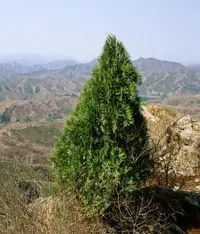
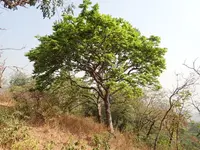
The African copaiba balsam tree, Daniellia oliveri, is a medium to large deciduous tree native to savannas and open woodlands of West and Central Africa. It is valued locally for shade, timber, and aromatic resin.

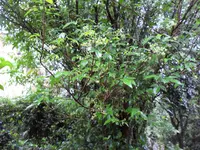
This species typically forms a broad, rounded crown with a straight trunk and fine, feathery foliage that gives it a light, airy appearance. The bark and resin can be fragrant.

In cultivation, it prefers warm climates, full sun, and well-drained soil, so it is usually grown outdoors in frost-free regions rather than as a houseplant. Understanding these natural conditions is essential to know how to care for African copaiba balsam tree.

Main Plant Requirements

Care Difficulty

Moderate Care

Light Preference

Full Sun

Water Requirements

Moderate Water

Temperature Preference

Tropical / Frost Sensitive

Hardiness Zone

11–13

Soil Texture

Sandy, Loamy, Clay

Soil pH

Slightly acidic (6.5–7.0), Neutral (7.0)

Soil Drainage

Well-drained

Fertilization

Minimal (feed rarely)

Get Personalized Care Plan

Scan your plant to receive care tips personalized for your specific plant

Available on iOS and Android

How to Care for the African copaiba balsam tree

This savanna tree prefers abundant sun to develop a strong crown and healthy foliage.

  • Provide 6–8 hours of direct sun daily; full sun exposure suits established trees in open landscapes.
  • Young or newly planted African copaiba balsam tree specimens benefit from light afternoon shade or filtered light to reduce leaf scorch in hot, dry regions.
  • In dense shade the canopy thins and growth slows, so prune nearby plants or structures to increase light, especially during shorter winter days.

This species prefers deep, infrequent watering that encourages a strong, drought-tolerant root system.

  • In the ground, water thoroughly only when the top 5–8 cm of soil are dry, allowing water to soak 20–30 cm deep, then let the soil drain fully.
  • During the first 2–3 years, increase watering in hot, dry spells and reduce it in cool or rainy seasons to avoid prolonged soil saturation.
  • Signs of overwatering in Daniellia oliveri include yellowing leaves and soft new growth, while persistent leaf drop and brittle twigs suggest underwatering.

This tree is adapted to warm tropical to subtropical climates and does poorly in cold conditions.

  • Optimal growth occurs around 77–95°F (25–35°C), where the tree maintains active shoot and root development.
  • Mature trees may survive brief dips near 41°F (5°C), but foliage damage is likely; avoid planting where temperatures often fall below this.
  • The species tolerates high heat up to about 104°F (40°C) if soil moisture is adequate, but it is highly sensitive to frost and should be protected from cold fronts in marginal climates.

Humidity is not a major concern for Daniellia oliveri, which naturally tolerates seasonally dry air.

  • Aim for 30–50% humidity; the African copaiba balsam tree copes well with typical household or outdoor conditions in this range.
  • Leaf edge browning, fine crackling, or premature leaf drop can signal extended exposure to extremely dry air below 25%.
  • Increase humidity only in very arid settings using grouped plants or a nearby water tray, not by wetting foliage directly.

Daniellia oliveri prefers deep, well-drained, slightly sandy to loamy soil that does not stay waterlogged.

  • Use a mix of roughly 50% loam or sandy topsoil, 30–40% coarse sand, and 10–20% compost to balance drainage and nutrient supply.
  • Keep drainage fast; avoid compacted clay or sites where water stands for more than 1–2 hours after heavy rain.
  • Target a slightly acidic to neutral pH around 6.0–7.0, avoiding strongly acidic or saline soils that restrict root function.
  • Improve aeration by incorporating coarse sand or fine grit through the top 20–30 cm and avoiding heavy traffic over the root zone.

This species can be grown in containers while young, but long-term size and taproot development limit permanent pot culture.

  • Choose a tall, heavy container that supports the developing taproot and prevents the plant from becoming wind-unstable as it gains height.
  • Use a free-draining mix and elevate the pot on feet so drainage holes never sit in collected runoff after irrigation or rain.
  • Select thick-walled clay or concrete pots in hot climates to buffer root temperature swings and reduce stress on rapidly growing roots.

Nutrient needs are modest, but young Daniellia oliveri in cultivation respond well to light, balanced feeding during active growth.

  • Use a balanced slow-release fertilizer (for example 10-10-10) or well-rotted compost mixed into the topsoil in spring.
  • Feed once at the start of the growing season; in poor soils a second light application in midsummer is sufficient.
  • Apply at 50–75% of the label rate to avoid salt buildup and root burn, especially in containers.
  • Stop feeding in late summer to early fall so new growth hardens before cooler weather.

Pruning Daniellia oliveri focuses on removing weak wood and guiding a stable canopy structure.

  • Carry out main pruning in late winter to early spring before vigorous new growth starts.
  • Remove dead, diseased, crossing, or inward-growing branches to improve airflow and light penetration.
  • Select a single strong leader and well-spaced scaffold branches to shape a balanced crown.
  • Use clean, sharp bypass pruners or a pruning saw, making smooth cuts just outside the branch collar.

This species is usually field-grown, so focus on careful transplanting of young trees rather than frequent repotting.

  • Transplant in late winter to early spring when dormant, before new leaves emerge, to limit transplant shock.
  • Look for roots circling the container, tight rootballs, or slowed growth as signs that nursery plants need a larger planting space.
  • Loosen or slice circling roots gently, keep the rootball moist, and plant at the same soil depth as in the pot.
  • Water deeply after planting, then maintain even moisture and a light mulch ring to reduce root stress during establishment.

Propagation of Daniellia oliveri is mainly done from seed under warm, controlled conditions.

  • Collect mature pods at the end of the dry season and extract seeds once fully dry and brown.
  • Scarify hard seed coats lightly with sandpaper, then soak seeds in warm water for 12–24 hours to improve germination.
  • Sow in a free-draining mix at 75–85°F with bright light and consistent, gentle moisture.
  • Keep seedlings in deep containers to allow taproot development before field planting.

This tropical tree has low frost tolerance and needs protection in regions with cool or cold winters.

  • In ground, plant only in frost-free or very mild climates; young trees are especially sensitive to temperatures below 32°F.
  • Apply a 5–8 cm mulch layer around the root zone, keeping it slightly away from the trunk to moderate soil temperature.
  • Move container-grown plants indoors or into a heated greenhouse before night temperatures fall below 45–50°F.
  • Reduce watering in winter, keeping soil just slightly moist to avoid cold, waterlogged conditions around the roots.

Care Tips

Encourage Strong Leader

Select 1 straight central stem while the tree is young and remove competing upright shoots early in the dry season to promote a stable single trunk and reduce future branch breakage.

Protect Surface Roots

Avoid frequent deep cultivation or heavy machinery near the base, because this species often develops shallow lateral roots that are easily damaged and more prone to rot and wind-throw after injury.

Dry-Season Mulching

Apply a 5–8 cm ring of coarse organic mulch outside the trunk flare before the dry season to moderate soil temperature, reduce moisture loss, and support fine root activity without piling mulch against the bark.

Windward Branch Management

In exposed sites, lightly thin or shorten long, windward branches while the tree is still small so the canopy loads are balanced and the risk of storm damage is reduced as it matures.

Monitor Resin Bleeding

Inspect the trunk and main limbs a few times per year for abnormal resin bleeding or cankers, removing dead or loose bark and disinfecting tools between cuts as part of careful, long-term Daniellia oliveri care.

Common Pests and Diseases

Bark-boring beetles

This pest tunnels into stems and larger branches, weakening the wood and disrupting water flow. Symptoms include small round exit holes, frass (wood dust), and dieback of affected branches.

Solution

Prune and destroy infested branches promptly, cutting back into clean, undamaged wood. Reduce stress by watering during prolonged drought, avoid wounding the trunk, and in high-value trees consider a licensed arborist for targeted trunk or systemic treatments if boring activity is active and spreading.

Sap-sucking scale

These insects attach to twigs and branches, feeding on sap and causing yellowing foliage, reduced growth, and sticky honeydew that can lead to sooty mold on leaves and bark.

Solution

Scrape off localized colonies by hand or with a soft brush and prune heavily infested small branches. Improve tree vigor with proper watering, avoid excess nitrogen fertilization, and where necessary use horticultural oil during crawler stages to reduce populations as part of broader Daniellia oliveri care.

Leaf spot fungi

This disease produces brown to dark spots on leaflets that may coalesce, leading to premature leaf yellowing and drop, especially on stressed trees or in wet, crowded plantings.

Solution

Collect and destroy fallen leaves to reduce fungal spores and avoid overhead irrigation that keeps foliage wet. Improve airflow by thoughtful spacing or selective pruning, and in persistent cases a preventive copper or other registered foliar fungicide can be applied according to label directions during wet periods.

Termite attack

These insects may colonize dead or weakened wood in the trunk or large roots, causing internal tunneling, structural weakness, and in severe cases partial trunk failure.

Solution

Remove and dispose of dead, heavily damaged wood and avoid piling wood debris near the tree. Consult a licensed pest professional for soil or bait treatments around high-value specimens, and support tree health with appropriate watering and avoidance of mechanical trunk damage.

Interesting Facts

Gum and resin producer

This species exudes a clear to amber gum from its bark that is chemically similar to gum arabic and is traditionally used in parts of West Africa as an adhesive and in food-related applications.

Dominant savanna tree

It is one of the characteristic tall trees of the West African woodland and savanna belt, often forming open park-like stands that provide shade, leaf litter, and habitat structure for many grassland and woodland species.

Fire and drought adaptation

Mature trees develop thick, often flaky bark and a deep root system that help them survive seasonal fires and intense dry periods typical of Sudano-Sahelian climates.

Botan icon

Did you know?

Charcoal made from this species is widely regarded in several West African regions as a preferred fuel for metalworking and high-heat cooking because it burns hot and with a relatively steady glow, which has historically linked the tree to local blacksmithing and craft traditions.

FAQs about African copaiba balsam tree

Growth is moderately fast under warm, seasonal-rainfall conditions. Young trees may add 30–90 cm per year, slowing as they mature. Poor soil fertility, drought, or root disturbance reduce growth more than age alone.

Grow Healthy Plants with Botan Care

Keep your plants happy and healthy with plant identification, disease detection, and easy care guidance.

Botan plant care app — identify plants on mobile

Explore More Plants