Rhizome Barrier Control
Install a 20–30 cm deep solid root barrier around beds or near lawns to confine spreading rhizomes and make long‑term management of this plant much easier when growing bishop's goutweed.

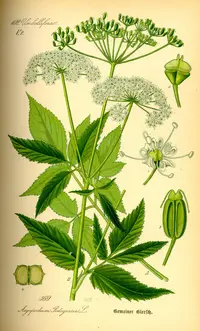
Bishop's goutweed (Aegopodium podagraria) is a fast-spreading, herbaceous perennial often grown as a groundcover. It forms low, dense clumps of divided, green or variegated leaves.
The plant naturally occurs in Europe and western Asia but has become naturalized in many temperate regions, especially in North America. It spreads by underground rhizomes, which makes it very persistent once established.
This vigorous growth habit makes it easy to maintain as a low-care foliage plant but also means it can become invasive in suitable climates. It prefers partial shade, consistent moisture, and well-drained soil, and understanding this helps gardeners know how to care for bishop's goutweed.

Care Difficulty
Easy Care

Light Preference
Partial Shade

Water Requirements
Moderate Water

Temperature Preference
Cold Hardy

Hardiness Zone
3–8

Soil Texture
Loamy, Clay, Organic-rich

Soil pH
Acidic (5.5–6.5), Slightly acidic (6.5–7.0)

Soil Drainage
Moist but well-drained

Fertilization
Minimal (feed rarely)
Scan your plant to receive care tips personalized for your specific plant
Available on iOS and Android
This shade-tolerant perennial prefers soft light rather than intense sun for strongest growth.
This groundcover prefers evenly moist soil but does not tolerate standing water for long periods.
This hardy perennial tolerates a wide temperature range typical of temperate outdoor gardens.
Humidity is not a major factor for Aegopodium podagraria in typical outdoor conditions.
Aegopodium podagraria prefers consistently moist, loose, well-draining ground.
This species can be grown in containers, which also helps limit its spreading habit.
This vigorous groundcover usually needs little feeding, as bishop's goutweed thrives in average garden soil.
Aegopodium podagraria responds well to pruning, which helps control spread and maintain a tidy patch.
This species is usually grown in the ground, so care focuses on dividing and transplanting rather than repotting.
Expansion of Aegopodium podagraria is most often achieved through division of its rhizomatous roots.
This hardy perennial tolerates winter in most temperate climates and usually needs minimal special care.

Plant Health Check
Not sure what's wrong with your plant? Check your plant's health inside the app.
Medieval European monasteries and cloisters commonly planted this species as a hardy groundcover and for use as a potherb, which helped it spread widely beyond its original forest habitats.
It expands primarily through shallow, fast-growing rhizomes that form dense clonal patches, allowing it to outcompete many native woodland and garden plants and making long-term control difficult once established.
In its native Eurasian range, it is a typical plant of light-dappled deciduous forests, thriving under partial shade where many sun-loving herbs cannot persist.

The common name bishop's goutweed reflects its historical use as a leafy vegetable and folk remedy for gout served to clergy in Europe, although modern clinical evidence for medicinal effects is limited and it is now mainly regarded as an invasive ornamental or groundcover species.
This species spreads very aggressively through underground rhizomes. It quickly forms dense colonies that can crowd out other plants and become invasive. Root barriers, deep edging, or contained beds are strongly recommended to prevent unwanted spread when growing bishop's goutweed.
Keep your plants happy and healthy with plant identification, disease detection, and easy care guidance.