Encourage Dense Mats
Shear the spent flower spikes back by 1/3–1/2 after the first main flush to promote dense groundcover growth and trigger a reliable second bloom period.

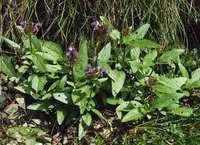
Prunella grandiflora, commonly called large-flowered selfheal, is a low-growing perennial from Europe that forms dense clumps or mats. It belongs to the mint family and has square stems and paired leaves. Short spikes of relatively large purple, pink, or white flowers appear in summer and attract bees and other pollinators. Plants spread slowly by short runners and can naturalize in informal borders, meadows, and cottage-style gardens. This species tolerates a range of soils, prefers sun to light shade, and benefits from consistent moisture but dislikes waterlogged conditions. These traits make it straightforward to care for large-flowered selfheal in many temperate gardens.

Care Difficulty
Easy Care

Light Preference
Partial Sun

Water Requirements
Moderate Water

Temperature Preference
Cold Hardy

Hardiness Zone
4–8

Soil Texture
Sandy, Loamy, Clay

Soil pH
Acidic (5.5–6.5), Slightly acidic (6.5–7.0)

Soil Drainage
Moist but well-drained

Fertilization
Minimal (feed rarely)
Scan your plant to receive care tips personalized for your specific plant
Available on iOS and Android
Prunella grandiflora prefers cool, bright conditions with moderate direct sun for best flowering.
This plant prefers evenly moist, well-drained soil and does not tolerate long periods of drought or saturation.
This hardy perennial tolerates a wide temperature range but flowers best in mild conditions.
Humidity is not a major factor for this hardy perennial if soil moisture is appropriate.
This species prefers moderately fertile, well-structured mineral soil that drains freely but does not dry out too fast.
This species grows reliably in containers if moisture and drainage are controlled carefully.
Prunella grandiflora usually needs only light feeding when grown in average garden soil.
Pruning helps Prunella grandiflora stay compact and extend its flowering season.
This species is most often grown in the ground, so transplanting is usually more relevant than repotting.
Prunella grandiflora is commonly propagated by division, cuttings, or seed to expand groundcover patches.
This perennial is generally cold hardy in temperate climates and needs minimal winter care in the ground.

Plant Health Check
Not sure what's wrong with your plant? Check your plant's health inside the app.
This species is naturally distributed across montane and subalpine regions of central and southern Europe, where it grows in sunny meadows, open woodland edges, and rocky grasslands on well-drained soils.
Compared with the common selfheal (Prunella vulgaris), this species develops notably larger, showier violet to purple corollas arranged in dense spikes that are adapted to attract bumblebees and other strong pollinators.
Wild populations show natural variation in flower color intensity, and horticultural selection has produced white, pink, and deep violet cultivars without altering the basic compact, clump-forming growth habit.

Although often grown as an ornamental, Prunella grandiflora is considered a minor nectar source in some European grassland conservation projects, where it helps support local pollinator diversity when planted in species-rich meadow mixes.
This species spreads moderately by short stolons and self-seeding. It usually forms tidy clumps or low patches rather than taking over beds, but in loose soil it can naturalize, so edging and occasional thinning help control spread.
Keep your plants happy and healthy with plant identification, disease detection, and easy care guidance.