Sea-buckthorn Care (Hippophae rhamnoides)

Also known as: seaberry, Himalayan berry
Sea-buckthorn

About Sea-buckthorn

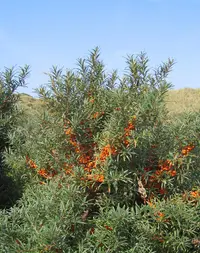
Sea-buckthorn, Hippophae rhamnoides, is a hardy deciduous shrub known for its narrow silvery leaves and bright orange berries densely packed along the stems. It usually forms thickets and develops a deep, wide root system that helps stabilize poor or sandy soils.

This species is native to coastal and mountainous regions of Europe and Asia, where it tolerates wind, salt spray, and low fertility. It fixes nitrogen in the soil, which supports its vigorous growth and makes it relatively undemanding once established.

For those learning how to care for Sea-buckthorn, it generally prefers full sun, well-drained soil, and moderate moisture, but it copes well with drought and cold climates.

Main Plant Requirements

Care Difficulty

Easy Care

Light Preference

Full Sun

Water Requirements

Low Water

Temperature Preference

Cold Hardy

Hardiness Zone

3–7

Soil Texture

Sandy, Loamy, Rocky

Soil pH

Slightly acidic (6.5–7.0), Slightly alkaline (7.0–7.5)

Soil Drainage

Well-drained

Fertilization

Minimal (feed rarely)

Get Personalized Care Plan

Scan your plant to receive care tips personalized for your specific plant

Available on iOS and Android

How to Care for the Sea-buckthorn

Hippophae rhamnoides performs best in open, bright sites with strong direct sun.

  • Provide 6–10 hours of direct sun daily; full south or west exposure suits most climates, with some light afternoon shade in very hot, dry regions.
  • The shrub tolerates light partial shade (around 3–4 hours direct sun), but fruiting and dense growth decline as shade increases.
  • Young plants benefit from some protection from harsh, reflective summer heat, but established Sea-buckthorn generally resists leaf scorch in high sun.

Hippophae rhamnoides prefers dry to moderately moist, well-drained soil and is highly drought tolerant once established.

  • Allow the top 5–8 cm of soil to dry before watering; in the ground this often means deep watering only after extended dry spells, especially on sandy soils.
  • During the first 1–2 growing seasons, water deeply when new growth droops slightly or leaves lose firmness, then reduce frequency as roots extend.
  • Ensure sharp drainage using sandy or gravelly soil; persistent wetness, yellowing leaves, and stem dieback indicate overwatering or poor drainage.

This cold-hardy shrub tolerates a wide temperature range but grows best in cool to moderate climates.

  • Active growth is strongest around 60–75°F (16–24°C); flowering and fruit set are reliable in regions with cool springs and moderate summer heat.
  • Dormant plants tolerate severe cold, often down to about -30°F (-34°C) or lower, provided roots are not waterlogged and soil drains freely in winter.
  • Summer heat above 90°F (32°C) is tolerated if soil is not soggy and roots are mulched; prolonged extreme heat with drought may reduce fruit size and vigor.

Humidity is not a significant factor for Hippophae rhamnoides, which thrives in typical outdoor air conditions across most climates.

Hippophae rhamnoides prefers lean, well-drained mineral soils rather than rich, heavy mixes.

  • Use sandy or gravelly loam with 20–40% coarse sand or grit to prevent water retention around roots.
  • Aim for slightly acidic to neutral pH, roughly 6.0–7.5, avoiding strongly acidic or saline soils.
  • In planting beds or large containers, mix in modest amounts of compost to improve structure without making the soil overly rich.
  • Avoid clay-heavy, compacted, or waterlogged sites; if drainage is marginal, raise the planting area or plant on a low mound to improve aeration.

This species can be grown in containers for smaller landscape use, but it needs careful management of root space and stability.

  • Choose a deep, heavy container that resists tipping, as the plant becomes woody and can develop a top-heavy canopy over time.
  • Select a potting mix amended with coarse sand or fine gravel so water drains rapidly while still anchoring the extensive root system.
  • Position the container where wind exposure is moderated by a wall or other structure to reduce stress on the tall, rigid branches.

Hippophae rhamnoides usually needs minimal fertilization because its roots host nitrogen-fixing bacteria.

  • On poor soils, apply a light layer of compost or well-rotted manure in early spring to support growth.
  • Use a low-dose balanced NPK or slow-release fertilizer at 1/2 strength once in spring only, if growth is weak.
  • Avoid feeding in late summer and winter, as extra nutrients then can cause soft growth that is more prone to cold damage.

Pruning Hippophae rhamnoides helps manage size, improve light penetration, and maintain healthy fruiting wood.

  • Carry out main pruning in late winter or very early spring before budbreak.
  • Remove dead, diseased, crossing, or heavily shaded branches with clean, sharp bypass pruners or a pruning saw.
  • Thin congested interior shoots to open the canopy and encourage strong new growth and better fruit set.
  • Shorten overly long branches to shape the plant, cutting back to outward-facing buds or side shoots.

Hippophae rhamnoides is usually grown in the ground, so focus on correct transplanting rather than frequent repotting.

  • Transplant young plants in early spring or fall when soil is moist and temperatures are mild.
  • Look for roots circling the pot, slow growth, or plants tipping in the container as signs it is pot-bound.
  • Move to a hole or container only slightly larger, loosening circling roots gently to encourage outward growth.
  • Water thoroughly after transplanting and keep soil evenly moist for 2–4 weeks to reduce transplant shock.

Hippophae rhamnoides is commonly propagated from seeds, hardwood cuttings, or suckers from established plants.

  • Collect hardwood cuttings in late fall or winter, 15–20 cm long, and root in sandy, well-drained medium kept slightly moist.
  • Sow seeds in fall outdoors or cold-stratify for 2–3 months at 34–41°F before spring sowing.
  • Lift and divide rooted suckers in early spring, keeping a good root portion for each new plant.
  • Provide full sun and free-draining soil for young plants to establish strong root systems.

This shrub is very cold hardy and usually needs little winter care once established in the landscape.

  • Apply a 5–8 cm mulch layer over the root zone in late fall, keeping it away from the stem base.
  • For container plants, move pots to a sheltered, unheated area where roots stay above about 14°F.
  • Brush off heavy wet snow from branches to limit breakage in exposed sites.

Care Tips

Install sturdy supports

Use strong posts and horizontal wires to support branches loaded with berries, spacing wires about 40–60 cm apart, so heavy fruiting wood does not snap in wind or under crop weight.

Manage suckers strategically

Allow a few well-placed root suckers to develop on the windward side as a living windbreak, but remove unwanted shoots annually with a sharp spade to prevent the stand from spreading into paths or neighboring beds.

Plan male–female layout

Plant 1 vigorous male upwind for every 6–8 female shrubs and mark it clearly, so future pruning or renovation does not accidentally remove the pollen source and reduce fruit set.

Use thorn-safe harvesting

Harvest with thick gloves and long sleeves, and consider cutting small fruiting twigs and freezing them so berries snap off easily by hand or with a comb over a tray, reducing damage from the dense thorns.

Nitrogen management check

Because the roots fix nitrogen, avoid high-nitrogen fertilizers and instead monitor for excessive vegetative growth with few berries, adjusting inputs toward low-nitrogen, higher-potassium products to balance growth and fruiting when growing Sea-buckthorn.

Common Pests and Diseases

Sea-buckthorn fly

This pest is the most significant insect problem on sea-buckthorn and its larvae tunnel inside ripening berries, causing them to soften, discolor, and drop prematurely.

Solution

Collect and destroy infested berries, including dropped fruit, to break the life cycle, and use fine insect netting over shrubs before fruit ripens to prevent egg-laying. In areas with heavy pressure, monitor with yellow sticky traps near the fruit zone and consider early harvest of berries to reduce larval development, which is a key part of Hippophae rhamnoides care in orchards.

Sea-buckthorn aphid

These insects feed on young shoots and leaves, causing curling, yellowing, and sticky honeydew that can attract sooty mold on stems and foliage.

Solution

Prune and remove heavily infested shoot tips, then wash colonies off remaining shoots with a strong stream of water. Encourage natural predators like lady beetles, avoid high-nitrogen fertilization that promotes soft growth, and if needed apply insecticidal soap thoroughly to the undersides of leaves during cool parts of the day.

Verticillium wilt

This disease is caused by soil-borne fungi that invade the water-conducting tissues, leading to wilting, branch dieback, and yellow or brown leaves, often on one side of the plant first.

Solution

Remove and destroy severely affected branches, disinfect pruning tools between cuts, and avoid planting sea-buckthorn in sites where susceptible trees or shrubs have previously died from wilt. Improve soil drainage, avoid overwatering, and plant resistant or healthy stock only, since there is no reliable chemical cure once the fungus is established in the plant.

Leaf spot

This disease causes small brown to black spots on leaves that can merge into larger blotches, sometimes leading to premature leaf drop later in the season.

Solution

Rake and dispose of fallen leaves to reduce fungal spores and prune to open the canopy for better airflow and faster drying of foliage. If the problem recurs, apply a suitable copper or other labeled fungicide in early spring as new leaves emerge, following label directions and focusing on thorough coverage of foliage.

Cankers

Symptoms include sunken, discolored areas on stems or branches where bark cracks or peels, sometimes accompanied by dieback of shoots beyond the infected section.

Solution

Prune out affected branches well below the visible canker during dry weather and dispose of all infected material away from the planting area. Keep plants healthy by avoiding mechanical damage, preventing water stress, and not overfertilizing, since stressed shrubs are more prone to infection by canker-causing fungi and bacteria.

Interesting Facts

Extreme cold tolerance

This species survives winter temperatures below −40°F, thanks to very hardy buds and deep dormancy that protect tissues from freezing damage.

Nitrogen-fixing shrub

Its roots host symbiotic actinobacteria (Frankia) that fix atmospheric nitrogen, allowing the plant to thrive on very poor, sandy or degraded soils and improve them over time.

Salt and wind specialist

Naturally occurring along seacoasts and riverbanks in Eurasia, it tolerates salt spray, shifting sand, and strong wind, which makes it useful for dune stabilization and erosion control when growing Sea-buckthorn.

Botan icon

Did you know?

The bright orange berries of Hippophae rhamnoides are among the most vitamin C–rich fruits known in temperate regions, historically used in parts of Europe and Asia as a scurvy-preventing food during long winters when fresh produce was scarce.

FAQs about Sea-buckthorn

This species is best grown outdoors in full sun and open exposure. It dislikes low light and stagnant indoor air. Sea-buckthorn indoor care is challenging long term, so containers are usually kept outside on balconies, patios, or terraces.

Grow Healthy Plants with Botan Care

Keep your plants happy and healthy with plant identification, disease detection, and easy care guidance.

Botan plant care app — identify plants on mobile

Explore More Plants